After mini-collapses, India national cricket team enter Colombo on guard against **Pakistan national cricket team’s diverse spin arsenal

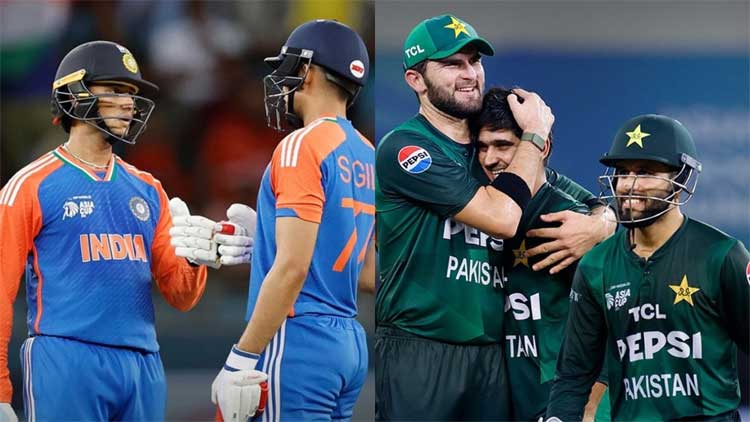

Despite securing two wins from two matches, India’s much-vaunted batting unit has endured a strangely inconsistent T20 World Cup campaign, raising questions ahead of a sterner examination against Pakistan.
Half-centuries from skipper Suryakumar Yadav, Ishan Kishan, and Hardik Pandya have provided bright spots, but the batting dominance that defined India’s recent series against South Africa and New Zealand has yet to fully materialise.
India’s victories over the United States and Namibia came on challenging surfaces in Mumbai and Delhi, where stroke-making was far from straightforward. The Wankhede pitch offered movement and turn, while the Arun Jaitley Stadium track initially played slow and two-paced.
Against the United States, India found themselves in serious trouble at 77 for six before Suryakumar Yadav’s rescue act steadied the innings. The collapse was triggered by veteran seamer Shadley van Schalkwyk, whose variations in pace dismantled India’s middle order.
Any hopes that the stutter was an early-tournament aberration were dented by further batting hiccups against Namibia. India suffered two separate collapses, first against spin and later in the death overs, though a substantial total ensured the damage was largely cosmetic.
Namibia captain Gerhard Erasmus proved particularly effective, unsettling India’s batters with a mix of conventional off-spin and unorthodox slingy deliveries. His changes in release point and trajectory disrupted rhythm rather than relying on extravagant turn. Left-arm spinner Bernard Scholtz complemented him with disciplined, classical bowling, including a notable dismissal of Suryakumar Yadav.
India now brace for a significant spin test against Pakistan at Colombo’s R. Premadasa Stadium. Pakistan’s spin-heavy attack — featuring Shadab Khan, Abrar Ahmed, Mohammad Nawaz, and others — has already demonstrated its potency.
Particular attention will fall on Usman Tariq, whose slingy action and deceptive pauses add another unconventional dimension. Conditions at Premadasa, historically favourable to slower bowlers, could amplify Pakistan’s strengths.
While late-order run outs against Namibia can be viewed as situational mishaps, India’s vulnerability to spin during the middle overs will concern team strategists. Unlike previous opponents, Pakistan are unlikely to let similar opportunities slip.
As India head into a high-stakes contest in Colombo, sharpening their response to varied spin tactics may prove decisive.
Comments are closed.