
After Gen-Z revolt, Nepal’s first woman PM Sushila Karki guides nation toward elections

The images were seared into the world’s memory within just 72 hours — scenes of fear, anger and disbelief unfolding across Kathmandu in September 2025. The parliament building was set ablaze. The prime minister’s residence was looted and torched. Military helicopters evacuated ministers from besieged homes.
The immediate trigger was a government ban on Instagram — though years of public frustration with entrenched political elites had already primed the country for unrest. Most protesters belonged to “Generation Z”, a term used for those born roughly between 1997 and 2012.
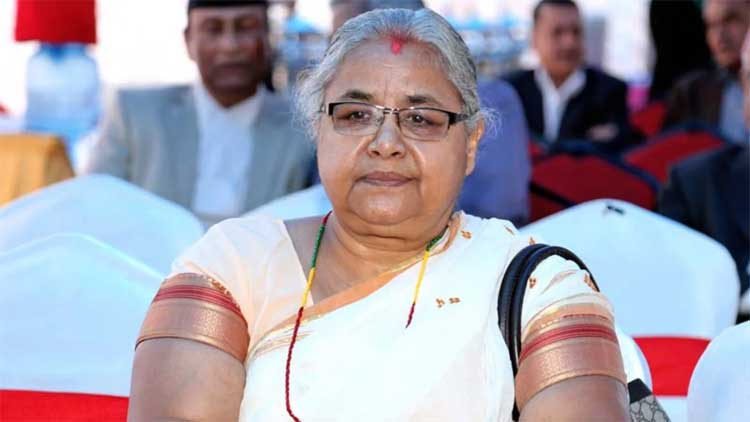
In the end, the turmoil brought an unlikely figure to power: a 73-year-old former judge who fondly recalled studying beside the river Ganga River during her student days.
Sushila Karki was sworn in as Nepal’s 42nd prime minister on September 12, 2025, becoming the first woman to lead the Himalayan republic. The former chief justice rose to power directly from the country’s most violent political upheaval in a generation.
Her ascent was fuelled by discord — and, literally, decided on Discord, the messaging platform where thousands of activists debated who should lead the country.
The ban that lit the fuse
Political instability had plagued Nepal for years. Since the monarchy was abolished in 2008, the country had seen 14 governments led by eight prime ministers in just 17 years.
Corruption scandals were frequent, youth unemployment hovered near 20 percent, and the government estimated that more than 2,000 young Nepalis were leaving the country daily in search of work abroad.
The immediate spark came on September 4, 2025, when the government of then-prime minister K. P. Sharma Oli suspended 26 social media platforms — including Facebook, YouTube, WhatsApp and X (Twitter) — for failing to register under a controversial new digital law.
Within days, thousands of young protesters gathered at Maitighar Mandala in central Kathmandu and marched toward parliament.
Their anger extended far beyond social media restrictions. Protesters denounced corruption, nepotism and the lavish lifestyles of so-called “nepo kids” — children of powerful politicians — whose displays on social media had become symbols of inequality.
Security forces eventually opened fire on demonstrators, killing 17 people in Kathmandu alone. Two more were killed outside the capital, while hundreds were injured.
Doctors at a city morgue later reported receiving 47 bodies over two days, most victims killed by high-velocity gunshot wounds to the head or torso.
The killings, captured on phones and uploaded online after the ban was partially lifted, quickly inflamed public anger.
The following day, Kathmandu erupted in violence. Protesters set fire to the parliament building, the Supreme Court complex, the prime minister’s and president’s residences, police stations, and the headquarters of Oli’s Communist Party of Nepal (UML).
By September 10, when the army imposed a nationwide curfew, more than 70 people had died and over 2,000 were injured. Damage to Nepal’s $42-billion economy was later estimated at $586 million.
Under pressure — reportedly including persuasion from army chief Ashok Raj Sigdel — Oli resigned on September 9, submitting his resignation to President Ramchandra Poudel.
Discord, the army, and an unlikely leader
Even after Oli’s resignation, Nepal’s political crisis remained unresolved.
The protest group Hami Nepal convened a virtual meeting on Discord where around 10,000 participants — including members of the Nepali diaspora — debated potential leaders.
Karki emerged from a shortlist of five candidates.
General Sigdel then acted as a mediator between the Gen-Z movement, the president’s office and political parties to resolve constitutional hurdles to her appointment.
On September 12, President Poudel dissolved the 275-seat parliament at Karki’s recommendation and swore her in at the presidential residence, Sheetal Niwas.
Elections were scheduled for March 21, 2026 — two years earlier than originally planned.
The choice of Karki was paradoxical. A youth-driven movement protesting the dominance of ageing politicians had selected a septuagenarian to lead the country.
But many protesters viewed her reputation for integrity as decisive.
The judge who would not be bought
Born in Biratnagar on June 7, 1952, Karki was the eldest of seven children. She studied political science at Banaras Hindu University in Varanasi before returning to Nepal to pursue law at Tribhuvan University.
She later joined the 1990 pro-democracy movement against Nepal’s monarchy and was briefly jailed for her activism.
In 2016 she made history as Nepal’s first female chief justice.
Her tenure was turbulent. After the Supreme Court overturned the government’s preferred appointment for police chief, lawmakers launched an impeachment motion widely criticised as politically motivated. The motion was eventually withdrawn after public pressure.
Karki retired in 2017, but her reputation for independence and integrity made her a trusted figure during the 2025 crisis.
“I did not come to this position because I sought it,” she said after taking office. “I came because voices from the streets demanded that I take this responsibility.”
A transitional mission
Karki quickly declared those killed in the protests as martyrs, visited injured demonstrators in hospitals, and announced compensation for victims’ families.
Her government also established a judicial commission to investigate the violence and created a reconstruction fund for damaged public buildings.
Speaking to diplomats in October 2025, she described her administration as a strictly transitional government.
“Our sole mandate is to hold free and fair elections,” she said. “We will step aside once a democratically elected government takes office.”
The India connection
Karki’s appointment was warmly welcomed by India.
Prime Minister Narendra Modi congratulated her, calling her leadership “a shining example of women’s empowerment.”
Karki had studied in Varanasi, Modi’s parliamentary constituency, and often spoke warmly about her time in India.
She recalled evenings spent along the banks of the Ganga and friendships formed during her student years.
A fragile transition
Nepal’s political transition remains uncertain. The country has not completed a full five-year government term since the monarchy ended in 2008.
Many established political figures — including Oli — remain active in politics, while younger leaders such as Kathmandu mayor Balen Shah are seen as rising figures.
Karki has repeatedly urged political unity as elections approach.
“Anarchy does not bring happiness,” she said after 100 days in office. “Only peace and stability open the door to prosperity. The change we seek is a long and tireless journey.”
Comments are closed, but trackbacks and pingbacks are open.