
After Bangladesh visit, Jaishankar contrasts India’s ‘good’ and ‘bad’ neighbours, says neighbourhood policy guided by common sense

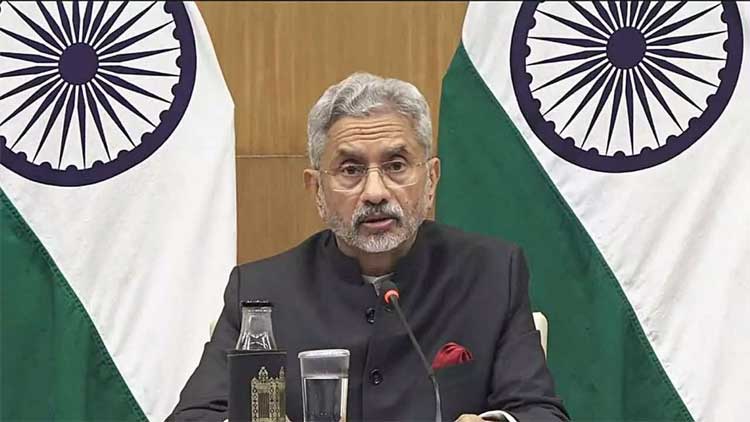
Two days after visiting Bangladesh to attend the funeral of the country’s first female prime minister, Khaleda Zia, External Affairs Minister S. Jaishankar spoke on India’s approach to its neighbours, distinguishing between “good” and “bad” neighbours and emphasising that New Delhi’s foreign policy is guided by “common sense.”
Jaishankar represented India at Zia’s funeral on Wednesday and handed over a condolence letter from Prime Minister Narendra Modi to her son and acting chairperson of the Bangladesh Nationalist Party (BNP), Tarique Rahman.
India’s stance on ‘good neighbours’
During an interaction at IIT Madras in Chennai, Jaishankar was asked about India’s neighbourhood policy amid ongoing violence and protests in Bangladesh. He explained that India chooses to nurture relations with countries that are “good” or at least “not harmful.”
“If you have a neighbour who is good to you, or at least not harmful to you, your natural instinct is to be kind and to help that neighbour. If the neighbour has a problem, you would like to contribute in some way. If nothing else, you will say hello, try to build friendships and bonding, and that is what we do as a country,” he said.
Highlighting India’s support for friendly neighbours, Jaishankar cited examples including vaccine aid during COVID-19, fuel and food assistance during the Ukraine crisis, and the $4 billion support extended to Sri Lanka during its financial emergency.
‘Bad neighbours’ and India’s right to defend itself
Jaishankar also addressed countries that he described as “bad neighbours,” particularly those that “deliberately, persistently, unrepentantly continue with terrorism.” He asserted that India has the right to take measures to protect itself from such threats.
“We will exercise that right. How we exercise that right is up to us. Nobody can tell us what we should do or not. We will do whatever we have to do to defend ourselves. It is a common sense proposition,” he added.
In an apparent reference to Pakistan and India’s decision to suspend the Indus Waters Treaty following the Pahalgam terror attack last year, Jaishankar said, “Many years ago, we agreed to a water arrangement, a water-sharing arrangement, because the belief, the underpinning of that, was that it was a gesture of goodwill. But if you have decades of terrorism, there is no good neighbourliness.”
He concluded, “If there is no good neighbourliness, you do not get the benefits of that good neighbourliness. You cannot say, please share water with me, but I will continue terrorism with you.”
Jaishankar’s remarks come at a time of heightened regional tensions and underline India’s principle of engagement based on reciprocity, balancing cooperation with vigilance against threats to national security.
Comments are closed.