
African Leaders Unveil Unified Climate Roadmap Ahead of COP30

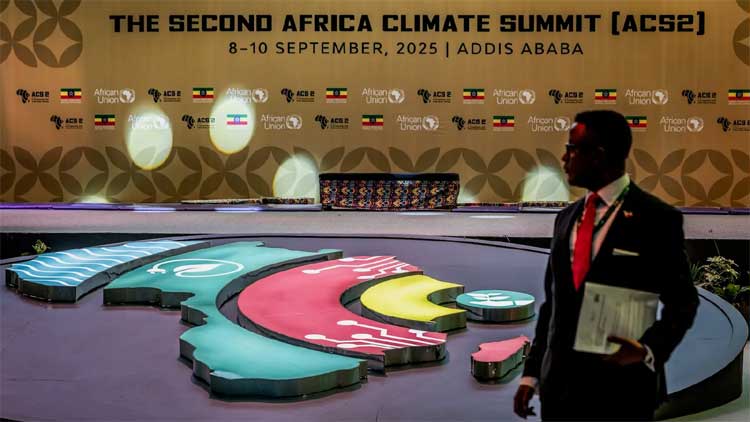
After three days of talks in Addis Ababa, African leaders on Wednesday agreed to a common climate roadmap, pledging to present a unified position at COP30 in Brazil later this year. The declaration casts Africa as a “continent of solutions” and places climate adaptation, justice, and energy access at the core of its agenda.
Africa, set to be home to one-fifth of the world’s population by 2030, contributes just 3% of global greenhouse gas emissions and accounts for 6% of energy use. Against that backdrop, leaders are pushing for tens of billions in new investment and have set a target of generating 300 gigawatts of renewable energy by 2030.
“It’s inspiring to see Africa leaping forward with clarity, purpose, and determination,” said Mohammed Adow, director of the think tank Power Shift Africa. “Africa is claiming its rightful space in the climate dialogue.”
This was only the second Africa Climate Summit, following the inaugural gathering in Nairobi in 2023. Alongside ambitious energy goals, leaders also called attention to Africa’s $84 billion in annual adaptation needs — of which only $14 billion was delivered in 2021–22. Advocates hope a stronger collective stance at COP30 will amplify demands on wealthier nations.
Some see room for self-reliance too. “Governments could dedicate portions of their budgets to climate priorities to show that Africa is putting our money where our mouth is,” said Omar Elmawi of the Africa Movement of Movements.
The summit coincided with Ethiopia inaugurating a massive and controversial hydroelectric project on the Nile — now Africa’s largest at 5 GW — and announcing its bid to host COP32 in 2027. Prime Minister Abiy Ahmed also unveiled a $50 billion annual funding goal for climate solutions, while urging “bold, united, and sustained collaboration” to avert catastrophe.
The declaration further spotlighted Africa’s Green Minerals Strategy, designed to leverage critical resources such as cobalt from the Democratic Republic of the Congo for a green transition. But concerns linger: leaders endorsed “transitional energy sources,” which critics warn could lock in natural gas, and backed carbon markets, which have already raised controversy through land-for-credit deals.
Still, observers say the outcome marks a turning point. “This represents a very decisive moment for the continent,” said Adow. “Africa has shown that it’s moving from the margins of global climate decision-making to the center.”
Comments are closed.