
Abhishek Sharma: The Most Dangerous T20 Batter, Blending Violence with Consistency

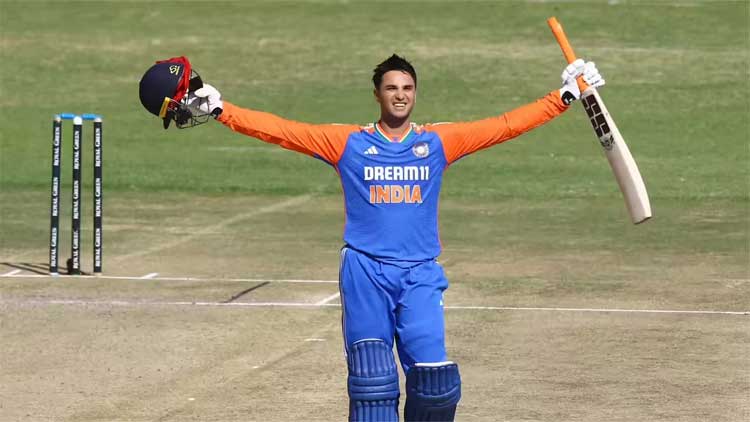
Abhishek Sharma has moved past the stage where the debate is about talent. The real question now is speed: how fast can he break a T20 game beyond repair? In today’s format, that is the sharpest definition of danger — a batter who can flip a match in a few overs, before bowlers or captains have time to recalibrate.
So, is Abhishek Sharma the most dangerous T20 batter in the world right now? If danger is defined as maximum damage per ball, backed by consistent impact at the highest level, the answer leans strongly toward yes — with the unavoidable caveat that extreme aggression always brings volatility.
What “dangerous” really means in T20s
T20 greatness comes in many forms: anchors, finishers, match-up specialists. Danger is narrower and more ruthless. It belongs to batters who make captains feel one over away from losing control of the entire innings.
That danger usually combines three elements: an elite strike rate, a boundary pattern that forces defensive fields early, and a role that guarantees enough deliveries to cause irreversible damage. Abhishek’s current profile ticks all three.
The numbers behind the fear
Rankings aren’t perfect, but when they match the eye test, they matter. Abhishek is currently the world’s No. 1-ranked T20I batter — not as a lifetime achievement, but as a reflection of present impact.
More telling is how his numbers are built. He scores at a strike rate firmly in the game-breaking zone while maintaining a strong average for an opener. That overlap is rare. Most batters choose one at the expense of the other. Abhishek is living in both spaces.
The innings that explains everything
His 84 off 35 against New Zealand in Nagpur — powering India to 238 — is the clearest illustration of his threat. It wasn’t just explosive; it was structurally destructive.
That kind of innings triggers panic: defensive fields in the powerplay, frontline bowlers used too early, match-ups burned before the innings settles. Once that happens, the batting side controls not just the scoreboard, but the opposition’s entire decision-making process.
Why his skill set is uniquely damaging
Abhishek’s separation from other hitters lies in how he scores.
First, he compresses time. Many aggressive batters need a few balls to settle. He often doesn’t. When a batter starts at full volume, bowlers lose their adjustment window.
Second, he rewrites the powerplay equation. A 60/0 powerplay opens a different universe of options than 42/1. Abhishek isn’t just scoring — he’s buying strategic freedom for everyone who follows.
Third, he makes good bowlers bowl defensively. Boundary density across both sides of the wicket forces captains into survival mode. In T20s, survival is expensive.
Why this isn’t just a purple patch
The IPL evidence strengthens the case. Over full seasons, teams plan obsessively: hard lengths, wide lines, pace-off, layered fields. When a batter keeps clearing the ropes week after week despite that, it’s no longer a streak — it’s influence.
Abhishek’s recent IPL form shows sustained six-hitting volume that actively changes how opponents bowl. That is the true marker of danger: when the bowling side plays to avoid catastrophe rather than to impose itself.
The caveat that keeps the debate alive
Danger isn’t the same as inevitability. Abhishek’s approach carries variance by design. Some days, the first 10 balls decide everything.
The blueprint to stop him is clear: hard into the body, wide outside off, pace-off into the pitch. But executing that perfectly, under pressure, is a very small target — and missing it even slightly can cost the game in one over.
Verdict
Right now, Abhishek Sharma looks like the most dangerous T20 batter in the world. His ceiling is outrageous, his role maximises damage, and his performances show he can dismantle international attacks, not just franchise bowling units.
He may not be the safest every-innings banker — that’s a different conversation. But if danger means winning a match in 15 balls, Abhishek Sharma sits at the very top of the food chain.
Comments are closed.