
Aadhaar, Voter ID, Ration Cards Not Valid Proof of Citizenship for Voting: ECI Tells Supreme Court

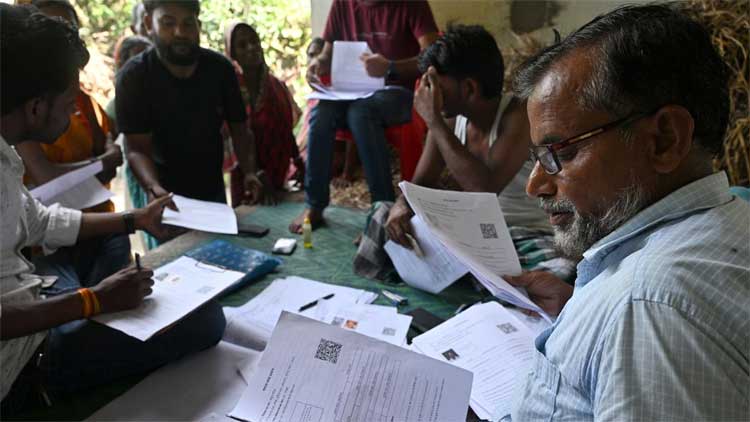
The Election Commission of India (ECI) on Monday defended its ongoing Special Intensive Revision (SIR) of Bihar’s electoral rolls, asserting before the Supreme Court that Aadhaar, voter IDs, or ration cards cannot serve as standalone proof of voter eligibility. Instead, it claimed only documentary evidence of Indian citizenship can determine eligibility under the Constitution.
In an affidavit submitted late Monday, the poll body emphasized its plenary powers under Article 324, arguing that it is constitutionally empowered to supervise elections and ensure only Indian citizens are enrolled as voters.
🔍 Key Highlights from ECI’s Affidavit
✅ Citizenship, Not Identity, Is the Core Criterion
-
The ECI clarified that Aadhaar is only a proof of identity, not of citizenship, and therefore insufficient for inclusion in voter rolls.
-
Ration cards and voter IDs (EPICs) also cannot be relied upon exclusively, due to risks of fake documentation or circular validation.
🔐 Constitutional Backing for SIR
-
Under Article 324, the ECI claims full authority over elections, including electoral rolls.
-
Article 326 mandates that only Indian citizens aged 18+ can vote.
-
Sections 16 and 19 of the Representation of the People Act, 1950, require proof of citizenship, age, and residence.
⚖️ Rejects Central Govt Monopoly on Citizenship Verification
-
Responding to claims that only the Centre can decide citizenship status under the Citizenship Act, 1955, ECI called this argument “patently erroneous”.
-
It said it has every right to demand documentation for determining voter eligibility, especially for those claiming citizenship by birth.
❌ No Automatic Validation of Existing Voter IDs
-
ECI opposed using EPICs as conclusive proof, stating they are products of previous rolls and cannot bypass the current revision.
-
“Automatic continuance” would defeat the purpose of the fresh verification exercise, it said.
🗂️ The SIR Document List: Flexible but Firm
-
The ECI stressed that the 11 accepted documents are “illustrative, not exhaustive”.
-
Alternative records, including evidence of registration in the 2003 rolls, may be accepted by Electoral Registration Officers (EROs).
🗓️ Court Proceedings and Concerns
-
The Supreme Court on July 10 stayed finalisation of draft rolls pending further orders and urged ECI to consider Aadhaar and voter IDs for inclusion.
-
However, the poll panel has now reaffirmed its stricter eligibility checks, rejecting the idea of accepting those documents alone.
📅 Next Hearing: July 28
⚠️ Opposition and Civil Society Challenge
-
Petitions from leaders like Manoj Jha, KC Venugopal, Mahua Moitra, and NGOs such as ADR question the timing, legality, and inclusiveness of the SIR.
-
They fear mass disenfranchisement, particularly of migrants, poor, and marginalised groups unable to produce valid documents.
📊 ECI’s Response and Stats
-
The commission called the petitions “premature” and “unsupported by evidence.”
-
It cited overwhelming cooperation from all political parties and said over 90% of forms had been collected, covering 7.11 crore electors as of July 18.
-
Accounting for deaths, migrations, and duplicate entries, effective coverage is 94.68%, it claimed.
⚖️ “Right to Vote is a Constitutional Right”
-
ECI reminded the court that voting is not a fundamental right, but a constitutional right under Article 326, and subject to the legal and administrative criteria defined therein.
🧾 Final Word
“The SIR is a necessary, inclusionary process to clean electoral rolls. It does not cancel citizenship. No name will be removed without due process,” the affidavit asserted, underscoring that the revision enhances the purity and integrity of elections, not undermines them.
Comments are closed.