
Aadhaar to Be Replaced by Voter ID and Biometrics for Benefit Payments: Union Minister

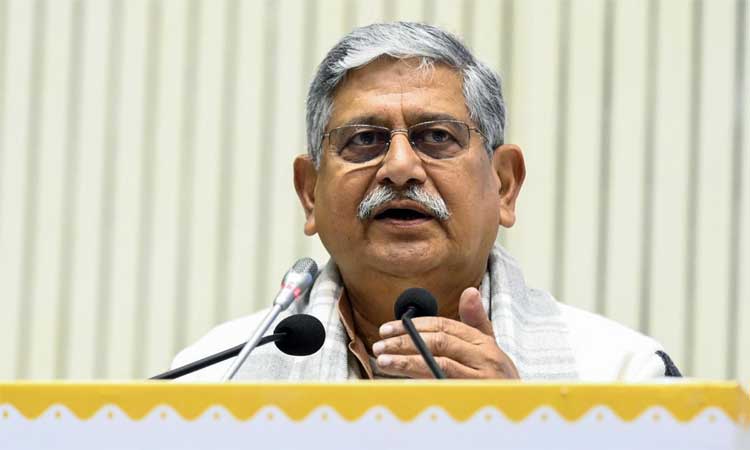
The Central Government is considering a shift in the identification system used for distributing welfare benefits, with Union Minister Rajiv Ranjan Singh, popularly known as Lalan Singh, announcing that Aadhaar will no longer serve as the primary basis for beneficiary payments under the proposed arrangement. Instead, beneficiaries will be identified through their voter ID cards and biometric authentication.
Singh, who heads the Ministry of Panchayati Raj as well as the Fisheries, Animal Husbandry and Dairying portfolios, made the announcement during the National Workshop on the People’s Plan Campaign (PPC) 2026-27, organised by the Ministry of Panchayati Raj in New Delhi on October 30.
The minister said that beneficiaries would be required to provide their Electors Photo Identity Card (EPIC) number along with biometric details to establish their identity and receive payments under the proposed system.
Why Is the Government Planning This Change?
Explaining the proposed shift, Singh questioned the reliability of Aadhaar as the sole basis for identifying beneficiaries, pointing to the easy availability of Aadhaar enrolment and issuance facilities.
He reportedly said that Aadhaar cards could be obtained quickly through enrolment centres and argued that the new identification mechanism would strengthen beneficiary verification.
According to the minister, biometric authentication combined with voter ID details would help establish the identity of genuine beneficiaries and reduce the possibility of duplicate or fraudulent entries in welfare schemes.
However, he did not provide a detailed implementation timeline or specify all the government schemes that would come under the proposed arrangement.
Voter ID and Biometric Authentication to Become Key
Under the proposed mechanism, beneficiaries would have to provide their EPIC numbers and undergo biometric verification before receiving eligible payments.
The EPIC number is the unique identification number printed on an Indian voter ID card. Combining it with biometric authentication is intended to provide an additional layer of identity verification.
The announcement has raised questions about how the proposed system will be implemented, particularly for beneficiaries who do not possess voter ID cards or whose names are missing from electoral rolls.
It also remains unclear how the government will address cases involving discrepancies in voter records, biometric authentication failures and individuals who are otherwise eligible for welfare assistance.
Which Government Schemes Could Be Affected?
The minister did not announce a complete list of schemes that would adopt the proposed identification mechanism.
However, several central government welfare programmes currently use Aadhaar-based authentication or Aadhaar-seeded bank accounts for beneficiary identification and payments.
These include:
- PM-Kisan: Provides income support to eligible farmer families.
- MGNREGA: Provides employment-related benefits to rural households.
- Pradhan Mantri Awaas Yojana-Gramin: Supports eligible rural households in obtaining housing.
- National Social Assistance Programme: Provides social assistance, including pensions for eligible elderly people, widows and persons with disabilities.
- National Livestock Mission: Supports eligible entrepreneurs and activities in the livestock sector.
It is important to note that the minister has not confirmed that all these schemes will move away from Aadhaar-based payments. The precise scope of the proposed change remains unclear.
Announcement Comes Amid Special Intensive Revision Debate
The announcement has also attracted political attention because it comes amid the ongoing debate over the Election Commission’s Special Intensive Revision (SIR) of electoral rolls.
Opposition parties and several civil society groups have raised concerns about the deletion of names from voter lists during the revision exercise, questioning whether eligible citizens could lose their voting rights because of errors in the process.
The proposal to use voter ID numbers as a basis for accessing welfare benefits has therefore prompted questions about the possible consequences for people whose names are missing from electoral rolls.
Critics have raised concerns that linking welfare payments to electoral identity could create difficulties for eligible beneficiaries if their voter registration details are inaccurate or incomplete.
Government Yet to Clarify Implementation Details
While the minister has outlined the proposed identification mechanism, several important details are still awaited. These include the list of schemes covered, the agencies responsible for implementation, the biometric verification infrastructure and the process for resolving authentication failures.
The government will also need to clarify how beneficiaries without voter ID cards will be accommodated and whether alternative identification arrangements will be available.
For now, the announcement signals a proposed change in the way beneficiary identities and welfare payments may be verified. However, until formal guidelines and implementation details are issued, Aadhaar should not be considered automatically withdrawn as an identification requirement across all government welfare schemes.
Comments are closed.