
Yogi Adityanath’s ‘Missing Hindu Voters’ Claim Sparks Questions Within BJP

The BJP had deployed more than 1.61 lakh Booth Level Agents (BLAs) during the SIR exercise, compared with 1.57 lakh by the Samajwadi Party (SP) and 1.54 lakh by the Bahujan Samaj Party (BSP).
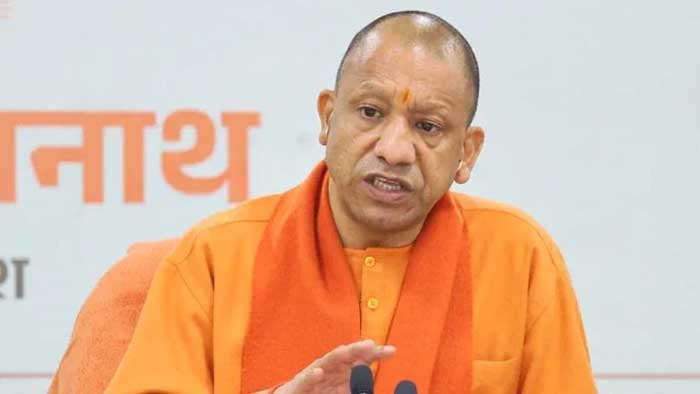
Adityanath, speaking at the Aaj Tak Panchayat last week, had claimed that 1.27 crore Hindu voters whose names appeared in panchayat electoral rolls were missing from Assembly voter lists, despite many of them receiving government welfare benefits.
Another BJP leader said the issue also raised questions about the state government’s monitoring of the bureaucracy. Booth Level Officers (BLOs) and Electoral Registration Officers (EROs) are government employees, and senior officials and ministers should have noticed any shortcomings during the revision exercise, the leader said.
An Election Commission official, however, claimed that Samajwadi Party workers had been more active than BJP representatives at the booth level during the SIR process.
According to the official, Muslim voters were also more proactive in checking their names and ensuring that they were not removed because of discrepancies. Hindu voters, meanwhile, were comparatively less attentive, assuming their names would remain on the electoral rolls.
Another BJP leader questioned why the discrepancy had been highlighted several months after the final electoral rolls were published. The leader argued that the state government’s database of welfare beneficiaries could have been compared with the voter lists much earlier.
A minister in the Adityanath Cabinet also pointed towards possible administrative shortcomings, noting that BLOs and EROs were government employees rather than party workers. The minister suggested that political leanings among some officials could have influenced decisions, while acknowledging that party representatives could not monitor every individual voter application.
BJP Sees an Opportunity to Consolidate Hindu Support
Despite internal questions over the handling of the SIR exercise, some BJP leaders believe the issue could provide an opportunity to consolidate Hindu voters ahead of the 2027 Assembly elections.
A senior party leader said the issue was politically significant because it concerned Hindu voters, while the proportion of Muslim voters had reportedly increased following the revision.
Sources said that after the draft electoral rolls were published in January, Adityanath and BJP state president Pankaj Chaudhary held a virtual meeting with ministers, MPs, MLAs, MLCs and party functionaries to discuss the large-scale deletions.
The party leadership subsequently set a target of identifying and adding at least 200 voters at every polling booth before the electoral rolls were finalised.
BJP and RSS Strengthen Election Preparations
Alongside plans to begin a voter-tracing campaign on November 20 and organise a two-day strategy meeting in Mathura, the BJP’s central leadership has started strengthening its organisational structure across Uttar Pradesh.
Six organisational secretaries with backgrounds in the Rashtriya Swayamsevak Sangh (RSS) have been assigned responsibility for the state’s six organisational regions to oversee preparations for the Assembly elections.
The appointments include:
- N Madhukar, BJP organisational general secretary for Andhra Pradesh and Telangana, has been assigned the Kashi region, which includes Varanasi and has 71 Assembly seats.
- Chandrashekhar, Madhya Pradesh BJP’s organisational general secretary, will oversee the Gorakhpur region, which has 62 seats.
- Karamveer, Chhattisgarh BJP’s organisational general secretary, has been assigned the Awadh region, comprising 82 seats.
- Pawan Sai, Jharkhand BJP’s organisational general secretary, will oversee the Kanpur-Bundelkhand region, which has 52 seats.
- Satish Dhond, Maharashtra BJP’s joint organisational general secretary, will be responsible for Western Uttar Pradesh, which has 71 seats.
- Ajey Kumar, Rajasthan BJP’s organisational general secretary, has been assigned the Braj region, which has 65 seats.
All six are full-time RSS workers with experience in organisational management.
A BJP leader said the arrangement was intended to decentralise responsibilities and reduce the workload during the election period. The six leaders will coordinate with Uttar Pradesh BJP organisational general secretary Dharampal Singh and report to BJP national organisational general secretary B L Santhosh.
They are expected to visit their respective regional headquarters, tour constituencies, participate in party meetings and address organisational concerns.
The BJP had undertaken a similar arrangement before the 2022 Assembly elections, when Dharampal Singh was assigned responsibility for the Kashi region.
The party is also planning to deploy at least one experienced leader, preferably with an RSS background, in every district and Assembly constituency.
According to a BJP source, at least 40 leaders from each state not going to the polls will be sent to Uttar Pradesh to assist with election management, resolve organisational issues and coordinate with alliance partners. Leaders from Gujarat, West Bengal, Odisha, Andhra Pradesh, Bihar and other states will also be deployed in areas with significant populations of voters originating from those states.
BJP to Hold Strategy Meeting in Mathura
The BJP will organise a two-day organisational planning meeting, known as the Yojana Baithak, in Mathura from Monday.
Around 50 senior BJP and RSS functionaries are expected to participate, along with Chief Minister Yogi Adityanath, Deputy Chief Ministers Keshav Prasad Maurya and Brajesh Pathak, selected state ministers and state BJP president Pankaj Chaudhary.
The discussions are expected to cover the Assembly election strategy, voter lists, campaign issues, star campaigners, the party manifesto, constituency-level political conditions and seat-sharing arrangements with alliance partners.
The organisational changes and upcoming meetings reflect the BJP’s efforts to strengthen its grassroots network and prepare its election machinery ahead of the 2027 Uttar Pradesh Assembly elections.
Comments are closed, but trackbacks and pingbacks are open.