
Nvidia CEO Jensen Huang Steps Down Amid Controversy, Raising Questions Over Chipmaker’s Future

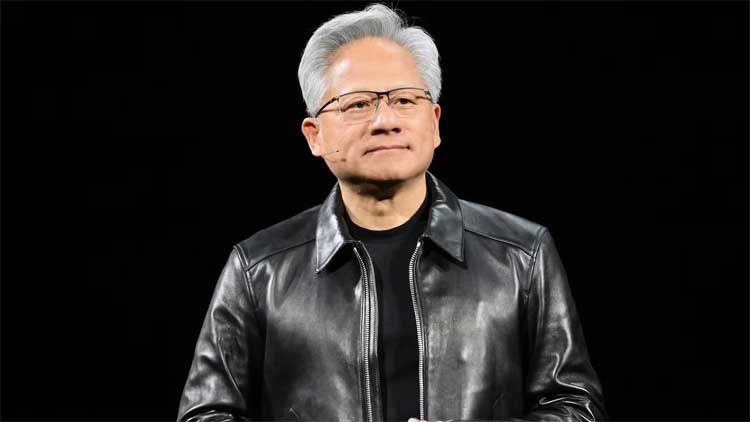
Nvidia CEO Jensen Huang is stepping down, marking a major turning point for the $4 trillion chipmaker and raising uncertainty over the future of the artificial intelligence industry.
According to the account provided, Chief Financial Officer Colette Kress will assume the role of interim CEO while the company searches for a permanent successor. Nvidia has also appointed former Synopsys CEO and board member Harvey Jones as its first-ever board chairman.
Huang, who co-founded Nvidia and owns approximately 3.61% of the company, will also leave its board.
The reported departure comes amid growing scrutiny of Huang’s personal relationships and allegations involving a Chinese businesswoman whom US authorities reportedly suspect of having links to Chinese intelligence. These allegations have not been independently established.
The controversy reportedly intensified following media reports of another alleged relationship involving a senior Nvidia executive who directly reported to Huang.
Uncertainty for the AI industry
Huang’s reported exit could have significant consequences beyond Nvidia. Under his leadership, the company became the backbone of the global AI revolution, supplying advanced processors that power data centres, cloud computing platforms and leading artificial intelligence models.
Nvidia also played a major role in financing the AI ecosystem, investing heavily in cloud providers, suppliers and leading AI companies.
His departure could therefore disrupt an industry already facing questions about mounting AI infrastructure costs, rising debt and whether massive investments in artificial intelligence will ultimately generate sustainable returns.
Implications for US-China relations
Huang’s departure could also influence US semiconductor export policy.
The Nvidia chief has repeatedly advocated maintaining access to the Chinese market, arguing that US companies should remain competitive in the global AI race.
His position has attracted attention in Washington because advanced Nvidia chips are central to the technological rivalry between the United States and China.
US President Donald Trump previously praised Huang’s contribution to the country, while the allegations surrounding the Chinese businesswoman have added another dimension to the controversy.
From gaming pioneer to AI industry icon
Nvidia was originally best known for producing graphics processing units (GPUs) used by gamers and computer enthusiasts.
However, the ability of its chips to perform massive numbers of calculations simultaneously made them essential to training and running modern AI systems.
That transformation propelled Nvidia to become one of the world’s most valuable companies and turned Huang into one of the technology industry’s most influential executives.
His public appearances frequently attract enormous attention, with investors closely watching his comments for signals about the future of AI, semiconductor demand and technology stocks.
What happens next?
The reported leadership transition comes at a particularly sensitive moment for Nvidia.
The company faces intensifying competition, geopolitical uncertainty and growing questions about the financial sustainability of the AI boom.
A permanent successor will have to maintain Nvidia’s technological leadership, preserve relationships across the AI ecosystem and navigate increasingly complicated US-China trade restrictions.
Comments are closed, but trackbacks and pingbacks are open.