
Turkiye’s Renewable Energy Push Faces Scrutiny Ahead of COP31

Vast rows of solar panels stretch across the central Turkish province of Konya, converting sunlight into electricity as Turkiye prepares to host the upcoming United Nations climate summit, COP31. The country is highlighting its growing investment in renewable energy, even as questions remain about its continued dependence on coal and other fossil fuels.
Climate campaigners say Turkiye’s renewable energy ambitions are not matched by a clear strategy to phase out fossil fuels, including coal, oil and natural gas. Burning these fuels releases greenhouse gases that contribute to global warming.
According to Turkiye’s Energy Ministry, coal remained the country’s largest source of electricity last year, accounting for 33 percent of total generation. Solar and wind together contributed nearly 23 percent.
One of Europe’s Largest Solar Farms
The town of Karapinar, in Konya province, is home to the Kalyon Karapınar YEKA-1 Solar Power Plant, one of Europe’s largest solar facilities. The site features more than three million solar panels spread across an area equivalent to approximately 2,600 football fields.
Operational since 2023, the facility generates enough electricity annually to meet around 0.7 percent of Turkiye’s total power demand.
Plant director Burak Dogru told The Associated Press that the project prevents approximately 1.75 million metric tons of carbon emissions each year, demonstrating the country’s efforts to shift its energy sector towards cleaner sources.
Despite these developments, Turkiye’s greenhouse gas emissions remain substantial. The Turkish Statistical Institute reported that the country produced 584.5 million metric tons of carbon dioxide equivalent in 2024, the latest year for which data is available.
Duygu Kutluay, a campaigner with the Beyond Fossil Fuels advocacy group, acknowledged Turkiye’s plans for expanding renewable energy but warned that they lack a clear timetable for phasing out coal and other fossil fuels, particularly natural gas.
She argued that the absence of such a roadmap is incompatible with Turkiye’s commitment to achieving net-zero emissions by 2053.
Turkiye is also exploring nuclear energy as a way to reduce its dependence on imported energy. Its first nuclear power plant is under construction along the Mediterranean coast, while additional reactors remain under consideration.
COP31 Faces Questions Over Climate Commitments
Around 265 kilometres from Konya, the Mediterranean city of Antalya will host COP31 from November 9 to 20. The summit is expected to bring together tens of thousands of delegates, world leaders, business representatives and civil society organisations to discuss the implementation of global climate commitments.
The meeting comes at a time of growing concern over energy security. The war involving Iran has contributed to rising oil and gas prices, prompting countries to reassess their energy supplies.
Meanwhile, international efforts to reduce greenhouse gas emissions have faced mounting criticism. The United States, the world’s second-largest carbon emitter after China, will again be absent from the negotiations following President Donald Trump’s decision to withdraw the country from international climate discussions.
The previous two climate summits also concluded without significant agreement on how to reduce fossil fuel consumption, with their final declarations making no mention of fossil fuels.
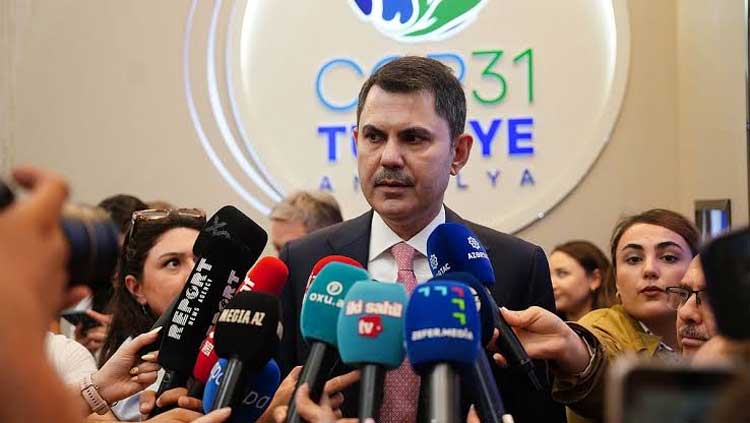
Turkiye’s Environment and Climate Change Minister Murat Kurum, who will preside over COP31, has said the summit should prioritise implementing existing climate commitments rather than introducing additional targets.
As part of this approach, Turkiye plans to promote a “Climate Implementation Bridge”, an initiative intended to connect countries with financial resources, technology and other assistance to turn climate pledges into practical action.
Presenting the summit’s priorities earlier this year, Kurum said the international community was no longer simply waiting for new decisions but wanted to see previous commitments implemented.
Turkiye’s Environmental Ambitions Under Scrutiny
President Recep Tayyip Erdogan has repeatedly highlighted Turkiye’s commitment to environmental protection and climate action. First Lady Emine Erdogan has also promoted a nationwide zero-waste campaign encouraging recycling and more responsible resource consumption.
Kurum has said COP31 will focus on electrification, reducing waste and cutting methane emissions.
However, the Climate Action Tracker, which assesses countries’ climate policies against the goals of the 2015 Paris Agreement, has classified Turkiye’s climate targets and policies as “critically insufficient”.
The Paris Agreement seeks to limit global warming to well below 2 degrees Celsius while pursuing efforts to restrict the temperature increase to 1.5 degrees Celsius above pre-industrial levels.
Environmental concerns have also become a source of tension within Turkiye. Human rights organisations have accused authorities of overlooking environmental issues and frequently arresting activists.
Earlier this year, a court annulled the environmental impact assessment for a proposed expansion of the coal-fired power plant at Afsin-Elbistan in southeastern Turkiye. Environmental campaigners welcomed the decision as an important development.
However, plans subsequently emerged to expand another coal-fired power station in Canakkale, in the country’s northwest.
Like other Mediterranean countries, Turkiye is increasingly exposed to extreme heat, drought, water shortages, wildfires and flooding. Last month, rainfall described as the heaviest in more than 80 years triggered severe flooding in Istanbul, killing eight people.
Turkiye and Australia Share COP31 Responsibilities
Turkiye was selected to host COP31 after a prolonged disagreement with Australia, which had also sought to organise the summit.
Under a compromise arrangement, Australia has taken responsibility for leading consultations on the summit’s agenda and overseeing the negotiations, while Turkiye will host the event.
The decision has attracted criticism from climate campaigners because both countries remain closely associated with fossil fuel industries. Turkiye continues to rely heavily on coal, while Australia is a major coal exporter.
Nevertheless, UN Climate Change Executive Secretary Simon Stiell defended the arrangement in February, arguing that a host country’s reliance on fossil fuels does not automatically determine the outcome of a climate summit.
He said the partnership between Turkiye and Australia offered an opportunity to achieve a strong outcome.
As COP31 approaches, the central challenge for Turkiye will be demonstrating how its expanding renewable energy capacity can be translated into a broader transition away from fossil fuels. The summit will provide an international platform to discuss whether existing climate commitments can move beyond promises and deliver measurable reductions in emissions.
Comments are closed, but trackbacks and pingbacks are open.