
Trump Announces Major Diesel Deal With Russia To Lower US Fuel Prices Ahead Of Midterms

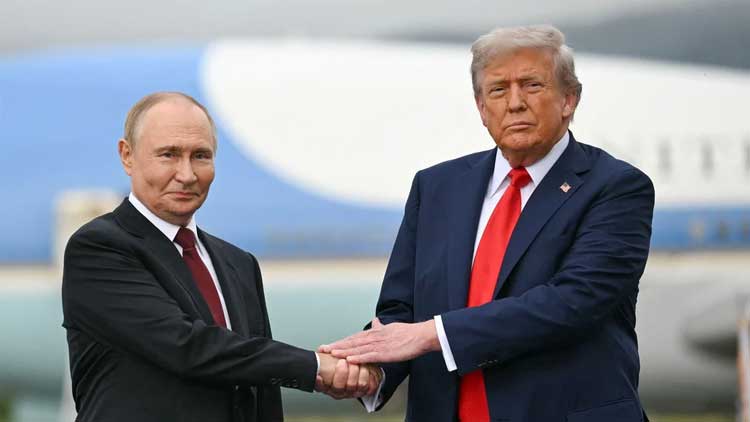
US President Donald Trump on Friday announced an energy supply agreement with Russia that could see Moscow deliver nearly 5 million tonnes of diesel fuel to global markets. The announcement followed a phone call with Russian President Vladimir Putin and came alongside a temporary US Treasury Department licence permitting purchases of Russian diesel until April 7, 2027.
The move comes as Trump seeks to bring down domestic energy prices ahead of the crucial US midterm elections, with inflation and affordability emerging as major concerns for voters and potential challenges for the Republican Party.
Trump Outlines Diesel Supply Plan After Putin Call
In a post on Truth Social, Trump said Russia had agreed to supply more than 300,000 tonnes of diesel fuel to the American and global markets immediately, followed by another 500,000 tonnes in November and 1 million tonnes thereafter.
He added that Russia would deliver a further 3 million tonnes within a short period, depending on the condition of its diesel refineries.
Trump asserted that the agreement would help bring down diesel prices for consumers in the US and across global markets.
Russia Sanctions And Proposed Tariffs Remain In Focus
The announcement has raised questions about how the agreement could affect the Lindsey O. Graham Sanctioning Russia and Iran Act of 2026, which Trump signed into law last month.
The legislation was designed to target Russia’s energy export revenues by authorising tariffs of up to 100% on goods from the five largest purchasers of Russian oil and gas during the 12 months before the law was signed.
India, China, Azerbaijan, Slovakia and Hungary were expected to be among the countries affected. The legislation requires the US president to impose tariffs on Russian energy purchasers within 30 days, with October 18 identified as the relevant deadline.
However, the law also gives Trump the authority to issue national-interest waivers exempting countries from the tariffs. The latest US-Russia announcement has therefore created uncertainty over how the measures will be implemented.
Meanwhile, Russian seaborne crude oil exports to India fell sharply in September, declining 59% from August volumes and 51% from September 2025, according to S&P Global Commodities at Sea data.
Energy Analysts Question Impact On Global Prices
The proposed agreement has drawn scepticism from energy market analysts, who have questioned whether the volumes involved would be sufficient to bring down global prices.
Oil markets researcher Rory Johnston criticised the move in a post on X, arguing that the volume pledged by Moscow was modest compared with the diesel it was already exporting despite damage to its refinery network.
The deal’s impact will depend on the actual volumes delivered, the condition of Russian refining infrastructure and how the temporary US authorisation affects trade flows.
Zelensky Warns Against Easing Russia Sanctions
Ukrainian President Volodymyr Zelensky also criticised the prospect of easing restrictions on Russian energy exports without a broader agreement to reduce hostilities.
In a post on X, Zelensky said any relaxation of sanctions without a clear and lasting de-escalation agreement would be a sign of weakness. He argued that such a move could enable Russia to prolong the war and inflict further damage.
Ukrainian strikes on Russian oil refineries in recent months have also contributed to tensions between Kyiv and Washington. The US has expressed concern that disruptions to Russian energy exports could push global prices higher, adding another complication to efforts to balance sanctions policy with energy affordability.
Comments are closed, but trackbacks and pingbacks are open.