
El Niño Threatens Coral Reefs Worldwide; India’s Lakshadweep Among Worst-Hit Regions

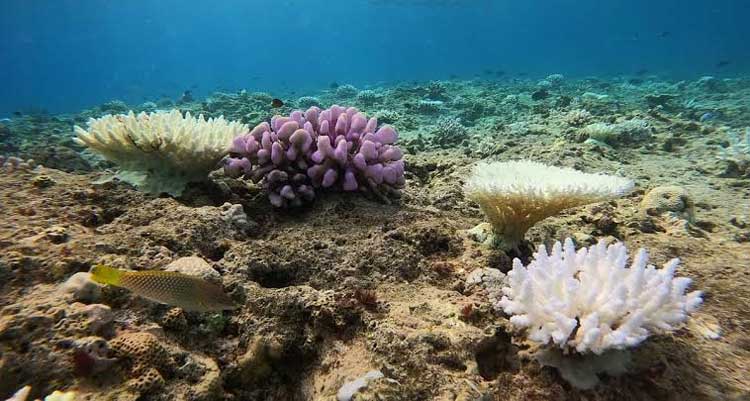
Rising ocean temperatures and intensifying El Niño conditions are threatening coral reefs worldwide, with scientists warning that increasingly frequent marine heatwaves are leaving reefs with less time to recover from mass bleaching events. Research indicates that India’s coral reef ecosystems, particularly those in Lakshadweep, have suffered significant damage, highlighting growing concerns about the future of marine biodiversity.
The United Nations Environment Programme (UNEP) has warned that coral reefs are experiencing new bleaching events before they can recover from previous damage. United Nations Secretary-General António Guterres has also cautioned that climate change is intensifying the impacts associated with El Niño.
According to the Intergovernmental Panel on Climate Change (IPCC), even if global warming is limited to 1.5°C above pre-industrial levels, an estimated 70-90% of tropical coral reefs could disappear.
Marine Heatwaves Leave Coral Reefs With Less Time To Recover
Coral reefs once had decades to recover from major bleaching events. However, rising ocean temperatures and recurring marine heatwaves are sharply reducing that recovery period.
Manuel González Rivero, a reef expert at the Australian Institute of Marine Science and lead author of a report by the Global Coral Reef Monitoring Network (GCRMN), said reefs now often have only five or six years to recover between major bleaching events.
He warned that reefs affected by unprecedented marine heatwaves in 2024 may have had little more than a year to begin recovering before facing renewed stress from the developing El Niño.
Repeated bleaching can weaken corals, increase mortality and undermine the ecological functions of reef systems. When heat stress persists or returns before recovery is complete, reefs may struggle to rebuild their coral cover.
El Niño Raises Concerns Over Global Coral Bleaching
The World Meteorological Organization (WMO) has reported that El Niño conditions have become established, with sustained increases in sea surface temperatures across the central and eastern equatorial Pacific.
Forecasts issued by WMO-designated centres indicate a near-100% probability of El Niño persisting through September-November 2026 and December 2026-February 2027, with the phenomenon expected to strengthen and peak towards the end of 2026.
El Niño is a natural climate pattern associated with changes in ocean temperatures and atmospheric circulation. However, against a backdrop of human-driven global warming, the additional heat can push already stressed coral reefs beyond their tolerance limits.
Derek Manzello, coordinator of the US National Oceanic and Atmospheric Administration’s (NOAA) Coral Reef Watch programme, told Mongabay-India that every strong El Niño since 1998 has been associated with a Global Coral Bleaching Event.
There have been four such global events, with each affecting more reefs than the previous one, according to Manzello.
An estimated 8% of the world’s corals died during the first Global Coral Bleaching Event in 1998. A further 14% loss was recorded between 2009 and 2018, he noted. During the third global event, approximately 15% of reefs experienced coral mortality exceeding 10%.
A global assessment of the fourth event is still underway, but global coral cover declined by an estimated 8.9% during 2023-2024.
India’s Coral Reefs Face Mounting Pressure
India’s coral reef ecosystems are also experiencing the effects of repeated marine heatwaves.
A 24-year study in Lakshadweep recorded a decline in coral cover from approximately 37% to below 20% since 1998, according to marine biologist Amruth P., an assistant professor in the Department of Life Sciences at CHRIST University, Bengaluru.
Researchers from the Mysuru-based Nature Conservation Foundation (NCF), working with international collaborators, found that coral reefs recover more effectively when they receive around six years without a bleaching event.
However, increasingly frequent marine heatwaves are making such extended recovery periods harder to achieve.
A nationwide collaborative study led by NCF researcher Wenzel Pinto found that between 2023 and 2025, more than 80% of tropical coral reefs experienced extreme heat stress amid the 2023 El Niño and the fourth global mass coral bleaching event.
The research covered five Indian reef regions, providing a broader picture of the pressures affecting the country’s coral ecosystems.
Lakshadweep Among India’s Worst-Hit Coral Reef Regions
Lakshadweep emerged as the worst-affected Indian region in the nationwide study, with up to 37% of coral cover reported as bleached or dead.
By comparison, the proportion was 11.5% in the Mahatma Gandhi Marine National Park in the Andaman Islands.
The impacts also varied among coral species and locations, indicating that local environmental conditions can influence the severity of bleaching and mortality.
In Palk Bay, for example, 13.6% of Acropora corals, a group of reef-building corals often considered vulnerable to heat stress, were bleached or dead. Among Porites corals, which generally have greater heat tolerance, the corresponding mortality reached 61.8%.
These differences suggest that coral vulnerability cannot always be predicted by species characteristics alone. Local ocean conditions, the intensity of heat stress and the duration of exposure can all influence outcomes.
Scientists say understanding these variations will be crucial for identifying reefs that may recover, adapt or face the risk of collapse as marine heatwaves intensify.
Lessons From The 1982-83 El Niño
The dangers posed by El Niño to coral reefs have been documented for decades.
One of the first large-scale mass coral bleaching events occurred in the eastern tropical Pacific during the 1982-83 El Niño, when unusually high ocean temperatures caused widespread coral mortality.
Manzello recalled that the event severely affected reefs in the Galapagos Islands, Panama, Colombia and Costa Rica.
Research by Manzello and colleagues found that coral mortality in parts of the southern Galapagos Islands reached approximately 95-99%, effectively eliminating coral reefs in some areas.
The eastern tropical Pacific is particularly vulnerable because its reefs exist near the environmental tolerance limits of corals. The region also experiences some of the most pronounced environmental changes associated with the El Niño-Southern Oscillation.
Although reefs in Pacific Panama showed increased resilience following the 1982-83 event, Manzello warned that these same reefs are now experiencing severe bleaching, leaving their future uncertain as another El Niño develops.
Why Coral Reef Recovery Is Critical
Coral reefs support marine biodiversity, provide habitat for numerous fish species and help sustain coastal communities through fisheries and tourism. They also contribute to coastal protection by reducing wave energy and helping limit erosion.
When coral cover declines, these ecological and economic benefits can be weakened. Repeated bleaching can also change the composition of reef communities, allowing some organisms to persist while others decline.
The Indian research suggests that recovery trajectories will differ from one reef system to another. Some may retain the capacity to recover, while others could experience prolonged degradation depending on local conditions and the frequency of heat stress.
Scientists are therefore emphasising the importance of long-term monitoring to identify which reefs recover, how quickly they do so and what environmental factors influence their resilience.
Scientists Call For Stronger Monitoring Of El Niño’s Impacts
As El Niño conditions develop, researchers are calling for closer monitoring of marine ecosystems across India.
Amruth said tracking the effects of the current climate phase would be essential to understanding how India’s coral reefs respond to renewed ocean warming.
Recently, 188 ecologists and conservationists across India signed a Call to Action seeking stronger research and long-term monitoring of the ecological impacts of the 2026-27 El Niño.
The effort aims to improve understanding of how the climate phenomenon could affect ecosystems and help scientists assess the risks to vulnerable habitats.
What Lies Ahead For The World’s Coral Reefs?
The combination of rising background ocean temperatures, recurrent marine heatwaves and intensifying El Niño conditions presents a major challenge for coral reef conservation.
The IPCC’s warning that 70-90% of tropical coral reefs could disappear even under a 1.5°C warming scenario highlights the scale of the threat.
While local conservation and monitoring can help identify vulnerable reefs and support recovery, scientists stress that limiting global warming remains essential to reducing the long-term risks.
For India, the experience of Lakshadweep and other reef regions underlines the need for sustained research and protection of marine ecosystems.
As the current El Niño phase unfolds, the coming months could provide important evidence of how much recovery capacity coral reefs retain—and whether the intervals between bleaching events will remain long enough for these ecosystems to survive.
Comments are closed, but trackbacks and pingbacks are open.