
‘Why Is Rahul Opposing?’ Centre Says Chidambaram, 4 Other Congress MPs Backed UPI Revenue Framework

The Centre has defended the new UPI Merchant Discount Rate (MDR) framework after Congress MP Rahul Gandhi demanded its withdrawal, pointing to recommendations of the Parliamentary Standing Committee on Finance for a tiered revenue mechanism for UPI.
A senior government functionary said the finance panel had recommended a tiered MDR and revenue framework for UPI and called for it to be notified and operationalised without delay.
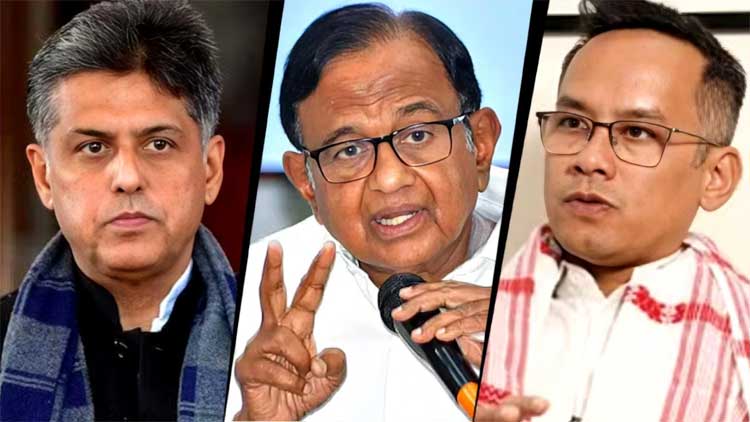
According to the government functionary, cited by PTI, five Congress MPs — former finance minister P Chidambaram, Manish Tewari, Gaurav Gogoi, Kishori Lal and K Gopinath — were present when the committee adopted its report on August 12. The functionary said no dissent was recorded in the published minutes.
The government questioned Rahul Gandhi’s opposition to the framework, arguing that members of his party had participated in the parliamentary panel’s deliberations.
Gandhi had criticised the Centre over the decision to introduce MDR on specified UPI merchant transactions above ₹2,000 and demanded that the government withdraw the measure.
What The Parliamentary Panel Recommended
The Parliamentary Standing Committee on Finance, chaired by BJP MP Bhartruhari Mahtab, had called for a viable revenue mechanism for UPI, according to the government’s account of the report.
The committee emphasised that a sustainable revenue model was necessary to ensure the long-term financial viability of the UPI ecosystem without placing a continuing burden on the government exchequer.
The report also referred to a ₹2,000 crore budgetary allocation for 2026-27 to offset ecosystem costs associated with the zero-MDR policy for RuPay and low-value UPI transactions.
The panel noted that UPI could eventually process up to 150 billion transactions a month and add 600 million users. It also flagged a gap between government incentives and the broader costs of maintaining the payment ecosystem.
Who Will Pay UPI MDR?
The government has clarified that the new framework does not impose charges on person-to-person UPI payments. P2P transactions will remain free regardless of the amount transferred.
Merchant payments of up to ₹2,000 will also remain free, while small merchants covered under the zero-MDR framework will continue to receive the benefit.
Under the framework notified on September 15, a 0.4% MDR applies to specified person-to-merchant transactions above ₹2,000, with the MDR capped at ₹300 for transactions of ₹75,000 and above. Certain essential sectors have a flat ₹5 MDR for qualifying transactions, while capital-market transactions attract a separate 0.02% rate subject to a ₹300 cap.
The Finance Ministry said approximately 96% of all P2M transactions would remain unaffected and stressed that MDR is not a tax or a government charge. Instead, it is distributed among participants in the payment ecosystem, including banks and payment service providers.
The government has also said customers will not be charged MDR directly and that merchants should not pass the cost on to consumers.
Comments are closed, but trackbacks and pingbacks are open.