
US Supreme Court Blocks Trump’s Mail-In Ballot Restrictions

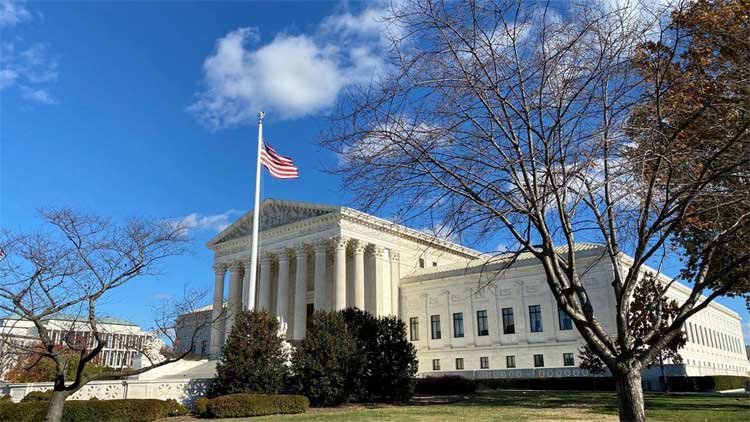
The US Supreme Court on Monday dealt a major setback to President Donald Trump’s efforts to restrict mail-in voting ahead of the November midterm elections, refusing to lift a lower-court order that had halted the controversial plan.
Only two of the court’s six conservative justices dissented from the decision.
Justice Brett Kavanaugh, who joined the majority, said Trump’s proposal could ultimately prove lawful but argued that election officials lacked enough time to implement it properly before the November 3 vote.
Trump signed an executive order in March seeking to tighten restrictions on mail-in voting, claiming without evidence that the system was vulnerable to fraud. The order was swiftly challenged in court by several Democratic-led states.
The states argued that the US Constitution gives state governments — rather than the federal government — broad authority over the administration of elections.
Under Trump’s order, states would be required to compile lists of eligible voters, with the US Postal Service (USPS) instructed to deliver mail-in ballots only to voters appearing on those lists.
Election officials in several states had warned that uncertainty surrounding the order was creating confusion and disruption just weeks before the election. Several states, including North Carolina, have already begun mailing ballots to voters.
A USPS whistleblower had separately warned that millions of Americans could fail to receive their ballots, alleging that systems being used by the postal service had been developed in a “sloppy and rushed manner.”
Trump has long criticised mail-in voting, despite using the method himself. He voted by mail in Florida’s Republican primary last month.
The president has repeatedly claimed, without evidence, that mail-in voting is especially vulnerable to fraud. He has also linked those claims to his false assertion that the 2020 presidential election was stolen from him by Democrat Joe Biden.
The ruling comes as Trump’s Republican Party faces the possibility of losing its narrow control of Congress in the November midterms, with the House considered particularly vulnerable.
Democrats have said that if they regain control, they would seek to block Trump’s legislative agenda and could also pursue impeachment proceedings against him for a third time.
Comments are closed, but trackbacks and pingbacks are open.