
Nepal floods expose gaps in China’s early-warning system, data sharing

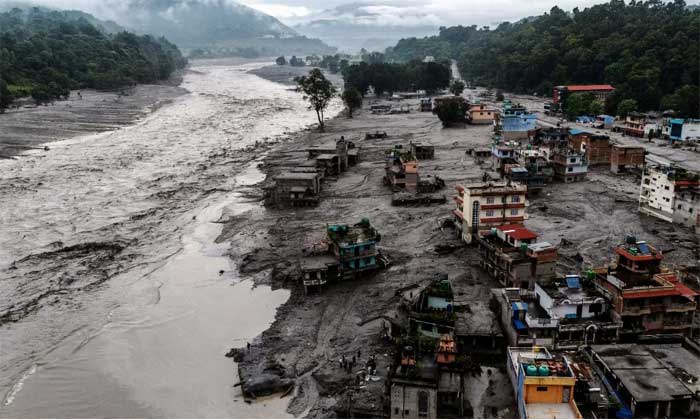
At least 800 people have been killed and more than 3,000 remain missing after devastating flash floods struck areas along the Nepal-China border last week, raising questions over gaps in cross-border disaster monitoring and information sharing.
As Nepal grapples with the aftermath, officials have pointed to shortcomings in China’s early-warning and data-sharing mechanisms, saying Kathmandu did not receive sufficient information about potentially dangerous developments in the Himalayan region ahead of the disaster.
Nepal had raised concerns earlier
The disaster came just a month after officials from Nepal and China met in Kathmandu to discuss cooperation on monitoring and responding to floods, extreme weather and glacier-related hazards.
Nepali officials told Reuters that despite the discussions, Nepal did not receive the kind of advance information it had sought from the Chinese side.
“What we actually wanted from them, and still want, is if there are early movements of glaciers and early movements around that area, we would want to know a bit early,” Sauhardra Joshi, a hydrologist with Nepal’s Flood Forecasting Division, told Reuters.
Dharam Raj Uprety, chief executive of Nepal’s National Disaster Risk Reduction and Management Authority, told Bloomberg that residents had less than five minutes of warning before the floods struck.
“We don’t have weather stations in high mountain areas because of the lack of trans-boundary data seeding mechanisms,” Uprety said, pointing to limited sharing of weather and climate data across national borders.
Nepal had also raised similar concerns with Chinese officials last year after a glacial lake outburst flood in China’s Tibet region killed nine people and left more than a dozen others missing across the two countries.
China rejects criticism
China, however, has disputed suggestions that it failed to provide timely information.
The Chinese embassy in Nepal said the two countries remained in close contact over the disaster and had made “substantial progress” at their May meeting on cross-border disaster information sharing.
“China has always made every effort, within the limits of existing technologies, to conduct monitoring, assessment and analysis and have shared important information with the Nepali side,” the embassy said in a statement on X.
It added that experts faced significant challenges while monitoring the Himalayan region, but maintained that relevant data had been “shared timely”.
Following the disaster, Chinese President Xi Jinping called for accelerated surveys of glaciers and glacial lakes across the Tibetan Plateau, according to state-run Xinhua News Agency.
China’s Communist Party has also called for stronger monitoring and early-warning systems to improve the identification of interconnected disaster risks.
The August 26 flash floods were triggered by a glacial collapse that sent ice, mud, rocks and torrents of water through a Himalayan valley, destroying settlements along its path. By Monday, at least 800 people had reportedly died in Nepal and China’s Tibet region, while more than 3,000 remained missing.
Comments are closed.