
India sends 62 tonnes of aid to Nepal, reinforces ‘first responder’ role

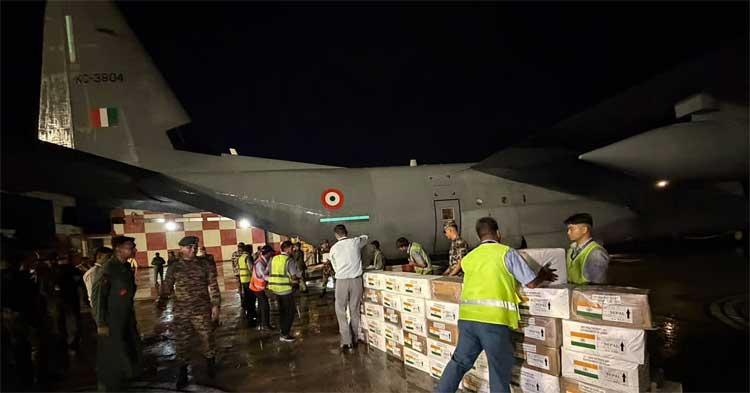
India has rushed 62 tonnes of emergency relief supplies to Nepal since deadly flash floods struck on Wednesday, becoming the first major country to physically deliver humanitarian aid to the disaster-hit Himalayan nation.
India’s rapid response has reinforced its emerging role as a “first responder” in major disasters, following similar relief operations in countries including Türkiye, Syria, Myanmar, Sri Lanka and Venezuela.
By Friday evening, India had delivered the aid in three airlifts. The first Indian Air Force C-130J aircraft carried 10 tonnes of temporary shelters, blankets, hygiene kits, solar lamps and medicines. A second C-17 aircraft transported 37.5 tonnes, including tents, blankets, hygiene kits, solar lamps, dewatering pumps, kitchen sets, generators, medicines and food. A third flight carrying another 10 tonnes of humanitarian supplies also departed for Kathmandu on Friday.
Prime Minister Narendra Modi spoke to Nepalese Prime Minister Balendra Shah within hours of the disaster, expressed condolences and assured him of India’s full support. Indian teams are also coordinating with Nepal on rescue and relief operations.
Several countries and international organisations have pledged financial assistance, emergency supplies and specialist support.
Nepal has said it can mobilise up to $229 million for disaster relief, including resources from government relief funds and up to $164 million in emergency assistance that the World Bank has indicated could be made available.
China has committed emergency supplies and financial assistance, although arrangements for transferring the funds and delivering physical aid were still being finalised. Nepal has generally declined offers of foreign search-and-rescue teams, saying its own security agencies can manage rescue operations.
The UAE has allocated $10 million for urgent humanitarian assistance, while the UK has pledged £5 million ($6.8 million) and deployed a Rapid Deployment Team to provide consular support.
Australia has announced a $5 million assistance package, with funds going to the World Food Programme, Australian NGOs and locally led recovery efforts. It is also deploying humanitarian specialists and additional consular personnel.
South Korea has pledged $1 million through international organisations and sent a rapid response team to assist in efforts to locate nine missing South Korean nationals. Sri Lanka has committed another $1 million.
The US State Department has announced $500,000 in immediate assistance for emergency shelter, clean water, hygiene and relief supplies, while also deploying a disaster-response adviser.
The World Bank has indicated it could provide up to $163.55 million in emergency assistance, while the UN Central Emergency Response Fund has released $2.5 million.
The International Federation of Red Cross and Red Crescent Societies has released nearly CHF 1 million for the Nepal Red Cross Society and launched a CHF 25 million emergency appeal. Germany’s Welthungerhilfe has committed €100,000 from its emergency relief fund.
The World Health Organization has dispatched emergency medical supplies, including medicines, health kits and multipurpose tents, and released $150,000 through its regional health emergency fund. Médecins Sans Frontières has also sent an emergency team to assess urgent medical and humanitarian needs.
The disaster in the Nepal-China border region on August 26 is believed to have been triggered by a glacial collapse, possibly involving an avalanche of ice and rocks, unleashing a torrent of water, mud and debris through Himalayan river systems. The flooding destroyed villages, roads, bridges and other infrastructure, although officials and scientists are still assessing the exact sequence of events.
As of Saturday morning, at least 579 people had died in Nepal and seven in Tibet. More than 1,900 people, including at least 320 Indians and 100 people of Indian origin, remained missing in Nepal, while 554 people were still unaccounted for in Tibet.
Comments are closed.