
Nepal flash floods : 162 dead, 133 Indians missing; US agency blames glacial collapse

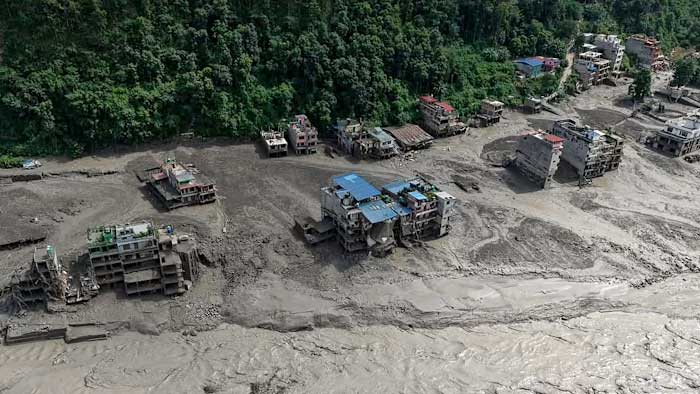
At least 162 people have been killed and hundreds, including 133 Indians, remain missing after a devastating flash flood swept through communities along Nepal’s Bhote Koshi River near the Tibet border, disrupting travel in several areas.
Rescue teams continued their search on Thursday, combing through thick mud and sludge after floodwaters and landslides buried the lower floors of buildings in the affected areas.
The missing foreign nationals include 133 Indians, as well as citizens of Australia, Britain, Malaysia, the Netherlands, Portugal, South Africa, South Korea and the United States.
India has sent 10 tonnes of Humanitarian Assistance and Disaster Relief (HADR) supplies, including essential medicines, to Nepal, External Affairs Minister S Jaishankar said.
The US government also expressed condolences over the disaster and announced $500,000 in emergency assistance, according to the State Department.
What caused the Nepal flash floods?
The US Geological Survey said a glacial collapse, rather than an earthquake as initially suspected, triggered seismic activity and a debris flow that caused “catastrophic” downstream impacts in Nepal and Tibet.
Early reports had suggested that an earthquake may have triggered an avalanche and subsequent flooding. Nepal Foreign Minister Shisir Khanal had also cited the possibility, according to local media reports.
Bihar, UP on high alert
Bihar and Uttar Pradesh were placed on high alert after the floods in Nepal caused damage across several districts in the Gandak river basin.
Authorities began emergency preparations, including evacuating people from vulnerable areas and deploying rescue and relief teams.
Union Home Minister Amit Shah spoke with Bihar Chief Minister Samrat Choudhary and Uttar Pradesh Chief Minister Yogi Adityanath about the situation and the possibility of rising water levels in rivers flowing into the two states.
“The National Disaster Response Force (NDRF) has been placed on high alert along with the local administrations and relief-rescue teams in the border areas where its impact may be felt,” Shah said.
Comments are closed.