
Canada to announce retaliatory tariffs after Trump tells leaders to ‘fall in line’

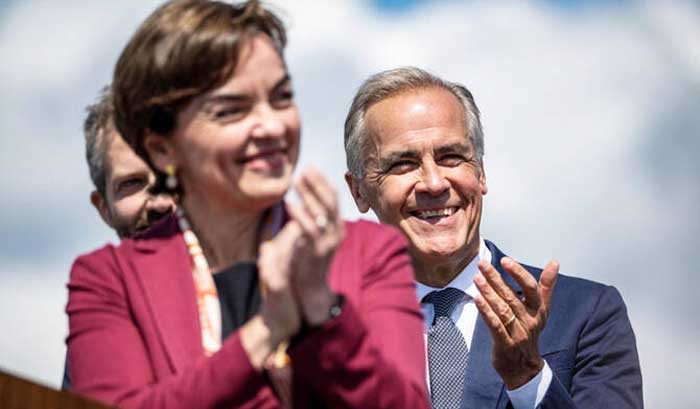
Canada is set to announce retaliatory tariffs against the United States on Tuesday after trade tensions escalated sharply, with President Donald Trump threatening additional tariffs and Prime Minister Mark Carney accusing Washington of seeking to undermine Canadian industries.
Finance Minister François-Philippe Champagne and three other Cabinet ministers are scheduled to unveil Canada’s response. Carney said Ottawa may move away from matching US tariffs dollar for dollar and instead impose targeted measures designed to protect Canadian workers and businesses.
Trump on Monday threatened new 50% tariffs on Canadian vehicles, auto parts and steel, while warning Canadian leaders to “fall in line” or face consequences he said would be “far WORSE” than existing tariffs.
Carney said US trade demands showed Washington wanted to “destroy our major industries,” including the auto, steel and aluminum sectors. He rejected what he described as an attitude that Canada should be treated as a “subsidiary” of the United States.
The latest escalation follows Carney’s decision to end trade negotiations with the Trump administration late Friday, after which Trump threatened 50% tariffs on about $20 billion worth of Canadian goods.
The United States and Canada have deeply integrated supply chains across automobiles, energy, agriculture and manufacturing, raising concerns that a prolonged trade war could hurt businesses and workers on both sides of the border.
Trump attacks Canadian leaders
Trump has intensified his criticism of Canadian leaders, accusing Canada of “ripping off” the United States and complaining about its tariffs on American agricultural products.
Ontario Premier Doug Ford, meanwhile, said Canadians were prepared to endure economic pain rather than give in to US pressure. Trump responded by personally attacking Ford and again referring to Carney as “Governor Carney.”
Ford dismissed the remarks and said Canada was prepared for an economic confrontation. Despite political differences between Ford’s Progressive Conservative government and Carney’s Liberal government, the dispute has generated broad political unity in Canada.
Canada threatens wider retaliation
Ford said “everything is on the table” if the dispute worsens, including restrictions on electricity exports and critical minerals to the United States.
Ontario previously imposed a 25% surcharge on electricity exported to Michigan, Minnesota and New York during an earlier phase of the trade dispute. Trump responded by threatening to double tariffs on Canadian steel and aluminum before both sides stepped back.
Ford also suggested Canada could target other US-dependent sectors, including oil and potash, if Washington continues escalating tariffs.
Auto sector at centre of dispute
The automotive industry has emerged as a key battleground. Ontario is the centre of Canada’s vehicle manufacturing sector, with plants and suppliers closely integrated with factories in Michigan and other US states.
Ford, General Motors and Stellantis operate major assembly plants in Ontario, while the wider supply chain supports tens of thousands of jobs. Trump’s proposed 50% tariffs on Canadian vehicles and parts could therefore have significant consequences for the industry on both sides of the border.
Ford accused Trump of seeking to shift Canadian production to the United States rather than simply negotiate a better trade agreement.
The dispute has also raised concerns over Canadian sovereignty after Carney said Washington had sought language that could have restricted Canada’s ability to negotiate trade agreements with other countries without US approval.
Carney said the negotiations had exposed broader differences over Canadian language and cultural protections, which Ottawa considers fundamental rights but Washington views as trade barriers.
Comments are closed.