
From Arab Spring to Jantar Mantar: Tracing the global playbook of political protests

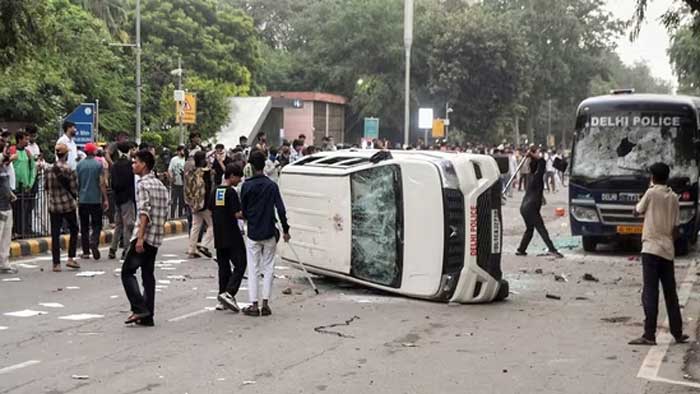
Between 2024 and 2026, popular uprisings removed or destabilised elected governments across three continents.
Bangladesh, Kenya, and Serbia in 2024 were followed by Indonesia, Madagascar, Mexico, Morocco, Nepal, Peru, the Philippines, and Timor-Leste in 2025; in two of those cases, governments fell outright. Such a wave reached New Delhi in July 2026 with the resignation of a cabinet minister after seven weeks of agitation led by the Cockroach Janta Party (CJP).
The dominant explanation, reproduced across much Western commentary, is generational: a cohort facing unemployment, inequality, and elite corruption mobilising through platforms it understands more fluently than its rulers. That account is accurate as far as it extends, but incomplete in a manner that matters for policy.
Some grievances are domestic, but the mechanism that converts grievance into governmental collapse is not. Across two decades, these movements have displayed a consistent sequence of events, vocabulary, funding architecture, social media mobilisation, and diplomatic accompaniment that is increasingly difficult to attribute entirely to coincidence.
A recurring feature of such movements is the absence of established political parties during their initial phase. Instead, politically unaffiliated individuals, often young, technologically proficient, and already influential among digitally connected audiences, emerge rapidly as the public faces of the agitation. Prominent and symbolically significant public spaces are deliberately selected to attract national headlines and international attention. The movements generally begin with non-violent demands, allowing them to acquire legitimacy and broader support, before gradually shifting towards confrontation, provocation, and direct challenges to state institutions. Their apparently decentralised and non-hierarchical character makes formal leadership difficult to identify and accountability difficult to establish. Yet beneath this outwardly unstructured appearance, mobilisation, messaging, logistics, media engagement, and digital amplification often display considerable coordination.
The template was assembled in Eastern Europe in the early 2000s. Some media reports claimed in November 2004 that the campaign of Ukraine’s Pora youth movement was an American creation, funded and organised through United States consultancies, pollsters, diplomats, and the two major American party institutes. The same package was alleged to have been deployed in Belgrade in 2000 at a reported cost of $41 million and in Ukraine at roughly $14 million. Freedom House and the National Democratic Institute financed the country’s largest election-monitoring effort and organised the exit polls whose early release shaped the informational agenda before any official count existed. Richard Miles, the American ambassador in Belgrade during the removal of Slobodan Milošević, occupied the same post in Tbilisi during Georgia’s Rose Revolution three years later.
By 2011, the method had migrated to countries in the Middle East. Groups directly involved in the Arab uprisings, including Egypt’s April 6 Youth Movement and the Bahrain Center for Human Rights, had received training and financing from the International Republican Institute, the National Democratic Institute, and Freedom House, according to interviews and American diplomatic cables released through WikiLeaks. The report recorded that the uprisings were homegrown and that Washington had supported the development of skills and networks rather than initiating protest. That qualification describes the actual function of the apparatus rather than diminishing it.
South Asia has since furnished three test cases within four years. In Bangladesh, a quota reform agitation that the Supreme Court had substantially conceded did not subside but intensified, and Prime Minister Sheikh Hasina fled to exile on August 5, 2024. She alleged that Western involvement had removed her from power through a civilian movement, although the claim was not confirmed by either her party or her family. While the allegation remains unverified, the surrounding institutional architecture is documented. One think tank primer traced two decades of United States Agency for International Development (USAID) and National Endowment for Democracy (NED) programming, routed through the International Republican Institute (IRI) and National Democratic Institute (NED), aimed at shaping Bangladesh’s political environment. It also claimed that a $29 million USAID contract intended to strengthen the country’s political landscape was subsequently criticised by the American president himself.
Sri Lanka in 2022 supplied the logistical corollary. Former President Gotabaya Rajapaksa’s memoir records that tents, mobile toilets, and an apparently inexhaustible supply of food and drink arrived at the Galle Face encampment, and that two European ambassadors telephoned him to ensure that the protesters were not cleared. The account is self-serving, and his economic mismanagement was the proximate cause of the crisis. Yet that does not dispose of the narrower question of who financed and sustained an extended urban occupation in a country that had run out of foreign exchange.
Nepal in September 2025 compressed the model to its practical limit. A ban on 26 social media platforms produced demonstrations on September 8. Nineteen protesters were killed that day, Prime Minister KP Sharma Oli resigned the following morning, and the state apparatus collapsed within 48 hours. A Discord chat server with more than 100,000 members then conducted a poll involving five candidates for interim prime minister, after which Sushila Karki was appointed on September 12. The succession of a sovereign government was therefore mediated through a foreign-owned platform accountable to no Nepali institution. The Rastriya Swatantra Party, identified by the army chief as a stakeholder in the movement, subsequently won the March 2026 election outright.
The recent Delhi agitation reproduces elements of this architecture with unusual clarity. The Cockroach Janta Party (CJP) was founded on May 16 by Abhijeet Dipke, a 30-year-old public relations postgraduate at Boston University who had previously spent three years on the Aam Aadmi Party’s social media team, including its diaspora outreach desk. The organisation was created within 24 hours of the Chief Justice’s remark comparing unemployed youth to “cockroaches.”
Dipke initiated and initially directed the movement from Boston. His early appearances included interviews with foreign media outlets, which gave the agitation an international profile and presented it as a matter of concern extending beyond India’s domestic political sphere. This considerably increased its visibility and appeal, particularly among sections of the diaspora and digitally connected youth. Although the movement initially emphasised non-violence, its mobilisation subsequently shifted towards confrontation and provocation, eventually challenging the authority of the state and its institutional machinery.
The party registered a hundred thousand members in 72 hours, crossed 25 million Instagram followers, more than double the ruling party’s, and resonated early among the Indian diaspora. Its founder directed a so-called national movement from Massachusetts before arriving for the first Jantar Mantar demonstration on June 6, after which left parties’ student organizations attached themselves to a platform they had not even built. Sonam Wangchuk’s 26-day hunger strike then supplied the indispensable sacrificial figure, converting a legitimate examination paper leak grievance into a full-blown government-toppling movement. As a result, several reports started to emerge in mainstream and social media claiming that funds and supplies for the CJP protest were arranged from abroad, an allegation that is unproven, but raises suspicions based on a worldwide pattern that has emerged in the last two decades.
As the agitation expanded, claims began circulating in mainstream and social media that money, logistical support, and supplies for the Cockroach Janta Party protests had been arranged from abroad. These allegations remain unproven and should not be treated as established fact. Nevertheless, they generated suspicion because the movement appeared to follow features observed in comparable mobilisations over the preceding two decades: offshore leadership and amplification, rapid digital expansion, diaspora participation, foreign media engagement, decentralised organisational structures, sustained protest logistics, and a gradual transition from issue-based demands to confrontation with the state.
The Indian opposition also latched on to the CJP protest with an objective to embarrass the government and create negative sentiments against the ruling party even among its own followers. An established template of portraying the law and enforcement agencies as oppressors was used to attract attention of international Left-Liberal media who is opposed to rise of India under the current political leadership. Given the proximity of the protest to Indian Parliament, currently in session, the protestors were virtually 500 meters from the hallowed premises when the agencies used cane charge and tear gas to contain the unrest. Clearly the protestors were more organized as the law enforcement and security agencies did not anticipate the level of mobilization, resulting in chaos in the heart of the Capital. The success of Parliament march spawned similar protests in some other state capitals, forcing the government to cut their losses and concede to the main demand.
The conclusion is not that these grievances were fabricated. The NEET leak occurred, Nepali corruption was systemic, and Sri Lanka’s default was real. What differs is the conversion mechanism. Every state generates grievance; what determines whether grievance becomes governmental failure is access to offshore organisational infrastructure, diaspora amplification, platform architecture beyond domestic regulatory reach, and an international press corps carrying settled preferences about which governments merit pressure. That apparatus exists, is distributed unevenly among states, and its effects are not neutral.
Treating each episode as entirely spontaneous guarantees repeated surprise, while treating every agitation as foreign-directed guarantees precisely the escalation that such a template requires in order to succeed. The record from Kyiv in 2004 to Jantar Mantar in 2026 suggests that the apparatus does not manufacture anger. It shortens the interval between anger and institutional collapse.
Comments are closed.