
Lindsey Graham remembered as champion of a fading US foreign policy vision

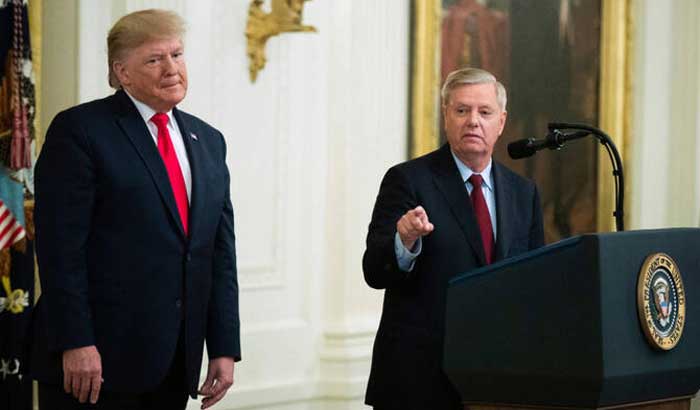
Veteran US Senator Lindsey Graham, who died unexpectedly at the age of 71 on Saturday after suffering an aortic tear, leaves behind a complex foreign policy legacy marked by unwavering support for military intervention, NATO, Israel and Ukraine, even as the Republican Party shifted toward President Donald Trump’s “America First” agenda.
Representing South Carolina in Congress for more than three decades, Graham became one of Washington’s strongest advocates of an interventionist US foreign policy. Although he initially opposed Trump, he later emerged as one of the president’s closest allies, arguing that working with Trump was the most effective way to influence Republican policy.
Despite Trump’s skepticism toward traditional alliances, Graham consistently backed Ukraine in its war against Russia, championed NATO, and pushed for stronger sanctions on Moscow. Ukrainian President Volodymyr Zelensky described him as “a true defender of freedom,” while NATO Secretary-General Mark Rutte praised his steadfast commitment to the alliance.
Graham also remained one of the Senate’s most vocal supporters of Israel and took a hardline stance against Iran. He repeatedly called for tougher action against Tehran, endorsed US strikes on Iranian nuclear facilities, and even suggested military action targeting key Iranian infrastructure. His positions earned praise from Israeli leaders, including Prime Minister Benjamin Netanyahu, but drew sharp criticism across the Middle East and from Iran, where state television reacted to his death with open hostility.
Supporters viewed Graham as one of the last influential Republicans committed to an active US role in global security, while critics argued that his close alignment with Trump compromised his earlier principles. Former diplomats and policy experts said his record would be remembered as both influential and deeply divisive.
His death has prompted tributes from leaders across Europe and Ukraine, reflecting his long-standing advocacy for transatlantic cooperation, while also reigniting debate over the future direction of US foreign policy within the Republican Party.
Comments are closed.