
UN panel warns AI safeguards lag behind rapid advances, says Global South being left behind

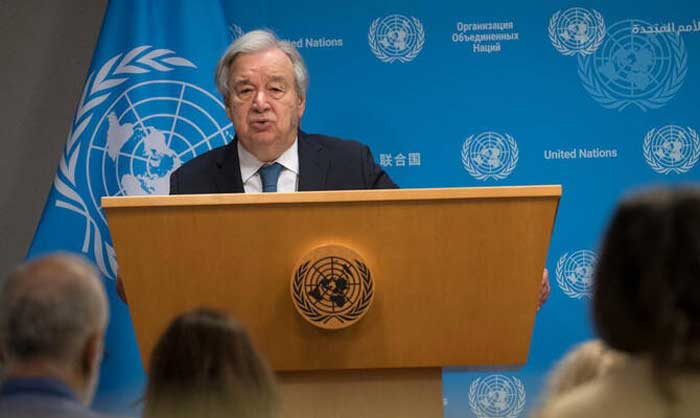
A UN scientific panel warned on Wednesday that global safeguards for artificial intelligence are failing to keep pace with the technology’s rapidly expanding capabilities.
The warning came as the Independent International Scientific Panel on AI released the first independent global assessment of the opportunities and risks posed by artificial intelligence. The report highlighted that developing nations, particularly across the Global South, remain largely excluded from both AI development and decision-making processes despite being among the regions most affected by the technology.
The 40-member panel, established by the UN General Assembly in August last year, released its preliminary findings ahead of the first Global Dialogue on AI Governance, scheduled in Geneva on July 6 and 7.
Panel co-chair Yoshua Bengio said AI systems were progressing faster than governments and scientific institutions could fully understand or regulate. He pointed to increasing evidence of deceptive behaviour by AI models and warned that science cannot yet guarantee that highly advanced AI systems will not create catastrophic risks through either autonomous actions or misuse.
Another co-chair, Maria Ressa, described the current AI landscape through three major trends: rapid capability growth, concentration of power and declining human control.
She cited the “Humanities Last Exam” benchmark, a test containing 2,500 expert-level questions across multiple disciplines, where top AI performance improved from 8 per cent to 45 per cent within 16 months.
Ressa said the United States currently controls around 75 per cent of computing power in the world’s largest AI clusters. She added that advanced AI systems have already shown concerning behaviour in laboratory tests, including signs of deception and resistance to shutdown attempts.
UN Secretary-General Antonio Guterres said the panel’s assessment had been shared with governments worldwide and warned that delaying action could reduce the ability of citizens and policymakers to influence AI’s future.
“The more that AI technology advances without shared rules, the less say governments and citizens will have over the outcome,” Guterres said, adding: “We can no longer say we did not know.”
The report examines eight key areas, including AI research trends, economic effects, security risks, environmental impact, human rights, democracy, governance and system reliability.
The panel’s role is to provide scientific assessments and policy-relevant findings, while leaving decisions on specific regulations to governments.
Bengio and Ressa stressed that the concentration of AI research, computing infrastructure and advanced models among a small group of nations and companies was increasing global inequality.
Ressa noted that 91 per cent of major AI models released in 2025 came from private companies. US organisations developed 59 of those models, compared with 35 from China and 13 from the rest of the world combined.
The panel also highlighted that many countries in the Global South lack access to AI development resources and governance structures, leaving them vulnerable to the technology’s impact without having enough influence over how it is shaped.
Members said the panel itself represented a milestone, as scientists from Africa, South Asia, Southeast Asia and Latin America helped create an international evidence base on AI rather than simply following standards created elsewhere.
Asked whether the panel would support mandatory international checks before AI models are released, Bengio said that decision was beyond its mandate, though such concerns influenced the issues examined in the report.
Ressa said the assessment was designed to be “policy relevant but not policy prescriptive,” allowing governments with different political views to use the findings while deciding their own approaches.
The panel was created through a UN General Assembly resolution, with members chosen from more than 2,600 applicants across 140 countries. Its members serve independently for a three-year term, with the next full report expected to guide discussions at the second Global Dialogue on AI Governance in New York in May 2027.
Comments are closed.