
Thousands left desperate for food and shelter after Venezuela earthquakes kill nearly 2,000

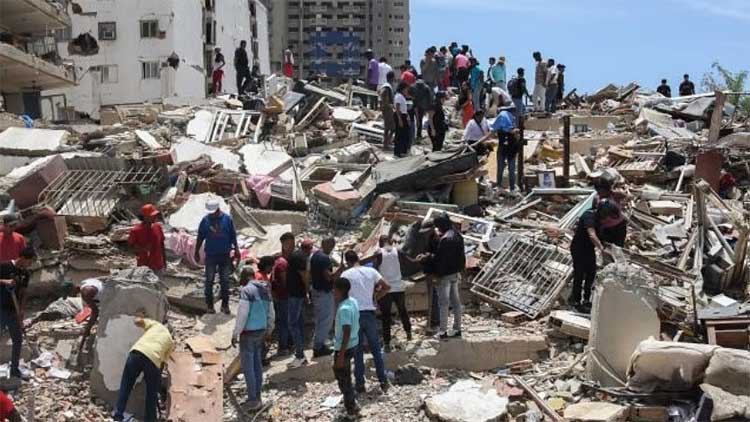
Tens of thousands of Venezuelans searched for food, shelter and missing relatives on Tuesday after two powerful earthquakes killed nearly 2,000 people, while rescuers delivered a rare moment of hope by pulling a 3-year-old boy alive from the rubble nearly a week after the disaster.
The 7.2 and 7.5 magnitude earthquakes last week caused widespread destruction across Venezuela, collapsing residential buildings, disrupting essential services and triggering one of the deadliest earthquake disasters in Latin America’s recent history.
Rescue efforts were losing hope after the crucial 72-hour survival window passed, but a Jordanian civil defence team rescued the child from the remains of a house in Caracas six days after the tremors. Footage shared online showed rescue workers celebrating as they found the boy alive, with officials saying his condition was stable.
Despite the rescue, the humanitarian situation continued to worsen, especially in the coastal city of La Guaira, the worst-hit area near Caracas. The UN refugee agency said food shortages were widespread, basic services had collapsed and communication networks were severely damaged.
“People almost kill each other for food… it’s like a cockfight,” said Daniela Armas, an 18-year-old vendor in La Guaira who was injured during the earthquake.
Venezuela’s National Assembly President Jorge Rodriguez said the death toll had climbed to 1,943, with more than 10,500 people injured. Around 6,500 people had been rescued from collapsed structures in La Guaira, though authorities estimated the total number of survivors pulled from the rubble could be closer to 20,000.
Public anger has grown over the government’s response, with many residents criticising the slow relief efforts in a country already facing years of economic hardship, weakened infrastructure and strained healthcare services.
The UN said it needs around $14.85 million to provide emergency aid and temporary shelter for 30,000 people over the next six months.
Preliminary satellite analysis by NASA suggested that nearly 58,870 buildings may have been damaged or destroyed.
The World Health Organization warned that Venezuela’s health system was under “extreme pressure” and that low vaccination rates before the earthquake had increased the risk of outbreaks of diseases such as measles and diphtheria.
Desperate searches continue
As international rescue teams from the United States, Mexico and other countries arrived with trained dogs and heavy equipment, many Venezuelans continued searching through debris with their bare hands for missing family members.
“It’s harder not knowing because you ask yourself, ‘What do I do? Where do I look for her?’” said Rosanna Luna, who was searching for her sister Soraida in the ruins of their home.
In La Guaira, temporary morgues were set up as families waited for information about missing relatives. Survivors described desperate attempts to recover loved ones trapped beneath collapsed buildings.
Darvin Silva, 37, said he fought through the wreckage to recover his mother, who died after being trapped under a fallen pillar.
“The effort it took me to get her out with my bare hands, with sledgehammers and pickaxes… you can’t even imagine,” he said.
The UN said around 50,000 people remained missing.
Massive international response
The disaster is expected to affect nearly seven million people and has caused an estimated $6.7 billion in economic losses, equivalent to around six percent of Venezuela’s GDP, according to UN estimates.
Twenty-seven countries have sent nearly 40 search-and-rescue teams, including more than 2,000 personnel and over 160 rescue dogs.
The UN has also prepared 10,000 body bags, though officials hope the final death toll will remain below current estimates.
In Caracas, the city’s only public cemetery has been operating its cremation facilities at full capacity, while families in La Guaira continue waiting for the remains of relatives believed to have died.
“My family is there — my sister and her children, as well as my brother’s children,” said Wilker Molalla while waiting to identify bodies.
“There were 11 people in my household. Only two of us survived because we were at work.”
Comments are closed.