
UN nuclear talks end without agreement as non-proliferation review collapses again

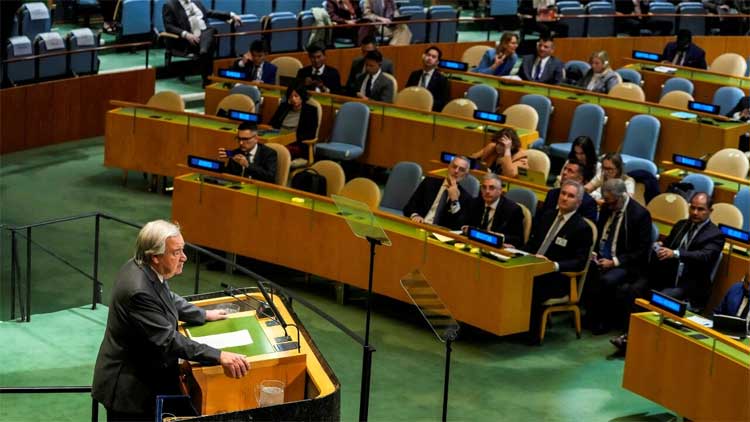
Four weeks of negotiations at the United Nations aimed at reaffirming global commitments to nuclear non-proliferation and disarmament ended without agreement on Friday, marking the third consecutive failure of a review process for the global nuclear framework.
Do Hung Viet, who chaired the conference, said negotiators had failed to reach consensus on a final outcome document despite extensive efforts.
“Despite our best efforts… it is my understanding that the conference is not in a position to achieve agreement on its substantive work,” he said, adding that he would not put the text forward for adoption.
The talks centered on reviewing the Treaty on the Non‑Proliferation of Nuclear Weapons (NPT), widely regarded as the cornerstone of international nuclear arms control. Previous review conferences in 2015 and 2022 also ended without consensus, raising concerns about the treaty’s authority and effectiveness.
Negotiators entered the discussions amid fears of a renewed global arms race and worked through a repeatedly revised and softened draft text. But even the diluted version ultimately failed to secure support.
Analysts warned that repeated failures could weaken the treaty’s credibility. Richard Gowan said the draft had become increasingly detached from current geopolitical realities and proliferation threats, including concerns surrounding Iran and North Korea.
The final draft reportedly softened or removed several contentious issues. Language describing Iran’s alleged “non-compliance” with nuclear obligations was removed, leaving only a broader statement that Iran should “never” develop nuclear weapons. References expressing concern about North Korea’s nuclear programme and calls for denuclearisation of the Korean Peninsula were also dropped.
Similarly, a direct appeal to United States and Russia to negotiate a successor to the expired New START treaty was omitted from the text.
Still, the draft retained references to risks including renewed nuclear testing by Russia, China and the United States, the expansion of nuclear arsenals and threats to nuclear infrastructure.
Seth Shelden of International Campaign to Abolish Nuclear Weapons (ICAN) argued that while many countries continued to pursue disarmament in good faith, nuclear-armed states and some allies were undermining those efforts through arsenal expansion and policies encouraging proliferation.
According to the Stockholm International Peace Research Institute (SIPRI), the world’s nine nuclear powers — Russia, the United States, China, France, the United Kingdom, India, Pakistan, Israel and North Korea — held 12,241 nuclear warheads as of January 2025, with around 90% controlled by Washington and Moscow.
The NPT, which came into force in 1970 and has been adopted by nearly every country, seeks to prevent the spread of nuclear weapons, advance disarmament and support peaceful nuclear cooperation. Major non-signatories include India, Pakistan and Israel.
Comments are closed.