
Vaibhav Sooryavanshi’s ₹2.11 crore impact night ends in heartbreak after costly ₹22 lakh fielding lapse

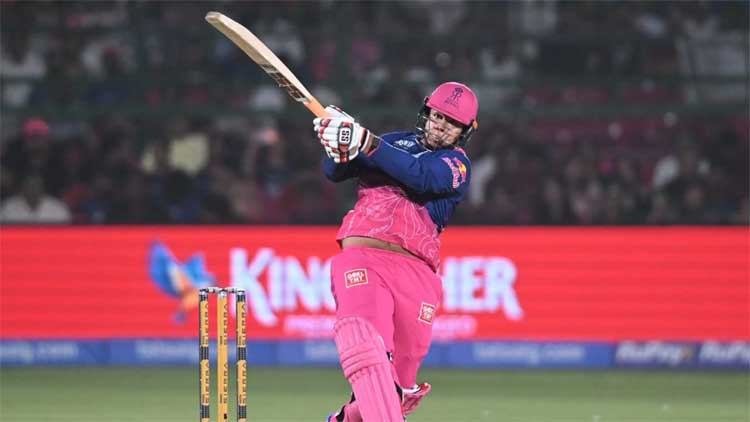
Rajasthan Royals uncovered another explosive innings from 15-year-old Vaibhav Sooryavanshi, but still ended the night with defeat after failing to capitalise on the platform he created against Delhi Capitals.
Sooryavanshi’s 46 off 21 balls powered Rajasthan to a blistering start, giving them the kind of powerplay dominance that usually shapes winning T20 totals. By the time he departed in the eighth over, RR were cruising at 89/2 after racing to 75/1 in the powerplay, with the teenager contributing 42 runs off just 16 deliveries during the opening assault.
Using the match-impact valuation model, his innings generated an estimated 60.30 batting impact points — translating to roughly ₹2.11 crore in batting value against a per-match cost of around ₹7.86 lakh based on his ₹1.10 crore contract. His innings alone delivered nearly 27 times his game cost in value terms.
The knock featured five boundaries and three sixes, giving RR early momentum and forcing Delhi’s bowlers onto the defensive. At that stage, Rajasthan appeared set for a total well beyond the merely competitive range.
Instead, the innings lost momentum after Sooryavanshi’s dismissal. Rajasthan’s middle order failed to convert the flying start into complete scoreboard control, eventually finishing on 193/5 — a target Delhi were able to chase with calculated aggression.
Sooryavanshi’s night was not flawless. A misfield in the 14th over of Delhi’s chase turned what should have been a single into four runs, reducing the pressure on the chasing side. According to the valuation model, the error cost him around 6.42 impact points, or roughly ₹22.45 lakh in match value.
Even after that deduction, his estimated net contribution remained around ₹1.89 crore, making him one of Rajasthan’s biggest value generators despite the defeat.
The broader issue, however, lay with Rajasthan’s inability to maximise the advantage he created. The franchise received a premium opening burst from a low-cost teenage player but failed to build enough on the foundation, allowing Delhi back into the contest.
The match ultimately highlighted both Sooryavanshi’s enormous upside and Rajasthan’s larger problem: finding a match-winning launch at the top but failing to convert it into complete control.
Comments are closed.