
Congo reports 17th Ebola outbreak: 65 deaths, 246 suspected cases so far | What we know

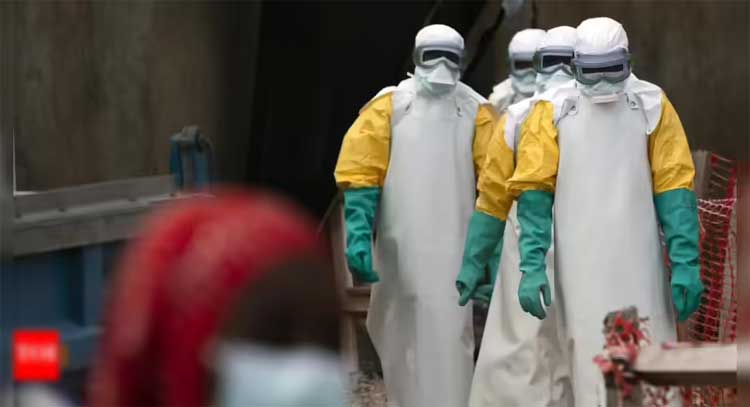
A fresh Ebola outbreak has been reported in eastern Democratic Republic of Congo, with authorities confirming 65 deaths so far in Ituri province as health officials race to contain the spread of the deadly virus.
Congo’s health minister Samuel Roger Kamba Mulamba said late Friday that laboratory tests had confirmed eight cases of the Bundibugyo strain of Ebola in the health zones of Rwampara, Mongwalu and Bunia.
What is Ebola?
Ebola virus disease is a severe and often fatal illness that is endemic to parts of central Africa, particularly Congo’s tropical forest regions. The virus spreads through direct contact with bodily fluids of infected individuals, contaminated objects or the bodies of people who have died from the disease.
Health authorities said 246 suspected cases have been identified so far. Investigators believe the suspected index case was a nurse at the Evangelical Medical Centre in Bunia who died after suffering symptoms including fever, vomiting, bleeding and extreme weakness.
65 deaths reported
Africa’s top public health agency, the Africa Centres for Disease Control and Prevention (Africa CDC), confirmed the outbreak on Friday and said 65 deaths had been recorded.
The agency said it was urgently coordinating with Congo, Uganda, South Sudan and international partners to strengthen surveillance, preparedness and cross-border response efforts.
Most suspected cases and deaths have been reported in the Mongwalu and Rwampara health zones, while Bunia — the provincial capital — has also recorded additional suspected infections. Four of the deaths occurred among laboratory-confirmed cases.
In response, the Congolese government has activated its emergency public health operations centre, enhanced laboratory and epidemiological surveillance and deployed rapid response teams to affected areas.
Concerns over virus strain
Preliminary findings suggest the outbreak may involve a non-Zaire strain of Ebola, according to Africa CDC, with genetic sequencing currently underway.
Congolese virologist Jean-Jacques Muyembe, one of the co-discoverers of Ebola, noted that 15 of the country’s previous 16 outbreaks involved the Zaire strain. He warned that the emergence of a different variant could complicate containment efforts because most approved vaccines and treatments were developed specifically for the Zaire strain.
Africa CDC also expressed concern over the risk of regional spread due to heavy population movement, mining-related migration and the proximity of the affected areas to Uganda and South Sudan.
Uganda’s health ministry separately confirmed that a Congolese man infected with the Bundibugyo strain had died in Kampala, though officials said no local transmission had been detected.
WHO response and regional challenges
The World Health Organization (WHO) said it first learned of suspected cases on May 5 and deployed a team to assist investigations in Ituri. While initial field samples tested negative, a laboratory in Kinshasa later confirmed positive Ebola cases on Thursday. The number of confirmed infections has now risen to 13.
WHO chief Tedros Adhanom Ghebreyesus said the organisation had released $500,000 from its emergency contingency fund to support surveillance, testing, contact tracing and patient care.
The outbreak comes amid worsening violence in Ituri province, where clashes between rival militia groups have displaced communities and strained health infrastructure.
Medical charity Médecins Sans Frontières warned earlier this month that many health centres in the region were either overwhelmed or no longer functioning, while poor sanitation in displacement camps was increasing the risk of disease outbreaks.
This is Congo’s 17th Ebola outbreak since the virus was first identified in the country in 1976. The previous outbreak, declared in Kasai province, ended in December last year after causing 45 deaths.
Comments are closed.