
India yet to face worst of climate-driven heat extremes: Report

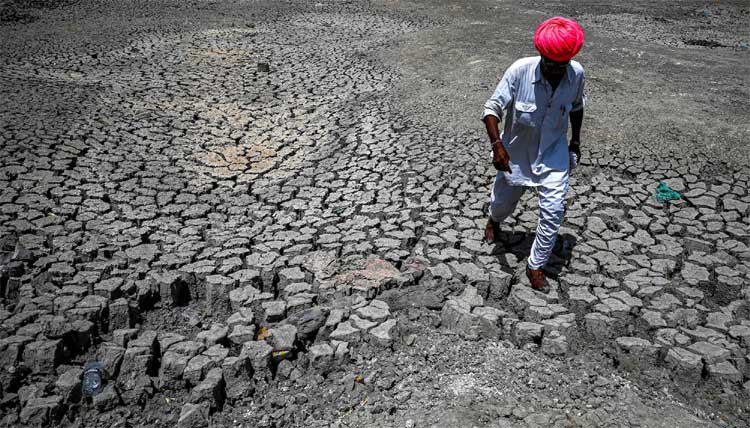
India has likely not yet experienced the most severe impacts of heat extremes driven by climate change, according to a new study released Wednesday by researchers at the Harvard University’s Salata Institute for Climate and Sustainability.
The paper, “Critical Perspectives on Extreme Heat in India,” finds that India’s land surface has warmed by about 0.88°C between 1980–90 and 2015–24, compared with roughly 1.4°C globally. Researchers attribute part of this “warming gap” to an unusual factor: air pollution.
The study says aerosols from pollution, along with large-scale irrigation in northern India, have temporarily masked some warming. Aerosols scatter or absorb sunlight, reducing daytime temperatures, while irrigation cools the surface through evapotranspiration. The effect is most visible in winter months across northern India, where warming trends are weaker and, in some areas, even show short-term cooling.
However, the researchers caution that this masking effect is not permanent. Clean-air policies such as the National Clean Air Programme could reduce aerosol pollution, improving health outcomes but also removing this cooling shield—potentially leading to higher winter temperatures.
The paper warns that planning systems may be underestimating future risks. It notes that heat action plans, labour protections and agricultural forecasts based on historical climate data could fall short as conditions intensify.
India’s workforce is especially vulnerable, with an estimated 380 million people engaged in heat-exposed work in agriculture, construction and informal sectors. The study suggests that up to 200 million people could face potentially life-threatening heat conditions by 2030.
Only about 8% of households currently have access to air conditioning, leaving most people to cope with rising temperatures through limited means.
The research also highlights growing uncertainty around rainfall patterns. Climate models vary widely, with some projecting rainfall increases of over 20% by the end of the century and others suggesting rises above 60%. Both outcomes would pose major challenges for agriculture and infrastructure, especially as inter-annual rainfall variability is expected to increase.
Beyond temperature and rainfall, the study warns that rising humidity levels could further worsen heat stress. It stresses the need for better long-range climate forecasting to support farmers and policymakers.
The researchers also call for large-scale adaptation strategies, including passive cooling designs, improved urban planning, and financial tools such as parametric insurance to support workers during extreme heat events.
They caution that focusing only on measures like “cool roofs” may be insufficient, especially as humid heat becomes more dangerous.
Unlike floods or cyclones, extreme heat often goes unseen but carries major economic and health costs, including reduced productivity, higher energy demand and strain on infrastructure. The study argues that financing for heat adaptation remains inadequate despite rising demand for cooling solutions.
It concludes that India’s immediate priority should be building stronger institutional and fiscal systems for heat resilience, including dedicated budgets, improved early-warning systems, and better coordination across health, labour, housing and disaster management sectors.
Comments are closed.