
How Pakistan-linked disinformation on IRIS Dena targeting India was exposed

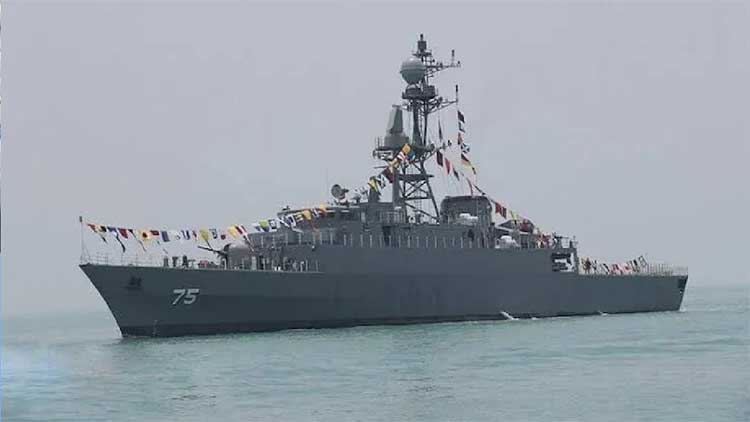
A coordinated disinformation campaign allegedly originating from Pakistan-based networks sought to exploit a recent US-Iran maritime incident to undermine India’s diplomatic standing, according to open-source intelligence (OSINT) assessments.
The trigger was the sinking of the Iranian Navy frigate IRIS Dena, which was torpedoed by the United States on March 4 off the coast of Sri Lanka. Pete Hegseth said the strike demonstrated that Iranian vessels were not safe even in international waters.
False narrative targeting India
Soon after the incident, social media saw a surge in posts under the hashtag #IndiaBetraysIran, falsely claiming that India had shared sensitive location data of the frigate with the US.
According to analysts, the campaign originated from a post by the handle @TacticalTribun and was rapidly amplified by coordinated networks. Around 40% of the activity was traced to Pakistan-based accounts, with additional amplification from Iran-aligned and other international clusters.
More than 500 posts from over 100 accounts generated tens of thousands of views within hours, with some posts reaching viral scale.
Hallmarks of coordinated operation
OSINT findings suggest the campaign followed a structured “hub-and-spoke” model, where an initial post was quickly replicated by key amplifiers and then spread further through replies, quote posts and hashtag clustering.
Visual content—such as images of the frigate and unrelated naval footage—performed significantly better than text posts, indicating deliberate attempts at emotional manipulation.
Investigators identified multiple layers of participation, including originators, high-reach amplifiers and low-reach “sockpuppet” accounts. The campaign showed signs of coordinated inauthentic behaviour, including identical messaging, synchronised posting and sudden spikes in engagement.
Multi-layered amplification
The narrative gained traction across diverse ideological groups, including Pakistan-based networks, pro-Iran and pro-Palestine accounts, anti-war communities in the West, China-aligned users and even segments of Indian domestic discourse. This created a self-reinforcing ecosystem that amplified the false claim across regions.
Pattern of repeated tactics
Officials linked the campaign to a broader pattern of similar operations attributed to Pakistan’s Inter-Services Intelligence. These have previously included deepfake videos and manipulated content targeting Indian leaders such as Rajnath Singh and Narendra Modi, as well as misrepresented footage involving Benjamin Netanyahu and Ali Khamenei.
Fact-checking agencies, including Press Information Bureau, have debunked such claims as propaganda aimed at straining India’s relations with Iran.
Strategic implications
Analysts describe the episode as a “hybrid disinformation operation” that leveraged a real-world conflict to build a false narrative. While the campaign’s initial surge was short-lived, it succeeded in planting doubts and highlighting how misinformation is increasingly being used as a geopolitical tool.
Comments are closed.