
Iran launched a barrage of missiles after Israel killed two of its top officials, sharply escalating tensions in the region

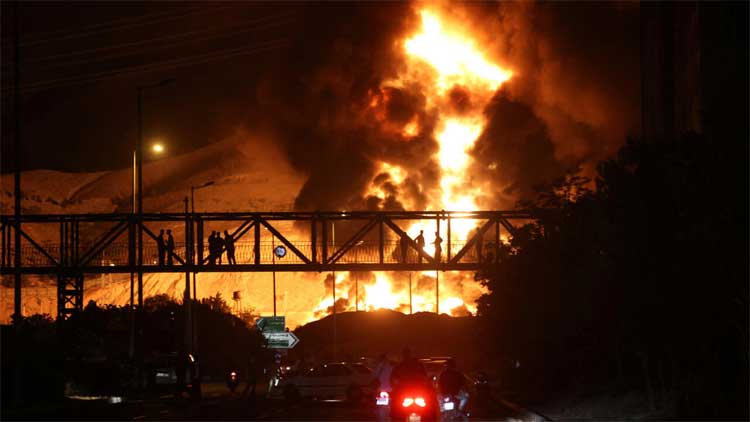
Israel killed two senior Iranian security officials in a major blow to the Islamic Republic’s leadership, as the country faces one of its most serious crises in decades. Iran responded on Wednesday with fresh missile and drone attacks targeting Israel and several Gulf Arab states.
Among those killed was Ali Larijani, secretary of Iran’s Supreme National Security Council and a key figure in national decision-making, particularly after the reported death of Supreme Leader Ali Khamenei earlier in the conflict. Also killed was Gen. Gholam Reza Soleimani, head of the Revolutionary Guard’s Basij force. Iran confirmed both deaths, noting their roles in suppressing nationwide protests earlier this year.
In retaliation, Iran launched a barrage of missiles toward Israel, with sirens sounding across central regions and explosions reported in Tel Aviv. Israel’s emergency service, Magen David Adom, said two people were killed in Ramat Gan, near Tel Aviv. Iranian missiles and drones also targeted Gulf countries, including the United Arab Emirates, where air defense systems intercepted incoming threats over Dubai.
Tensions have raised fears of a broader energy crisis, as Iran signaled it would maintain control over the Strait of Hormuz, a critical route for global oil shipments. Former US President Donald Trump said allies, including NATO members, had declined his calls to help secure the waterway.
Israel says strikes aimed at weakening regime
Israeli Defence Minister Israel Katz said the officials were “eliminated” in overnight strikes, while Prime Minister Benjamin Netanyahu stated the operation aimed to weaken Iran’s leadership and potentially empower its citizens. Despite this, there have been no major signs of unrest inside Iran since the conflict escalated.
Larijani, a former parliamentary speaker, had been a senior adviser on nuclear negotiations and was sanctioned by the US earlier this year. Soleimani had also faced sanctions from the US and the European Union over his role in suppressing dissent.
Regional escalation and global concerns
Iran expanded its attacks beyond Israel, launching strikes across Gulf states. Meanwhile, the United States military, through US Central Command, said it had targeted Iranian missile sites near the Strait of Hormuz to protect international shipping.
Oil markets have reacted nervously, with concerns mounting over disruptions to supply. The European Union has signaled it does not want to be drawn into the conflict, with foreign policy chief Kaja Kallas stating, “This is not Europe’s war.”
The International Atomic Energy Agency also reported that Iran’s Bushehr nuclear facility had been struck by a projectile but suffered no damage. Its chief, Rafael Mariano Grossi, urged restraint to avoid the risk of a nuclear accident.
Fighting spreads to Lebanon
Israel continued strikes against Iran-backed Hezbollah in Lebanon. A strike in the Nabatiyeh district killed three people, according to Lebanese authorities, with rescue operations ongoing.
The conflict has caused heavy casualties and displacement across the region. More than one million people have been displaced in Lebanon, while hundreds have been killed. In Israel, at least 14 people have died in Iranian attacks, and over 1,300 people have been killed in Iran since the conflict began in late February, according to the Iranian Red Crescent.
Comments are closed.