
India Urges Faster Global Climate Action at WSDS 2026

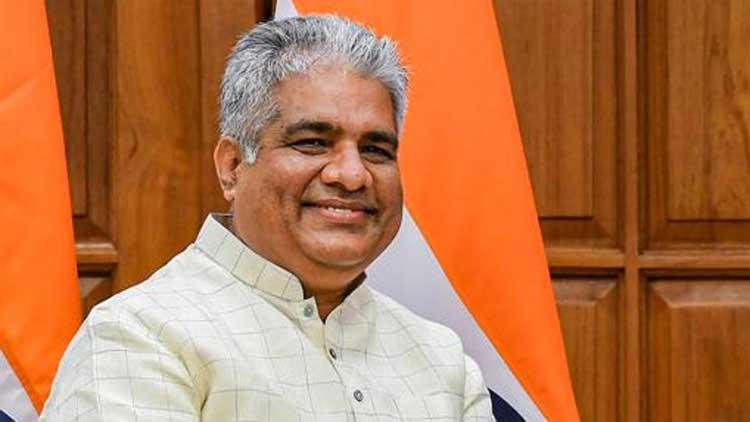
India’s environment minister on Wednesday called for a major acceleration in global climate efforts, urging nations to triple renewable energy capacity and significantly scale up adaptation finance.
Addressing the silver jubilee edition of the World Sustainable Development Summit (WSDS) 2026 organised by The Energy and Resources Institute (TERI), Union Environment Minister Bhupendra Yadav said countries must intensify their response to climate change by rapidly expanding solar and wind energy and doubling energy efficiency across industry, transport, and households.
Yadav stressed that adaptation finance — funding aimed at helping countries cope with climate impacts such as floods, droughts, and extreme weather — must be increased to levels comparable with mitigation finance dedicated to emissions reduction.
He also called for reforms in multilateral development banks to unlock trillions of dollars for climate finance, emphasising that climate ambition must be matched by transparent, predictable, and inclusive financial mechanisms.
Reaffirming India’s climate commitments, the minister highlighted the country’s targets of achieving 500 GW of non-fossil fuel energy capacity by 2030, reducing GDP emission intensity by 45% from 2005 levels, and reaching net zero emissions by 2070.
Warning that the world is falling behind on the Paris Agreement’s 1.5°C goal, Yadav said the challenge was not scientific but systemic. He argued that incremental policy changes are no longer sufficient and called for transformative shifts in scale, speed, and alignment of global action.
“The coming decades must be about delivery,” he said, urging a transition “from pledges to performance, from targets to trajectories, and from ambition to accountability.”
Experts at the summit underscored the need to make climate discourse more accessible. Siddharth Sharma, CEO of Tata Trusts, said climate change must move beyond elite forums and be communicated in ways that resonate with ordinary citizens, with solutions grounded in local contexts and equal focus on adaptation and mitigation.
Comments are closed.