
Afghan Barbers Face Pressure as Morality Police Crack Down on Short Beards

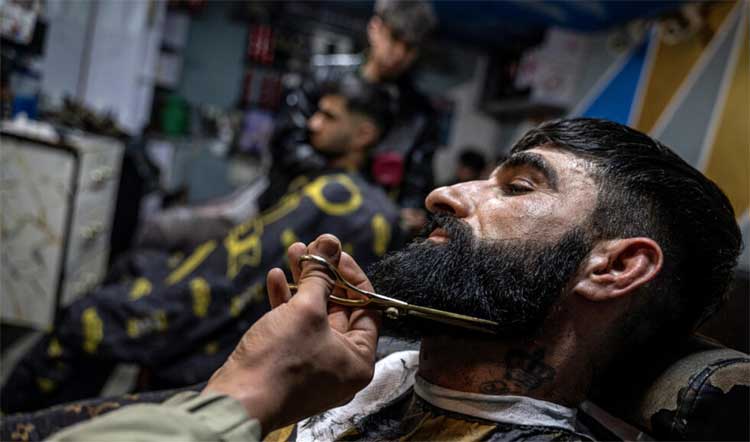
Barbers in Afghanistan say they risk detention if they trim men’s beards shorter than permitted under Taliban rules, as authorities intensify enforcement of their interpretation of Islamic law.
Last month, the Ministry for the Propagation of Virtue and Prevention of Vice declared it “obligatory” for men to grow beards at least the length of a fist, reinforcing earlier directives. Minister Khalid Hanafi said the government had a duty to ensure citizens’ appearance complies with sharia, adding that ministry officials are required to implement the Islamic system.
With morality patrols monitoring compliance in urban areas, several barbers who spoke to AFP requested anonymity, citing security fears.
In Ghazni province, a 30-year-old barber said he was detained for three nights after officials discovered that an employee had given a customer a Western-style haircut. “Initially, I was kept in a cold hall. Later, they moved me to a cold container,” he said, adding that he was released without charge. He continues to work but said he and his clients often hide when patrols pass. “No one can argue with them. Everyone is afraid,” he said.
He claimed that in some cases customers are released while barbers remain in custody. A United Nations report last year documented instances of barbers in Kunar province receiving prison sentences of several months for violating ministry regulations.
Tighter guidance
Alongside stepped-up enforcement, religious authorities have issued stricter guidance. An eight-page directive circulated to imams in November instructed prayer leaders to characterize shaving beards as a “major sin” during sermons. The guidance argued that shaving beards amounted to men “trying to resemble women.”
University students say similar expectations apply on campuses, where women remain barred from attending. A 22-year-old Kabul University student said lecturers warned male students that failure to maintain a “proper Islamic appearance,” including beards and head coverings, could affect grades.
In Kabul, a 25-year-old barber said the restrictions conflict with many young customers’ grooming preferences. “These are private businesses. Hairstyles and beards are personal matters,” he said. Hanafi has rejected such criticism, stating that instructing men to grow beards in accordance with sharia does not constitute an invasion of personal space.
Impact on livelihoods
Barbers also report declining business as fewer clients seek frequent grooming. “Government employees used to come several times a week. Now many have grown beards and rarely visit,” the Kabul barber said.
A 50-year-old barber in the capital said morality officers inspect shops daily. He recalled an encounter this month when an official questioned a haircut. “I explained the customer was a child, but he told us, ‘Do Islamic hair, not English hair,’” the barber said.
Comments are closed.