
Hasina in Delhi, Tarique Rahman in Dhaka: Why Bangladesh’s Polls Matter to India

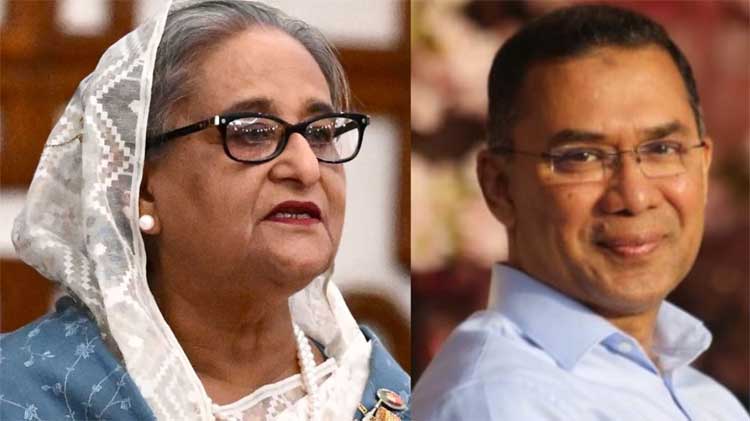
India is closely watching developments in neighbouring Bangladesh, which heads to the polls on February 12 in its first national election since the student-led uprising that removed Sheikh Hasina from power in August 2024.
The vote, being conducted under an interim government led by Nobel laureate Muhammad Yunus, represents a pivotal moment for the country.
Nearly 130 million Bangladeshis are registered to vote across approximately 43,000 polling stations, underscoring the scale of the exercise.
Why Bangladesh Matters to India
India’s interest in Bangladesh’s political trajectory is rooted in deep historical, strategic, and economic ties.
The relationship traces back to the 1947 Partition, when Muslim-majority East Bengal became East Pakistan, geographically separated from West Pakistan by Indian territory. Linguistic, political, and economic tensions between the two wings culminated in the 1971 Liberation War.
Following a brutal military crackdown by Pakistan’s rulers and a massive refugee influx into India, New Delhi intervened militarily. Pakistani forces surrendered in December 1971, leading to the creation of Bangladesh — which India was the first country to recognise.
Bangladesh’s early political years were marked by instability. Sheikh Mujibur Rahman, the country’s founding leader, was assassinated in 1975. Subsequent coups reshaped the political landscape, bringing figures such as Ziaur Rahman to prominence. His Bangladesh Nationalist Party (BNP) later emerged as a key rival to the Awami League led by Sheikh Hasina.
Shifting Political Dynamics
For decades, India’s ties with Bangladesh fluctuated alongside political changes in Dhaka.
Hasina’s Awami League maintained close relations with New Delhi, while the BNP and its allies often adopted positions viewed more cautiously in India, particularly due to their nationalist and Islamist leanings.
Hasina’s tenure from 2009 to 2024 saw significant bilateral cooperation. The 2015 Land Boundary Agreement resolved a decades-old issue involving enclaves. Trade expanded, India extended lines of credit, and Bangladesh became a major recipient of Indian electricity exports.
Security cooperation also deepened, with Dhaka acting against insurgent groups operating along India’s northeastern frontier.
The 2024 Upheaval
Political stability unravelled in 2024 as protests initially sparked by job quota policies evolved into a broader anti-government movement.
Clashes between demonstrators and security forces intensified. International media reports estimated significant casualties during the unrest.
On August 5, 2024, Sheikh Hasina left Bangladesh amid escalating protests and has since remained in India. Her departure triggered a dramatic political reset, including attacks on symbols associated with her family’s legacy.
Legal proceedings against Hasina have further complicated bilateral relations, with Bangladesh seeking her extradition — a sensitive issue that has featured in domestic political rhetoric.
Minority Safety Concerns
The post-uprising period also saw heightened concerns over minority safety.
Various organisations documented incidents of communal violence, while Indian officials raised the issue in Parliament, urging Bangladesh to ensure accountability.
Dhaka has rejected suggestions of systemic targeting, describing some external criticism as politically motivated. Diplomatic tensions have periodically surfaced, including disruptions to visa services.
India as a Campaign Issue
Bangladesh’s election campaign reflects evolving domestic and regional priorities.
The Awami League’s participation has been curtailed, while multiple parties and alliances have entered the fray.
The BNP, led by Tarique Rahman, has positioned itself as a principal contender, emphasising governance reforms and economic revival. Its manifesto addresses longstanding bilateral issues with India, including border management and water-sharing disputes, while pledging constructive regional engagement.
Jamaat-e-Islami, once barred from elections, has re-emerged as a notable player through alliances with newer political formations, including groups linked to the 2024 protest movement.
India’s Diplomatic Recalibration
New Delhi has adjusted its engagement strategy in response to Bangladesh’s shifting political landscape.
External Affairs Minister S Jaishankar and Indian High Commissioner Pranay Kumar Verma have held meetings with BNP leadership, signalling outreach beyond traditional partners.
For years, India maintained a cautious stance towards the BNP, particularly during periods of BNP–Jamaat governance. Recent interactions suggest a pragmatic reassessment driven by changing political realities.
Bangladesh’s diplomats have also expressed optimism about stabilising ties after the elections.
A Young Electorate, New Priorities
Bangladesh’s electorate is heavily youth-driven, with roughly 44 percent of voters aged between 18 and 37.
Analysts say key voter concerns include strengthening democratic institutions, reviving economic growth — particularly the garment-export sector — and managing relations with India.
The election outcome is widely seen as consequential not only for Bangladesh’s internal trajectory but also for regional stability.
Comments are closed.