
India, US Chart Path to New Trade Order With ‘Historic’ Framework

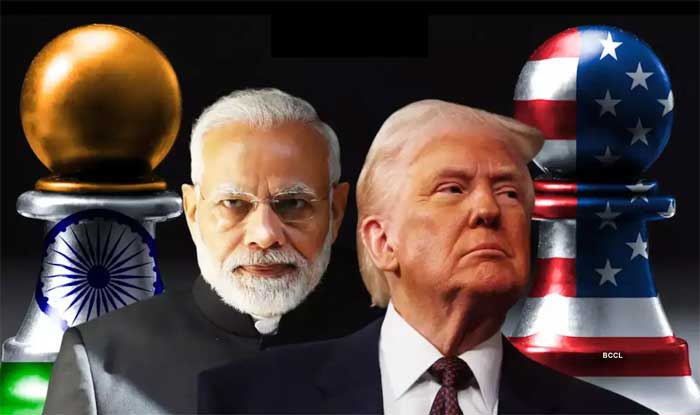
India and the United States on Saturday moved closer to sealing an interim trade agreement, announcing a framework that cuts US tariffs on Indian goods to 18% from 50% and commits both sides to deeper market access and stronger economic ties.
The breakthrough, nearly a year in the making, was formalised through a joint statement and an executive order by President Donald Trump removing a 25% levy imposed over India’s energy ties with Russia. A second order reducing so-called reciprocal tariffs to 18% is expected soon.
The tariff cuts are set to benefit labour-intensive sectors such as textiles, apparel, leather, footwear, plastics and rubber, restoring their competitiveness in the US market. These industries had been hit by cumulative duties of up to 50%.
Trade data show that these sectors account for over $30 billion—about one-third—of India’s $87.3 billion exports to the US in 2024. With the reduction, Indian exporters gain an edge over rivals such as China, Vietnam and Bangladesh.
Under the framework, zero duties are expected on Indian exports of gems and jewellery, generic pharmaceuticals and aircraft parts as early as March, when both sides plan to sign the interim agreement ahead of a broader bilateral trade agreement. An estimated $44 billion worth of Indian exports could receive duty-free access.
Commerce Minister Piyush Goyal called the framework “historic” and “balanced,” saying it would unlock massive opportunities for MSMEs, farmers, fishermen and skilled workers. He also announced relief under Section 232 for aircraft parts and preferential tariff quotas for auto components.
The agreement is expected to boost exports of gems and jewellery, machinery parts, toys, leather goods, home décor, smartphones and agricultural products.
In return, India committed to purchasing up to $500 billion worth of US goods over five years, including energy products, aircraft, precious metals, technology equipment and coking coal. The joint statement said India “intends” to make these purchases, while the US pledged its best efforts to meet demand.
Prime Minister Narendra Modi described the framework as “great news” that reflects growing trust between the two countries and strengthens the “Make in India” initiative.
Officials said most of the proposed imports are already part of India’s trade basket, with annual imports currently at around $300 billion and growing steadily.
The deal also protects sensitive sectors, particularly agriculture and dairy. Goyal said Indian farmers were “fully safeguarded” through carefully designed exemptions. Products such as meat, dairy, GM foods, cereals, oilseeds, fruits, honey, ethanol and tobacco remain excluded.
India also agreed to reduce or eliminate tariffs on several American industrial and agricultural goods, including motorcycles, animal feed, tree nuts, fruit products, soybean oil, wine and spirits.
The framework addresses long-standing non-tariff barriers, including medical device regulations, ICT import licensing and testing standards. Both sides will work to harmonise standards and ease compliance.
New Delhi also committed to ending direct and indirect imports of Russian oil and shifting energy purchases toward the US and Venezuela.
Minister of State for Commerce Jitin Prasada said the deal enhances the competitiveness of Indian exporters by lowering costs for US consumers.
The agreement includes safeguards allowing both countries to revise commitments if tariffs change unilaterally, ensuring mutual protection of interests.
Officials said the framework sets the stage for achieving $500 billion in annual bilateral trade by 2030 and will guide negotiations toward a comprehensive bilateral trade agreement.
Comments are closed.