
After India’s Trade Win, Bangladesh Rushes to Seal ‘Secret’ US Deal Days Before Polls

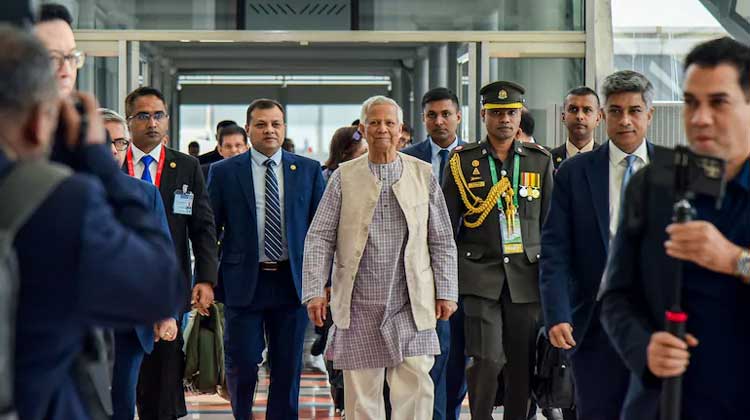
With only days remaining before Bangladesh’s general elections, the country’s interim government is moving ahead with a trade agreement with the United States, drawing questions over timing and transparency.
According to reports, Dhaka and Washington are set to sign the trade pact on February 9, just three days before the February 12 elections. Commerce Secretary Mahbubur Rahman has reportedly confirmed the proposed signing date.
However, the secrecy surrounding the agreement has raised eyebrows. Leading daily Prothom Alo reported that the terms of the deal remain undisclosed and that Bangladesh has signed a Non-Disclosure Agreement (NDA) with the US, keeping the details confidential.
Critics have questioned the finalisation of a major trade pact under an interim administration led by Muhammad Yunus, whose tenure is set to end shortly after the agreement is signed. This means the incoming government would be responsible for implementing the deal.
The timing is also notable as the proposed signing comes just a week after India and the US concluded a trade agreement that reduced tariffs on Indian exports to 18 per cent.
Dhaka Seeks Further Tariff Cuts
Bangladesh currently faces 20 per cent tariffs on its exports to the US, lowered from 37 per cent announced by President Donald Trump in April 2025. The revised rates were introduced under Washington’s reciprocal tariff policy in August.
The Yunus-led government is reportedly seeking further reductions to 15 per cent. However, the lack of clarity over the agreement’s provisions has unsettled exporters and traders.
The garment sector, the backbone of Bangladesh’s economy, is particularly concerned. In 2023, apparel exports were valued at nearly $38 billion.
“I was surprised to see the agreement being signed just three days before the election,” said Inamul Haque Khan, senior vice-president of the Bangladesh Garment Manufacturers and Exporters Association. “It carries major implications and should have been done after the polls.”
Domestic traders have echoed similar concerns, arguing that greater transparency is needed before committing to a deal with long-term economic consequences.
Secrecy, Trade Imbalance and US Demands
According to reports, the NDA covering tariff negotiations and trade talks was signed in June 2025. Months later, the US reduced tariffs on Bangladeshi imports to 20 per cent.
Bangladesh runs a significant trade surplus with the US. While it imports around $2 billion worth of goods from America, it exports nearly $6 billion in return.
Washington is reportedly seeking to narrow this gap by boosting exports of products such as wheat, corn, soybean oil and cotton. It is also pushing for increased sales of military equipment and reduced dependence on Chinese imports.
Additionally, the US is said to be seeking easier access for its automobile exports to the Bangladeshi market, including exemption from additional inspections.
Political Context
The February 12 elections will be Bangladesh’s first since the removal of former Prime Minister Sheikh Hasina following mass student protests in August 2024. Hasina has since gone into exile in India.
Against this backdrop of political transition, analysts say the secrecy and timing of the proposed US trade deal have intensified concerns over accountability and long-term economic policy.
Comments are closed.