
Mamata Banerjee May Argue SIR Challenge Herself in Supreme Court, Escalating Row With Election Commission

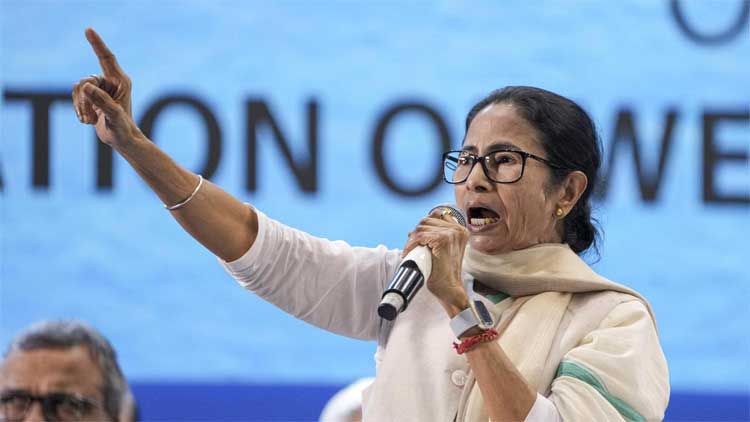
West Bengal Chief Minister Mamata Banerjee may become the first sitting chief minister to personally argue her own case before the Supreme Court, if permitted, when her petition challenging the Election Commission of India’s (ECI) Special Intensive Revision (SIR) of electoral rolls comes up for hearing on Wednesday.
Her petition will be heard along with a batch of pleas filed by Trinamool Congress (TMC) leaders against the SIR process. It seeks the complete scrapping of the revision exercise in West Bengal and urges that the 2026 Assembly elections be conducted strictly on the basis of the existing 2025 voter list.
The move marks a significant escalation in Banerjee’s confrontation with the poll panel. She has consistently alleged that the SIR, initiated ahead of the state elections, risks large-scale disenfranchisement in the name of verification.
In her plea, Banerjee, a trained advocate, has sought the quashing of all SIR-related orders issued by the ECI on June 24 and October 27, 2025, along with all connected directives. She has also sought a writ directing the Commission to hold the upcoming elections using the unaltered 2025 electoral roll.
She argues that the SIR’s reliance on a 2002 baseline and its “onerous” verification framework threaten the voting rights of genuine electors.
The petition raises particular concern over cases flagged for “logical discrepancies,” such as minor spelling errors or name mismatches. Banerjee has urged the court to bar individual hearings in such cases and instead direct authorities to make automatic corrections using available records. She has also sought transparent online publication of such cases on the websites of chief and district electoral officers.
Her plea further seeks directions mandating the acceptance of Aadhaar as valid proof of identity, publication of Form 7 recipients to prevent mass deletions, and greater powers for electoral registration officers to decide inter-state migration cases within five days.
Banerjee has also called for the removal of micro-observers from the verification process, or at least restrictions on their role in hearings and field verifications. She has urged the court to ensure that state-issued documents are recognised and that complainants filing objections appear in person.
The petition follows recent Supreme Court intervention to ease what the court described as the “stress and strain” faced by voters during the SIR exercise in West Bengal.
Last month, a bench led by Chief Justice of India Surya Kant, along with Justices Dipankar Datta and Joymalya Bagchi, issued a series of binding directions to make the revision process more transparent and voter-friendly, reiterating that the exercise should not exclude any eligible voter.
“See the strain and stress going on for ordinary people. Over one crore people have been issued notices,” the bench observed on January 12.
The court directed that affected voters must receive proper notice, assistance, and a meaningful opportunity to present documents. It expanded hearing venues, mandated written acknowledgements, and ordered the publication of notice lists at local offices.
Noting that nearly 12.5 million notices had been issued, the bench allowed voters to be assisted by relatives or party agents during hearings and submissions.
To prevent unrest, the court also held the state administration responsible for maintaining law and order, directing district collectors and police officials to ensure smooth conduct of the process.
The court recorded seven categories of “logical discrepancies,” including missing names in the 2002 rolls, age anomalies, gender mismatches, and unusually large family linkages.
Banerjee’s petition, following her earlier letter to Chief Election Commissioner Gyanesh Kumar, describes the SIR as bureaucratic overreach that disproportionately affects marginalised voters.
While several TMC leaders have challenged the exercise, Banerjee’s personal appearance and willingness to argue the case herself give the dispute added political and legal significance ahead of the 2026 West Bengal Assembly elections.
Notably, the Supreme Court has also reserved orders on similar petitions challenging the SIR in Bihar, where the exercise preceded last year’s elections.
Comments are closed.