
Asia Among World’s Least Insured Regions Despite Rising Climate Disasters

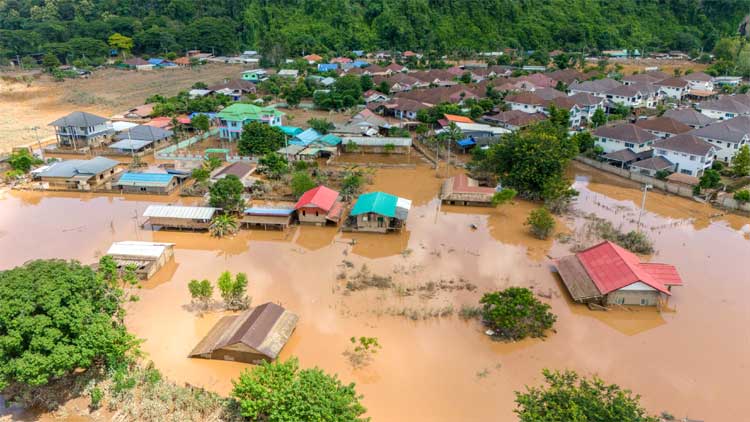
Asia-Pacific suffered losses of $73 billion from natural disasters last year, but only $9 billion of that amount was insured, according to German reinsurance company Munich Re. This makes the region one of the least insured in the world against climate-related disasters. By comparison, about 70 per cent of North America’s $133 billion in disaster losses were covered by insurance.
Asia was also home to the world’s second-costliest disaster in 2025—the 7.7-magnitude earthquake that struck central Myanmar. The quake caused an estimated $12 billion in damage, but only $1.5 billion was insured. It was also the deadliest disaster of the year, claiming around 4,500 lives.
In many lower-income Asian countries, including Myanmar, Laos, Cambodia, and the Philippines, insurance coverage remains below 5 per cent, Munich Re said.
One major challenge is the lack of reliable climate and disaster data, which makes it difficult for insurers to assess risks accurately. Benedikt Signer, Executive Director of the SEADRIF Insurance Company, said that in data-poor environments, international insurers struggle to price risk, enter markets, or work effectively with governments.
Governments also sometimes view insurance as a poor use of public funds. “When you buy something, you expect a visible good or service in return,” Signer explained. “With insurance, what you are buying is intangible, and you only benefit if there is a payout.”
Low insurance coverage poses serious risks to Southeast Asia’s role as a key global supply-chain hub, said Janice Chen, Munich Re’s Head of Property Treaty Underwriting in the region. Inadequate protection increases the chances that local disasters could trigger wider economic disruptions.
Agriculture and manufacturing dominate Southeast Asian economies. The region produces about 30 per cent of the world’s rice and more than 80 per cent of global palm oil. Climate-related disasters regularly damage crops, reduce yields, increase pest outbreaks, and disrupt transport and logistics networks.
For vulnerable communities, the lack of insurance can be devastating. Without financial protection, families often struggle to rebuild homes and livelihoods after disasters.
“If you don’t have savings and there’s no insurance, you can lose everything,” Signer said. Disaster losses often force families to cut consumption, withdraw children from school, or sell their limited assets just to survive.
SEADRIF, based in Singapore, provides parametric insurance for flood risks in Southeast Asia. In August 2023, it paid $1.5 million to Laos within a day of major floods. It also provided $2 million to the country after multiple floods in 2025.
Beyond insurance, experts say governments must also invest in physical defences such as seawalls and flood barriers. Strengthening partnerships with institutions like the World Bank and Asian Development Bank can further help reduce climate vulnerability across the region.
Comments are closed.