
How Climate Change Is Reshaping Winter Storms

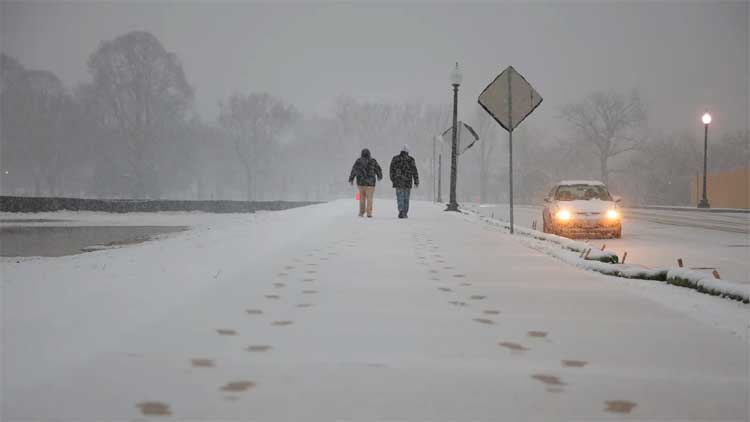
Climate change does not mean the disappearance of cold weather. Instead, it reflects a shift in long-term climate patterns driven largely by fossil-fuel emissions. Individual storms and cold snaps occur against a steadily warming global baseline, which is why scientists caution against using short-term weather events to question climate science.
Experts note that a single storm reveals little about long-term climate trends. What matters is how frequently extreme events occur, how intense they become, and how atmospheric systems behave over time, according to reports by The New York Times.
Warmer Air Holds More Moisture
One of the strongest links between climate change and winter storms is atmospheric moisture. As temperatures rise, the air can hold more water vapour. When conditions turn cold, this moisture falls as heavier precipitation.
During winter, this often results in more powerful snowstorms. In regions where temperatures fluctuate near freezing, it can lead to sleet, freezing rain, and rapid shifts between rain and snow, increasing travel disruptions and safety risks.
How Arctic Warming Affects Extreme Cold
Recent frigid conditions have been linked to changes in the polar jet stream — a high-altitude air current that typically confines cold air near the Arctic.
Scientists have found that the Arctic is warming nearly four times faster than the rest of the planet, a process known as Arctic amplification. This rapid warming may weaken or distort the jet stream, allowing Arctic air to move south more frequently.
While researchers continue to study the exact relationship, most agree that the Arctic plays a significant role in shaping global weather patterns.
Why Winter Storms Fuel Climate Misinformation
Severe weather events often become focal points for climate misinformation. Political leaders, including former US President Donald Trump, have repeatedly suggested that extreme cold contradicts global warming.
Scientists reject this view, explaining that climate change can destabilise weather systems, making both extreme heat and extreme cold more likely in different regions and seasons.
In a warming world, these extremes are not opposites — they are connected outcomes of atmospheric disruption.
The Impact on Energy Systems
Harsh winter weather also revives claims that renewable energy is unreliable. Wind and solar power are frequently blamed during blackouts.
However, studies following the 2021 Texas winter storm found that frozen natural-gas infrastructure — not renewable sources — caused most power failures. Gas pipelines and wellheads were inadequately winterised.
Recent research indicates that power grids with higher renewable energy shares, combined with energy storage and modern management systems, may be more resilient during extreme conditions.
What It Means for the Future
Climate change does not eliminate winter — it changes how winter behaves.
A warming planet is associated with heavier snowfall, sharper temperature fluctuations, and more disruptive storms. As global conditions evolve, weather patterns are becoming more volatile rather than more stable.
Understanding this distinction is critical. Preparing for climate risks requires scientific awareness and proactive planning, not denial. Cold weather will continue, but in a warming world, it may arrive with greater intensity and greater potential for damage.
Comments are closed.