
‘Difference Between Truth and Hope’: Why Owaisi Blamed Congress for Umar Khalid, Sharjeel Imam’s Jail Without Trial

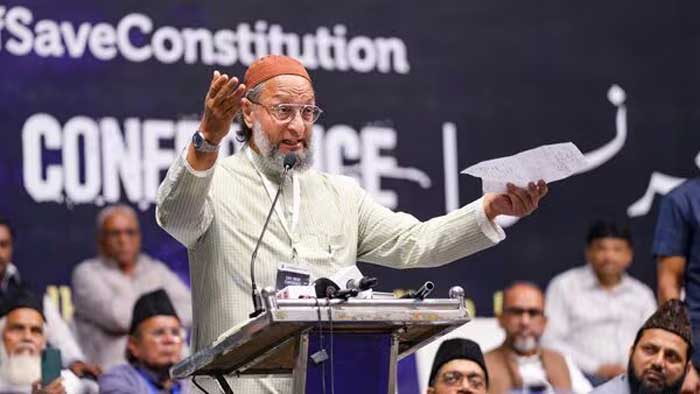
AIMIM chief Asaduddin Owaisi has blamed the Congress for the prolonged incarceration of activists Umar Khalid and Sharjeel Imam, who remain jailed without trial under the Unlawful Activities (Prevention) Act (UAPA) for their alleged role in the 2020 Delhi riots.
Speaking on Thursday, Owaisi accused the Congress of strengthening the stringent provisions of the anti-terror law, arguing that amendments introduced during the UPA government—when P Chidambaram was Union home minister—have enabled long periods of detention for undertrials, including Khalid and Imam.
What Owaisi said
“The Supreme Court did not grant bail to two undertrial accused, and it explained why,” Owaisi, the All India Majlis-e-Ittehadul Muslimeen (AIMIM) chief and Lok Sabha MP, was quoted as saying by news agency ANI. “During the UPA government, the UAPA was amended and a definition of what constitutes terrorism was added.”
Owaisi said he had earlier flagged these concerns in Parliament, noting that the grounds cited by the Supreme Court to deny bail were the same provisions he had criticised years ago.
Referring to amendments made around 2007–08, he pointed to Section 15(a) of the Act, which defines terrorist acts. “It says ‘by any other means of whatever nature to cause or likely to cause’—this is subjective,” he said, warning that such wording could be misused. “Who defines it?”
He also highlighted Section 43D of the UAPA, which allows detention of up to 180 days without filing a chargesheet. Owaisi alleged that minorities are routinely held for the maximum period under this provision.
“This speech of mine is recorded in the Lok Sabha,” he said. “I had said that in 100 per cent of cases where minorities are arrested, they will be in detention for 180 days without a chargesheet.”
Supreme Court rejects bail pleas
On January 5, the Supreme Court refused to grant bail to Khalid and Imam in the alleged larger conspiracy case linked to the 2020 Delhi riots. The court cited the gravity and statutory nature of the offences, as well as the alleged central role played by the two accused.
A bench of Justices Aravind Kumar and N.V. Anjaria held that Khalid and Imam stood “qualitatively on a different footing” from other accused, observing that the material on record prima facie indicated their “central and formative roles” in the planning and strategic direction of the alleged conspiracy.
Rejecting the argument that prolonged incarceration alone warranted bail under the UAPA, the court said delay could not override statutory restrictions. “Delay cannot be the trump card to outweigh statutory limitations and the facts of a particular case,” the bench observed, stressing that courts must assess the gravity of the offence, the legal framework, the role attributed to each accused and the prima facie strength of the prosecution’s case.
Comments are closed.