
Modi ‘Didn’t Call Trump’: US Commerce Secretary Howard Lutnick Claims India–US Trade Deal Fell Through Amid Tariff Threats

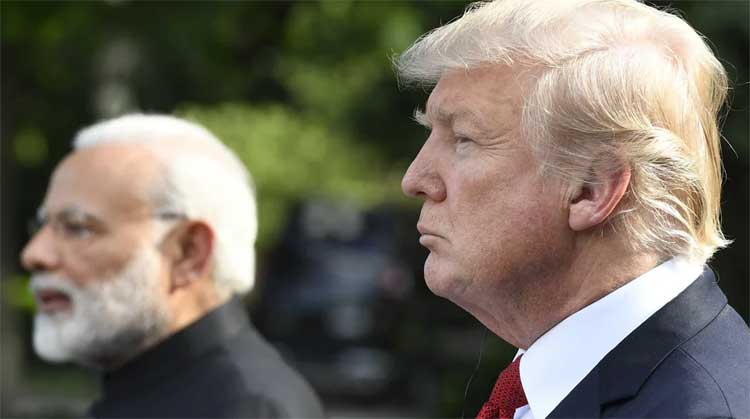
With trade negotiations between India and the United States still unresolved, a senior aide of US President Donald Trump has offered a striking explanation for why a potential bilateral deal failed to materialise. US Commerce Secretary Howard Lutnick has claimed that an agreement was effectively ready but collapsed because Prime Minister Narendra Modi did not personally reach out to President Trump.
Speaking on a podcast with entrepreneur Chamath Palihapitiya, Lutnick said the negotiations had reached an advanced stage before stalling over what he described as a protocol issue.
“It’s all set up, but I said I gotta have Modi call the President… they were uncomfortable doing it, so Modi didn’t call,” Lutnick said, recalling the talks.
According to Lutnick, India and the US were “very close” to finalising the deal, but New Delhi ended up being “on the wrong side of the see-saw.” He added that Washington went on to conclude trade arrangements with countries such as Indonesia, Vietnam and the Philippines soon after, even though India’s deal was expected to be wrapped up earlier.
“India’s (deal) was gonna be done before them. I negotiated with them at a higher rate,” Lutnick claimed.
Tariff pressure over Russian oil
Lutnick’s remarks come amid renewed pressure from the Trump administration over India’s energy trade with Russia. Days earlier, President Trump hinted at raising tariffs on Indian goods if New Delhi did not cooperate on what he described as the “Russian oil issue.”
“India wanted to make me happy. Modi is a very good guy and he knew I was not happy. And it was important to make me happy. We can raise tariffs on them very quickly,” Trump said recently.
The US had imposed steep 50% tariffs on India in August last year, citing New Delhi’s continued oil imports from Moscow following Russia’s invasion of Ukraine. Since then, Washington has sought to use the duties as leverage to push India to cut back on Russian energy purchases.
India’s ‘no deadlines’ position
India, however, has consistently defended its position, arguing that its energy imports are driven by market conditions and domestic consumer needs. Union Commerce Minister Piyush Goyal reiterated last year that New Delhi would not negotiate under pressure.
“We are talking to the United States, of course, but we don’t do deals in a hurry, and we don’t do deals with deadlines or with a gun on our head,” Goyal said in October, underlining India’s refusal to bow to momentary coercion.
Threat of even steeper duties
Concerns of a sharper escalation persist. US Senator Lindsey Graham has recently claimed that President Trump has approved a proposed Russia sanctions bill that could significantly raise tariffs on countries trading with Moscow.
Under the proposed Sanctioning Russia Act of 2025, the US president would be required to impose tariffs of “at least 500 percent” on all goods and services imported from countries that knowingly engage in trade involving Russian-origin uranium and petroleum products. India is among the countries that could be affected.
The bill is aimed at intensifying pressure on Russia to halt its war in Ukraine by targeting its major trading partners with punitive economic measures.
As negotiations continue, Lutnick’s comments have added a new political edge to the already complex India–US trade talks, highlighting how diplomacy, tariffs and geopolitics are increasingly intertwined.
Comments are closed.