
Microplastics weakening oceans’ ability to absorb carbon dioxide, new study warns

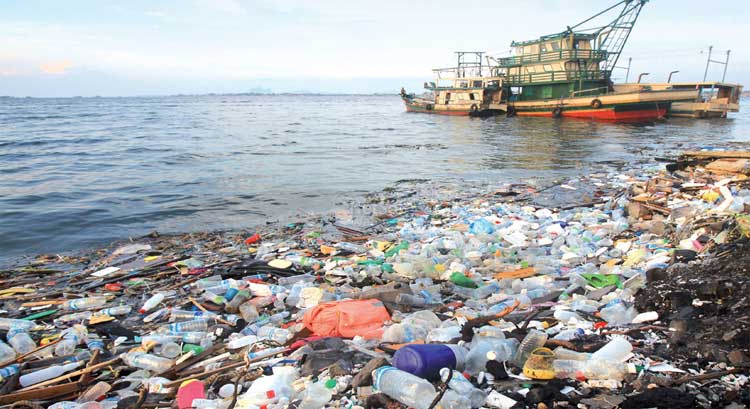
Microplastics are not only polluting the oceans but are also undermining one of Earth’s most important defences against climate change, a new study has found. Researchers say these tiny plastic fragments are impairing the oceans’ ability to absorb carbon dioxide — a process crucial for regulating global temperatures.
Microplastics, defined as plastic particles smaller than five millimetres, are now ubiquitous. They have been detected in oceans, freshwater, soil, air, Arctic ice and even the human body. While their environmental and health risks are well documented, scientists say their role in accelerating climate change has been largely overlooked.
According to a study published in the Journal of Hazardous Materials: Plastics, microplastics disrupt marine ecosystems that play a central role in carbon sequestration. “Climate disruption and plastic pollution are two major environmental challenges that intersect in complex ways,” the authors wrote. “Microplastics influence biogeochemical processes, disrupt oceanic carbon pumps, and contribute directly to greenhouse gas emissions.”
The study highlights how microplastics interfere with the ocean’s “biological carbon pump” — a natural process through which phytoplankton absorb carbon dioxide during photosynthesis and transport it to deeper ocean layers. Researchers found that microplastics reduce phytoplankton productivity and impair zooplankton metabolism, weakening the ocean’s capacity to lock away carbon.
“Our study shows that microplastics interfere with the ocean’s ability to absorb carbon dioxide, a process critical for regulating Earth’s temperature,” said Dr Ihsanullah Obaidullah, associate professor at the University of Sharjah and the study’s corresponding author. “Over time, this disruption could contribute to ocean warming, acidification and biodiversity loss, threatening food security and coastal communities worldwide.”
The research also draws attention to the “plastisphere” — microbial communities that colonise plastic surfaces in the ocean. These microbes play a role in carbon and nitrogen cycles and can emit greenhouse gases as plastics degrade, further exacerbating climate impacts.
Describing the research as a collaborative effort involving scientists from China, Hong Kong, Pakistan and the UAE, Dr Obaidullah said the study aimed to uncover a hidden link between plastic pollution and global warming. “Oceans are Earth’s largest carbon sink. Microplastics are undermining this natural shield against climate change,” he said.
The researchers reviewed 89 studies published between 2010 and 2025, adopting an integrative approach to identify gaps in existing research. They noted that while most studies focus on identifying microplastics and cleaning them up, little attention has been paid to their long-term impact on climate systems.
The findings come amid soaring global plastic production. A 2025 UN report estimates that more than 400 million tonnes of plastic are produced annually, with less than 10 per cent recycled. Without intervention, production could triple by 2060.
The authors urge policymakers to address plastic pollution and climate change together, rather than as separate crises. They recommend reducing single-use plastics, improving waste management, promoting biodegradable alternatives and investing in research on how microplastics affect ocean carbon cycles.
“This is not just an environmental issue,” Dr Obaidullah said. “It’s a global sustainability challenge.”
Comments are closed.