What’s happening now on Venezuela’s streets? Uneasy quiet, an interim president and Trump’s plan to ‘run’ the country
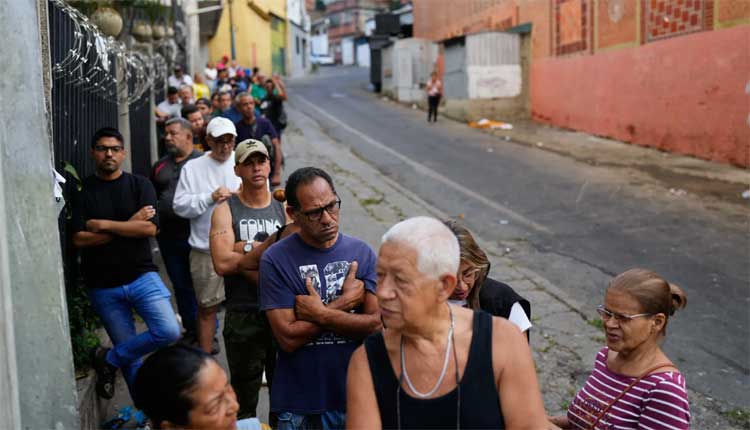
A day after the dramatic US military operation that led to the capture of Venezuelan President Nicolas Maduro and First Lady Cilia Flores, the capital Caracas was gripped by an uneasy calm on Sunday, with streets largely deserted and most businesses shut.
Only a handful of vehicles were seen on the roads, while convenience stores, fuel stations and other establishments remained mostly closed, according to reports from the ground. The subdued atmosphere followed the unprecedented foreign operation that saw Maduro transferred to the United States, where he and his wife now face narco-terror charges in New York.
Following the seismic political shift in the Communist-run Latin American country, US President Donald Trump said the United States would “run” Venezuela.
Maduro’s Vice President Delcy Rodríguez has reportedly received US backing for the time being and has been named interim president by Venezuela’s top court in line with constitutional provisions. However, uncertainty loomed large, with residents unsure about what the immediate future holds, the Associated Press reported.
The tense calm on Sunday stood in contrast to scenes on Saturday, when queues formed outside shops and petrol pumps hours after the early-morning operation, as residents rushed to stock up on essentials amid fears of unrest. While some queues were still visible on Sunday, widespread panic appeared to have subsided.
Roads usually crowded with runners and cyclists were largely empty. Armed civilians and some members of the military were guarding the presidential palace, according to the report.
Signs of the US operation were visible outside the capital as well. In La Guaira, families were seen clearing debris from homes damaged by blasts, with several buildings bearing large holes in their walls.
In a working-class neighbourhood in eastern Caracas, construction worker Daniel Medalla sat on the steps of a Catholic church and told fellow parishioners that there would be no morning Mass. He suggested that the quiet streets reflected not fear of another military strike but apprehension over possible government reprisals if people were seen celebrating Maduro’s removal.
Medalla recalled the harsh crackdown following last year’s contested elections, which had left Maduro politically weakened amid allegations of vote rigging. “We were longing for it,” the 66-year-old said of Maduro’s exit.
Meanwhile, the US government said it was prepared to work with Venezuela’s remaining leadership “if they make the right decision,” AFP reported. Secretary of State Marco Rubio said Washington would judge the interim leadership by its actions.
“We’re going to judge everything by what they do,” Rubio told CBS News. “If they don’t make the right decision, the United States will retain multiple levers of leverage.”
Oil remains a central issue in the unfolding crisis. Venezuela holds the world’s largest known crude reserves, much of which remain untapped. Trump has said American companies would “extract” these reserves, claiming they were left undeveloped under Maduro and previous governments.
Amid the uncertainty, state-run oil company Petróleos de Venezuela (PDVSA) has asked some joint ventures to cut crude production by shutting down oilfields, according to sources cited by Reuters. Oil stocks are reportedly piling up as exports remain paralysed.
Venezuela’s oil shipments have stalled following the US announcement of a blockade on sanctioned tankers entering or leaving Venezuelan waters, along with the seizure of two oil cargoes.
Comments are closed.