
Tarique Rahman Returns to Bangladesh After 17 Years as Political Tensions Escalate

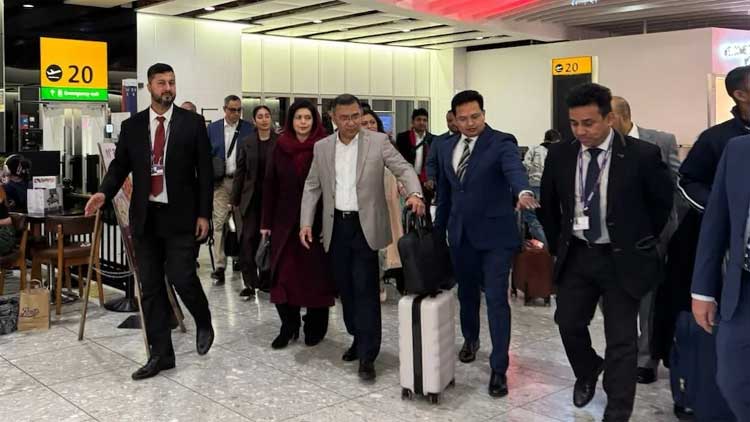
Tarique Rahman, acting chairman of the Bangladesh Nationalist Party (BNP), arrived in Dhaka on Thursday along with his wife and daughter, ending nearly 17 years of self-imposed exile in London. His return comes at a volatile moment for Bangladesh, which has been gripped by political unrest and violence following the killing of youth leader Sharif Osman Hadi last week.
After landing in the capital, Rahman is scheduled to head to the 300 Feet area in Purbachal, where he will address a public rally. This marks his first public political appearance in Bangladesh since leaving the country in 2008. Rahman, the elder son of former prime minister Khaleda Zia, is widely seen as a key contender for the prime minister’s post in the general elections due in February 2026.
According to Bangladeshi daily The Daily Star, Rahman and his family travelled on a Biman Bangladesh Airlines flight that made a stopover at Sylhet’s Osmani International Airport around 9:58 am before proceeding to Dhaka. Authorities have put elaborate security arrangements in place across the capital, anticipating large crowds and heightened tensions. Despite the winter chill, thousands of BNP supporters gathered along key routes to welcome Khaleda Zia’s son home.
Rahman’s homecoming coincides with a deteriorating law-and-order situation in Bangladesh. The country has been on edge since the death of Sharif Osman Hadi, a youth leader who succumbed to injuries in a Singapore hospital on December 18 after an assassination attempt in Dhaka. Violence escalated further on Wednesday when unidentified assailants hurled a crude bomb from a flyover near the Bangladesh Muktijoddha Sangsad in Dhaka’s Moghbazar area. The explosion killed one person on the spot, Hatirjheel Police Station’s Inspector (Operations) Md Mohiuddin told The Daily Star.
Protests demanding justice for Hadi have intensified in recent days. On Tuesday, Inqilab Moncho organised a rally at Shahbagh in Dhaka, following the conclusion of a protest at the Central Shaheed Minar a day earlier. The group, which played a prominent role during the July 2024 uprising, has issued a 24-hour ultimatum to the government, demanding that those responsible for Hadi’s killing be brought to justice before the 13th national election and a proposed referendum, according to BDNews24.
The unrest has also spilled over into attacks on media institutions. During last week’s violence, offices of leading Bangladeshi newspapers The Daily Star and Prothom Alo were torched, with journalists reportedly trapped inside for hours. Bangladeshi authorities have said the murder case will be tried under the Speedy Trial Tribunal, amid widespread calls for swift accountability.
Rahman’s return has also drawn renewed attention to his controversial past. He left Bangladesh in 2008 and has since lived in London after being convicted in multiple cases at home, including money laundering and charges linked to an alleged plot to assassinate now-ousted prime minister Sheikh Hasina. Despite this, his influence within the BNP remains strong, and his return is expected to reshape the opposition’s political strategy ahead of the 2026 polls.
Meanwhile, Bangladesh’s internal tensions have strained relations with India. The recent lynching of a Hindu man, Dipu Chandra Das, in Mymensingh triggered protests outside Bangladeshi missions in several Indian cities, including New Delhi, Kolkata, Bhopal, Jammu, Agartala, Mumbai and Hyderabad. The incident prompted both countries to summon each other’s envoys amid heightened security concerns.
Amid the backlash, a senior adviser in the Muhammad Yunus-led interim government said Dhaka was taking responsibility for supporting Das’s family. Education adviser C R Abrar also met the victim’s father, according to PTI.
In India, the issue has sparked political sparring. The BJP criticised the Mamata Banerjee-led West Bengal government for police action against protesters in Kolkata, calling it “appeasement politics,” while also accusing the Congress and other opposition parties of remaining silent on the killing.
As Tarique Rahman steps back onto Bangladesh’s political stage, his return adds another layer of uncertainty to an already fragile situation—one marked by violence, protests, and deepening political polarisation at home and growing diplomatic strain abroad.
Comments are closed.