IndiGo Faces CCI Scrutiny: How India’s Biggest Airline Built Its Monopoly
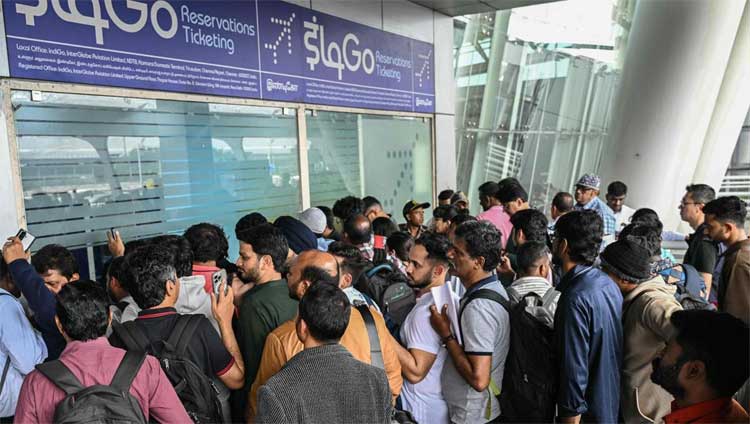
The Competition Commission of India’s (CCI) decision to open an investigation into IndiGo’s mass flight cancellations was hardly surprising. While the regulator has not specified which competition laws India’s largest airline may have violated, IndiGo’s dominant position in one of the world’s fastest-growing aviation markets inevitably invites scrutiny.
The larger question, however, is how IndiGo built a commanding market share of around 65% in less than two decades. The answer lies not merely in execution, but in timing — being in the right place at the right time — a luxury the airline may not enjoy to the same extent today.
IndiGo’s early advantage
IndiGo, operated by InterGlobe Aviation Ltd., began operations in 2006 with a small fleet and limited routes. Its rise coincided with a period of upheaval in Indian aviation.
In 2007, the government merged Air India and Indian Airlines in a bid to achieve scale, triggering prolonged integration challenges. That same year, Jet Airways acquired Air Sahara but continued operating under separate certificates, while Kingfisher Airlines merged with Air Deccan to gain international flying rights.
As rivals focused inward on mergers and restructuring, IndiGo steadily expanded. By 2009, the airline founded by Rahul Bhatia and Rakesh Gangwal had increased its market share to 14%, up from 10% in 2006. At the time, Jet Airways led with 25%, followed by Kingfisher at 24% and Air India at 18%, with the rest split among smaller carriers such as SpiceJet, GoAir and Paramount Airways.
While the market appeared balanced, competition for scarce slots at Mumbai and Delhi remained intense — and opportunities emerged as the global financial crisis took its toll.
Capitalising on rivals’ decline
Kingfisher began shrinking its fleet after 2008, reducing capacity from nearly 90 aircraft to 66. IndiGo moved swiftly to occupy the vacated space. By 2012, Kingfisher was effectively grounded, with IndiGo and other airlines rapidly filling the gaps it left behind.
IndiGo’s footprint at Mumbai and Delhi grew rapidly. Weekly flights from the two hubs rose from about 60 in 2006 to more than 200 by the end of 2007, 350 by 2009 and nearly 900 by 2012. By then, Kingfisher and Paramount Airways had exited the market.
Fresh opportunities arose in 2014 when SpiceJet scaled back operations and Jet Airways shifted its focus toward international routes following Etihad’s investment. Air India, burdened by debt, lacked the capacity to expand. IndiGo and GoAir stepped in, and by the end of 2014, IndiGo’s market share had climbed to 31%.
Expansion and consolidation
The entry of Vistara in 2015 reshaped the full-service segment, but IndiGo continued its steady capacity additions. By the end of that year, it controlled 36.7% of the market, ahead of Jet Airways (22.5%) and Air India (16.4%).
Pressure mounted on Jet Airways in the years that followed, culminating in its collapse in 2019. Once again, capacity opened up — and once again, IndiGo was best placed to absorb it. The pandemic only reinforced this advantage. Backed by a strong cash position, IndiGo continued inducting aircraft even as competitors struggled to survive.
IndiGo took delivery of 44 aircraft in 2020 alone — a pace it once achieved over an entire year. Today, it inducts four to five aircraft a month, steadily increasing capacity even when some deliveries replace older jets.
The pandemic pivot
Just before Covid-19 hit, IndiGo held about 48% of the domestic market. By 2023, as traffic rebounded to record highs, its share had surged to around 60%. GoAir shut down, SpiceJet shrank to about 5%, and Vistara and AirAsia India moved toward integration with the Tata-owned Air India group.
A familiar pattern played out repeatedly: when airlines collapsed or downsized, governments and airports prioritised restoring connectivity and revenue. The carrier that could restart flights quickest often secured the slots and traffic rights. More often than not, that carrier was IndiGo.
A shifting landscape
From 2012 through the pandemic years, IndiGo consistently benefited from competitors’ missteps and capacity constraints. That dynamic may now be changing. Air India, backed by the Tata Group, is expanding aggressively, while IndiGo’s recent operational disruptions have created an opening for rivals.
For nearly two decades, IndiGo thrived by exploiting small gaps left by others. Today, for perhaps the first time, the gaps may be opening in the opposite direction.
Comments are closed.