
Centre to Replace MGNREGA With ‘Viksit Bharat—Guarantee for Rozgar and Ajeevika Mission (Gramin)’

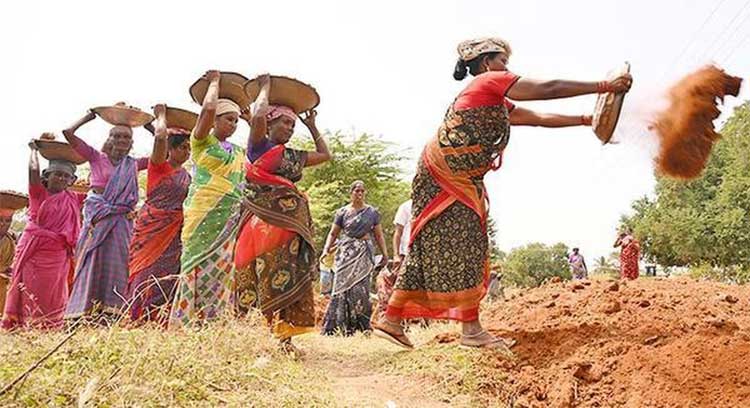
The Narendra Modi-led government is set to replace the Mahatma Gandhi National Rural Employment Guarantee Act (MGNREGA), 2005 with a new flagship programme titled Viksit Bharat—Guarantee for Rozgar and Ajeevika Mission (Gramin) under the proposed VB–G RAM G Bill, 2025.
According to the draft legislation, the new law aims to create a rural development framework aligned with the government’s long-term vision of Viksit Bharat @2047. It will provide a statutory guarantee of 125 days of wage employment in a financial year to every rural household whose adult members volunteer to undertake unskilled manual work—an increase from the 100 days guaranteed under MGNREGA.
The Bill states that the scheme will focus on empowerment, growth, convergence and saturation, with public works contributing to a proposed Viksit Bharat National Rural Infrastructure Stack. Priority areas include water security and water-related projects, core rural infrastructure, livelihood-linked assets, and special works aimed at mitigating the impact of extreme weather events.
Higher State Contribution
Unlike MGNREGA, which was fully funded by the Centre, the new programme will require a higher financial contribution from states. While it will remain a Centrally Sponsored Scheme, the cost-sharing pattern will be 90:10 between the Centre and states for North-Eastern states, Himalayan states and Union territories such as Uttarakhand, Himachal Pradesh and Jammu and Kashmir, and 60:40 for other states and Union territories with legislatures.
Ban on Works During Peak Farm Seasons
For the first time, the proposed law explicitly bars scheme-related works during peak agricultural seasons. The Bill notes that this provision is intended to ensure adequate availability of labour for farming activities during crucial periods.
Unemployment Allowance Retained
The Bill retains the provision for an unemployment allowance. If employment is not provided within 15 days of an application—or from the date employment is sought in the case of advance applications—the applicant will be entitled to a daily unemployment allowance, as prescribed.
New Governance Structure
The scheme will be overseen by a newly constituted Central Gramin Rozgar Guarantee Council, replacing the earlier arrangement under which MGNREGA was administered directly by the Ministry of Rural Development. The Central Council will include a chairperson, representatives of the Centre and states, up to 15 non-official members from Panchayati Raj institutions, workers’ organisations and weaker sections, and a Member-Secretary of Joint Secretary rank or above.
States will also be required to set up State Gramin Rozgar Guarantee Councils for monitoring and review. In addition, a National Level Steering Committee will be formed to advise on normative allocations, inter-ministerial convergence and overall implementation, with corresponding steering committees at the state level.
Role of Panchayats and Legal Override
Panchayats at the district, intermediate and village levels will remain the principal authorities for planning, implementation and monitoring, supported by District Programme Coordinators.
The proposed law will have an overriding effect over other legislation. However, states with existing employment guarantee laws that offer benefits and conditions equal to or better than those under the new Act may choose to continue implementing their own schemes.
If enacted, the VB–G RAM G Bill, 2025 would mark the most significant overhaul of India’s rural employment guarantee framework since MGNREGA was introduced two decades ago.
Comments are closed.