
UN Slashes 2026 Aid Appeal as Global Funding Drops to Lowest Level in a Decade

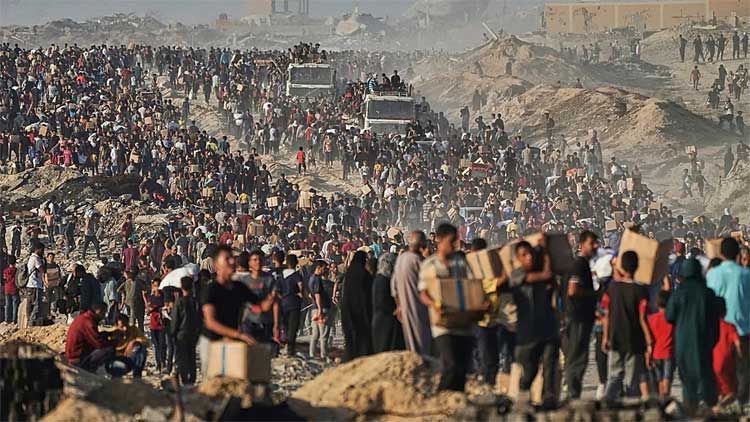
The UN’s humanitarian coordination office has sharply reduced its funding appeal for 2026 after global support — largely from Western governments — plunged this year to its lowest point in ten years.
The United Nations Office for the Coordination of Humanitarian Affairs (OCHA) announced on Monday that it will seek $33 billion next year to assist 135 million people affected by wars, climate disasters, earthquakes, epidemics and food shortages. In contrast, OCHA received only $15 billion in 2025 — the weakest funding level in a decade.
For 2026, OCHA is requesting over $4.1 billion to support 3 million people in Palestinian territories, $2.9 billion for Sudan, which is grappling with the world’s largest displacement crisis, and $2.8 billion for a regional response around Syria.
“In 2025, hunger surged. Food budgets were slashed — even as famines hit parts of Sudan and Gaza. Health systems broke apart,” OCHA chief Tom Fletcher said. “Disease outbreaks spiked. Millions went without essential food, health care and protection. Programs to protect women and girls were slashed, hundreds of aid organizations shut.”
OCHA had originally sought $47 billion for 2025 to assist 190 million people worldwide, but funding gaps forced the agency and its partners to reach 25 million fewer people than they did in 2024.
The sharp drop in donor support comes amid heightened security concerns among European governments over Russia’s growing assertiveness, coupled with sluggish economic growth across the region — factors that have tightened national budgets and reduced available humanitarian spending.
“I know budgets are tight right now. Families everywhere are under strain,” Fletcher said. “But the world spent $2.7 trillion on defense last year — on guns and arms. And I’m asking for just over 1 percent of that.”
This year, the UN system has cut thousands of jobs, particularly at its refugee and migration agencies. Secretary-General António Guterres has initiated a review of UN operations, though it remains unclear whether it will lead to structural changes.
Fletcher, who reports to Guterres, has pushed for a “radical transformation” of the aid system through reduced bureaucracy, greater efficiency and stronger decision-making power for local organizations on the ground. He noted ongoing “constructive” discussions with the Trump administration.
“Do I want to shame the world into responding? Absolutely,” he added. “But I also want to channel this determination and anger we have as humanitarians — that we will carry on delivering with what we get.”
Comments are closed.