
Experts Issue Red Alert as Delhi’s Air Turns ‘Life-Threatening’

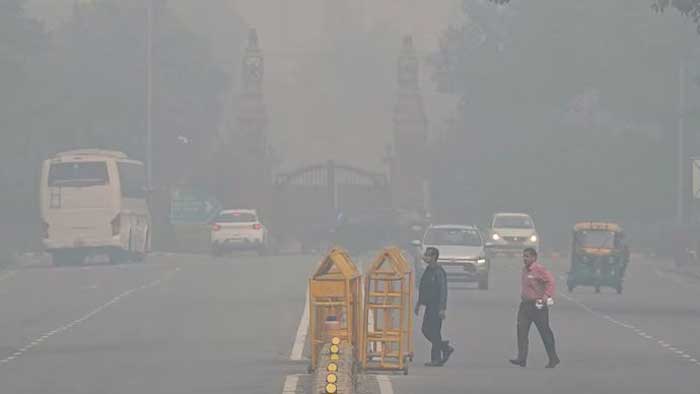
Delhi’s air quality deteriorated sharply on Friday, with several neighbourhoods plunging into the ‘severe’ category as hospitals reported a rise in pollution-linked illnesses and experts warned the situation now amounts to a “public health emergency.”
A LocalCircles survey found that nearly 80% of households in Delhi-NCR had at least one member fall sick due to toxic air in the past month. Doctors said air purifiers and masks offer only limited protection and called for year-round mitigation policies instead of seasonal measures.
Key Updates on Delhi’s Air Quality
1. AQI remains dangerously high
Delhi recorded a 24-hour average AQI of 370 at 9 am on Friday — the eighth consecutive day in the ‘very poor’ zone. CPCB data shows the trend worsening through the week: 392 on Wednesday, 374 on Tuesday, and 351 on Monday.
2. 18 stations hit ‘Severe’
More than 18 monitoring stations, including Chandni Chowk, Anand Vihar, Mundka, Bawana, Narela, DTU and Wazirpur, reported AQI levels above 400, many oscillating between 400–450.
3. Forecast: No relief for six days
The Air Quality Early Warning System predicts Delhi will slip into ‘severe’ and stay in the ‘very poor’ to ‘severe’ range for the next six days due to stagnant winds and winter inversion.
4. Source of pollution
IITM’s Decision Support System estimated that on Thursday:
-
Vehicular emissions: 17.3%
-
Stubble burning: 2.8%
For Friday, these are projected to dip marginally to 16.2% and 1.8%, respectively.
5. Farm fires continue
Satellite data detected 16 fires in Punjab, 11 in Haryana, and 115 in Uttar Pradesh on Wednesday — low but still contributing to background pollution under stagnant winter conditions.
Medical Community Raises Alarm
AIIMS doctors reported a 10–15% surge in respiratory and pollution-related cases.
Dr Anant Mohan of AIIMS said pollution levels are now “life-threatening” and should be treated as a public health emergency.
“It’s affecting every organ — the heart, brain, mental health, even unborn children. We now have clear evidence it cuts life expectancy,” he said.
Hospitals are seeing overflowing wards with patients suffering from wheezing, breathlessness, burning eyes, and worsening COPD.
Dr Saurabh Mittal added that Delhi makes a “huge mistake” by treating pollution as a November-only crisis:
“Water sprinklers and street sprays offer only marginal benefit. The city needs year-round action.”
Doctors emphasized that masks and air purifiers offer limited protection and cannot substitute systemic reforms.
Public Impact and Response
6. 80% households affected
The survey found:
-
36% households had four or more people fall sick.
-
Residents report persistent cough, burning eyes, headaches, congestion, and aggravated asthma.
7. Supreme Court intervention
The Supreme Court asked the CAQM to consider deferring school sports events, warning that holding outdoor activities now is like making children “train in gas chambers.” The court emphasised monthly monitoring and strict adherence to anti-stubble burning guidelines.
8. Citizen protests intensify
Residents, including parents and children, held protests at India Gate and Jantar Mantar, accusing authorities of “year-round political inaction.” Many said GRAP restrictions hurt workers but fail to reduce pollution due to weak enforcement and lack of long-term planning.
Comments are closed.