
Republicans Downplay Election Losses, Reaffirm Loyalty to Trump Ahead of 2026 Midterms

Nearly two weeks after Republicans suffered significant losses in Georgia, New Jersey, Pennsylvania and Virginia, party leaders insist there is nothing wrong with their policies, messaging or President Donald Trump’s leadership.
Trump has argued that Democrats and the media are misleading voters frustrated by high costs and economic pressures. GOP officials, aiming to avoid another electoral setback in next year’s midterms, are urging candidates to fully embrace the president and highlight his accomplishments.
These themes emerged in private discussions, internal briefings and official talking points circulating among senior Republican decision-makers in Washington following the Nov. 4 defeats. The assessment underscores how closely the party’s fate remains tied to Trump, even as many voters report worsening financial realities.
Despite that disconnect, Republican strategists aligned with Trump show little interest in challenging his narrative.
“Republicans are entering next year more unified behind President Trump than ever before,” Republican National Committee spokesperson Kiersten Pels said, calling Trump’s agenda popular and a major driver of GOP turnout.
Trump’s approval rating is similar to those of former Presidents Barack Obama and George W. Bush at this stage in their second terms — periods that preceded major midterm losses for their parties.
Trump Rejects Affordability Concerns
After the election, the White House began shifting its message to focus more directly on affordability. Trump’s second term so far has been dominated by trade wars, a crackdown on illegal immigration, the deployment of National Guard troops to U.S. cities and the longest federal government shutdown in U.S. history.
In recent days, Trump has talked more about costs. On Friday, he cut tariffs on beef and other consumer goods. Still, his central message remains that the economy is strong and prices are falling — echoing the unsuccessful messaging strategy of the Biden administration before him.
“We have a great economy and the prices are coming down,” Trump told reporters Sunday, blaming Democrats for what he described as “the highest inflation in the history of our country.” He claimed he had brought inflation back to a “normal level.”
In a recent social media post, Trump declared the GOP “the Party of Affordability.” He also claimed Thanksgiving dinner costs would drop 25 percent — a figure contradicted by data showing grocery prices are 2.7 percent higher than in 2024.
According to the AP VoteCast survey, economic concerns dominated this month’s elections.
Republican strategist Doug Heye warned that Trump’s approach may hurt GOP candidates entering a tough 2026 environment, where the president’s party traditionally suffers major losses.
“Republicans need to relay to voters that they understand what they’re going through,” Heye said, adding that Trump’s behavior often distracts from that message. “As we saw in Virginia, if you’re not talking about what voters are talking about, they’ll tune you out.”
Different Signals From the States
Not all Republican candidates share Trump’s outlook.
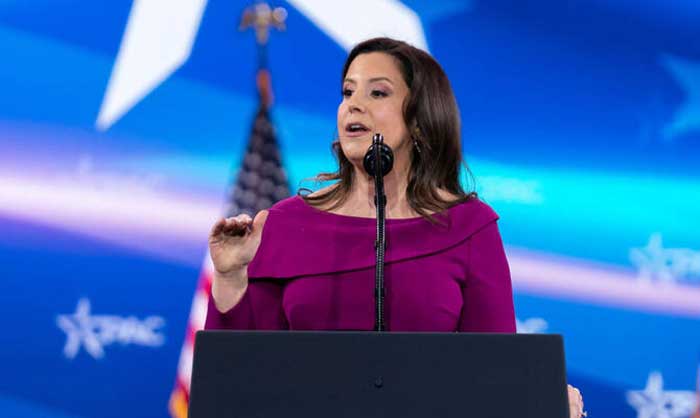
New York Rep. Elise Stefanik, a House GOP leader now running for governor, said affordability is the top issue in her state and downplayed the party’s intense focus on cultural debates like transgender athletes — a major theme in the Virginia governor’s race.
She refrained from criticizing Trump but redirected attention to New York’s Democratic governor, Kathy Hochul, saying Republicans are “fully united behind firing” her. Stefanik also avoided saying whether she would support a hypothetical Trump effort to deploy the National Guard to New York City.
RNC Talking Points Deflect Losses
The RNC’s post-election talking points, obtained by The Associated Press, attributed the GOP’s losses to Democratic advantages in key states while ignoring defeats in Georgia and Pennsylvania. The memo also overstated Trump’s political strength, claiming he is more popular than Obama and Bush were at this stage.
AP’s polling analysis contradicts that. Trump’s approval rating stands at 36 percent in a November AP-NORC poll — slightly higher than his first-term numbers but below where Obama and Bush were at the same point in their second terms. Gallup also shows Trump at similar levels to his past polling.
Both Obama and Bush saw their parties suffer major midterm setbacks.
Still, Trump’s team is doubling down. The RNC memo insists the recent elections “were not a referendum on President Trump” and says GOP success in 2026 depends on strong turnout from “Make America Great Again” voters — a turnout they say Trump will ensure.
Comments are closed.