
Delhi Chokes Again as AQI Nears 400; 21 Areas Record ‘Severe’ Pollution Levels

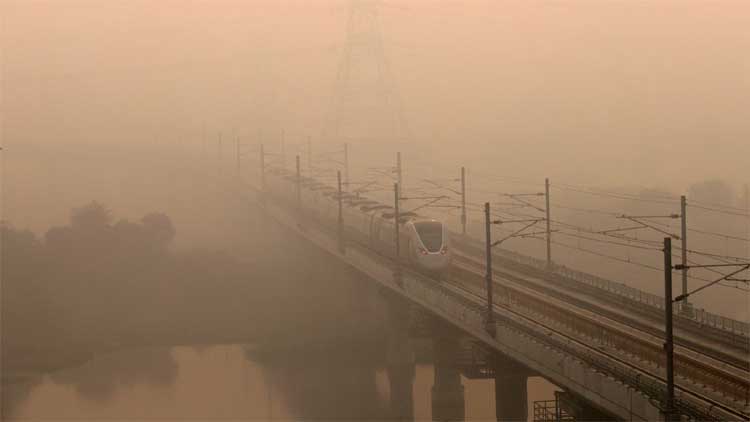
Delhiites woke up to another day of toxic air on Sunday, with pollution levels hovering in the ‘very poor’ to ‘severe’ range across the city. Data from the Air Quality Early Warning System showed an Air Quality Index (AQI) of 392 early in the morning, while several areas crossed the 400 mark, placing the national capital among the most polluted cities in India.
According to the Central Pollution Control Board (CPCB), Delhi’s 24-hour average AQI stood at 361 at 4 p.m. on Saturday, well within the ‘red zone’.
The CPCB classifies AQI levels between 0–50 as “good”, 51–100 “satisfactory”, 101–200 “moderate”, 201–300 “poor”, 301–400 “very poor”, and 401–500 as “severe.”
1. Several Areas Record ‘Severe’ Air Quality
Monitoring stations across the capital reported alarming figures: 415 at Alipur, 420 at ITO, 426 at Nehru Nagar, 424 at Vivek Vihar, 435 at Wazirpur, and 430 at Burari.
By 7 a.m. on Sunday, 21 of Delhi’s 39 monitoring stations registered AQI readings above 400 — officially in the ‘severe’ category, according to CPCB’s Sameer app.
In the National Capital Region (NCR), Noida recorded an AQI of 354, Greater Noida 336, and Ghaziabad 339, all in the ‘very poor’ range.
Delhi AQI at 7 a.m. on Sunday:
| Area | Agency | AQI |
|---|---|---|
| Bawana | DPCC | 436 |
| Rohini | DPCC | 435 |
| Wazirpur | DPCC | 435 |
| Jahangirpuri | DPCC | 433 |
| Burari Crossing | IMD | 430 |
2. DPCC Claims Air Quality Better Than Last Year
The Delhi Pollution Control Committee (DPCC) maintained that pollution control measures had yielded relative improvement this November compared with last year, despite hourly AQI touching 380 — the worst so far this season.
DPCC chairman Sandeep Kumar cited CPCB data showing that six of the first seven days of November recorded better AQI levels than the same period last year, crediting “timely implementation of departmental instructions.”
3. Officials Hope to Avoid GRAP Stage III
Officials said the city has so far managed to avoid pollution levels that would trigger Stage III of the Graded Response Action Plan (GRAP) — which includes bans on construction activities and entry of non-essential trucks.
“Last year, GRAP-III was enforced on November 13,” said Kumar. “This time, with coordinated efforts from departments and cooperation from residents, we hope to prevent reaching that stage.”
4. Noida and Ghaziabad Log Worst October Air in Five Years
According to CPCB data, Noida and Ghaziabad recorded their poorest October air quality in five years.
-
Noida’s average AQI for October 2025 was 236, compared with 205 (2024), 202 (2023), 211 (2022), and 181 (2021).
-
Ghaziabad averaged 227 this October, up from 194–224 over the previous four years.
Ritesh Tiwari, regional officer of the Uttar Pradesh Pollution Control Board (UPPCB) in Noida, attributed the deterioration to early Diwali celebrations, which fell in October this year. “Traffic congestion, heavy shopping activity, and fireworks worsened air quality,” he said.
UPPCB Ghaziabad official Ankit Kumar added that slow wind speeds and pollutant accumulation exacerbated the situation, but said measures like mechanised road sweeping, water sprinkling, and night patrolling in industrial areas are underway.
5. PM2.5 and PM10 Remain Main Pollutants
Fine particulate matter — PM2.5 and PM10 — continues to dominate Delhi’s air pollution. These particles, emitted mainly from vehicles, industries, and construction dust, can penetrate deep into the lungs and bloodstream, heightening risks for children, the elderly, and people with respiratory or cardiac conditions.
6. Questions Raised Over Data Accuracy
Amid circulating videos showing water sprinkling near air monitoring stations, some questioned whether such activities distort pollution readings.
DPCC officials denied any targeted manipulation, saying sprinkling occurs citywide. Member secretary Sandeep Mishra explained that sensors measure pollution within a 2–3 km radius, making local water spraying unlikely to skew results significantly.
However, concerns persist. A Hindustan Times analysis on November 5 highlighted missing data, irregular patterns, and algorithmic inconsistencies in Delhi’s air quality monitoring network — suggesting that the actual pollution levels may be even higher than reported.
Comments are closed.