Bill Gates Sparks Global Climate Debate After Arguing Humanity Will ‘Survive’ Crisis, Calls for Shift Toward Adaptation

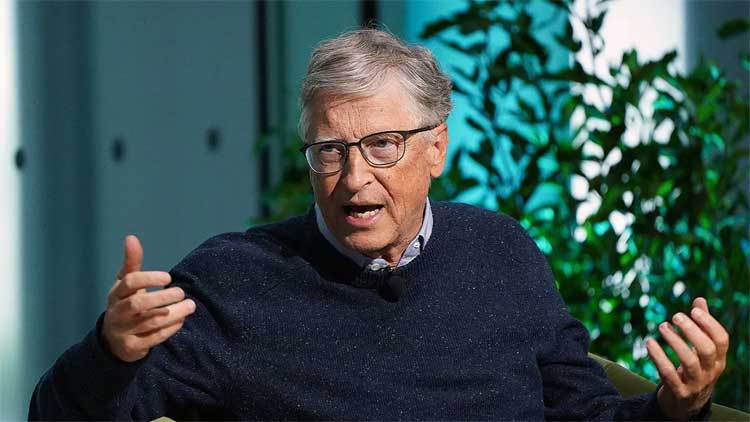
Microsoft co-founder and leading climate philanthropist Bill Gates has ignited a fresh global debate on climate strategy after questioning the prevailing “doomsday” narrative around global warming and urging a rethink of how the world allocates its resources to fight the crisis.
In a memo published last week, Gates said that while climate change is “one of the most serious challenges humanity has ever faced,” it is not an existential threat that will wipe out civilisation — a view widely echoed by climate activists and scientists. Instead of channelling overwhelming focus into limiting temperature rise to 1.5°C or 2°C, he argued for prioritising human development — improving health, reducing poverty, and increasing access to energy and infrastructure — as a more effective shield against climate impacts.
A Shift in Strategy — and Its Global Implications
Gates has long backed large-scale emissions reduction efforts and clean energy innovation. But his memo reflects a notable pivot: from a mitigation-heavy approach (cutting greenhouse gases) to one that places greater weight on adaptation — building resilience against climate shocks.
Given Gates’ influence and ability to mobilise capital, the shift is being seen as potentially consequential for global climate financing, especially for developing countries that have long demanded more support to cope with climate realities already unfolding.
His position now aligns closely with India’s evolving climate stance, which has in recent years stressed adaptation funding, resilient agriculture, and climate-proofing infrastructure. Many low- and middle-income nations across Africa, Asia, and Latin America are expected to welcome Gates’ intervention.
Gates’ Three Core Arguments
In the memo, Gates outlined three key points:
-
Climate change will not end civilisation — it is devastating, but survivable.
-
Temperature targets alone should not define climate success — limiting warming is important, but not the only metric.
-
Wealth, health, and development are the strongest defences — well-fed, well-protected societies survive disasters better than poor ones.
He argued that investments in food systems, healthcare, early-warning systems, and access to heating and cooling “will save more lives” than focusing only on cutting emissions.
Scientists Push Back
The critique from the scientific community was swift.
“Bill Gates is deeply misguided on climate,” wrote leading climatologist Michael Mann, warning that downplaying the urgency of emissions cuts risks weakening global momentum. Responding in the Bulletin of the Atomic Scientists, Mann countered that there is no adaptation pathway for runaway warming.
“The only safe and reliable way out when you find yourself in a climate hole is to stop digging — and burning — fossil fuels,” he said.
Climate activists also fear Gates’ remarks could be used by fossil fuel lobbies to slow the energy transition.
A Debate That Was Always Coming
Mitigation vs adaptation is not a new argument — but Gates has now brought it to centre stage, at a time when wealthy nations are struggling to meet financing pledges and the poorest countries are bearing the brunt of floods, droughts, heatwaves, and cyclones.
His memo raises a sharp question for policymakers ahead of upcoming global climate summits: Is the world’s climate strategy too narrowly focused on temperature targets at the expense of saving lives in the present?
Whether Gates’ shift reshapes climate funding priorities — or fuels more division — may soon become one of the most defining debates in global climate policy.
Comments are closed.