
Why ISRO’s latest ‘Bahubali’ LVM3 mission is a true heavyweight — and not just because of its 4,400-kg payload

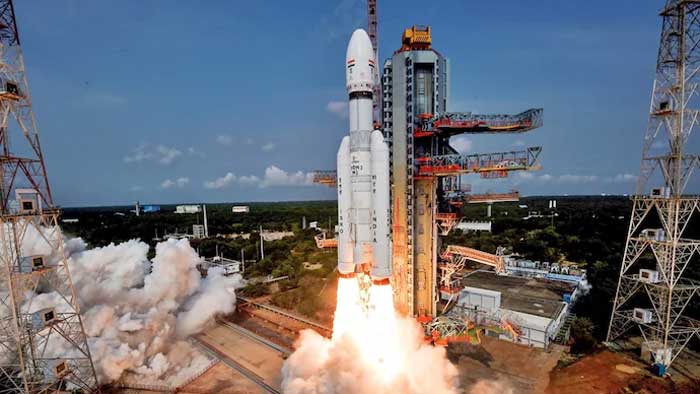
ISRO on Sunday successfully launched the country’s heaviest communication satellite, CMS-03, aboard the indigenously built LVM3-M5 — the ‘Bahubali’ heavy-lift rocket — from Sriharikota, marking a major milestone in India’s space and defence capabilities.
The 4,400 kg satellite lifted off from the Satish Dhawan Space Centre at 5:26 pm and was placed into its intended orbit later in the day. CMS-03 is a multi-band communications satellite designed to operate for at least 15 years and will provide secure, high-capacity services across the Indian landmass and the wider Indian Ocean Region (IOR).
Why the mission matters
-
Heaviest Indian communication satellite ever launched — fully built in India and launched from Indian soil.
-
Boosts defence and maritime capability — the Indian Navy says the satellite will significantly enhance space-based communication and situational awareness across the IOR.
-
‘Atmanirbhar Bharat’ milestone — ISRO chief S. Somanath called the mission a “shining example of self-reliance,” underscoring that the rocket and the cryogenic C25 stage are entirely homegrown.
-
Maritime security edge — the satellite carries advanced encryption, wide-frequency coverage and high-capacity transponders to support network-centric operations at sea.
-
Strategic asset — Lt Gen Anil K. Bhatt (retd), head of the Indian Space Association, said CMS-03 will be a “game changer” for national and naval security.
The LVM3 — earlier used for Chandrayaan-3 and India’s first human spaceflight test — has now completed another flawless mission, extending its record of successful launches since its debut in 2014.
Comments are closed.