
Indian Embassy in Kabul Will Help ‘Regional Peace’: Taliban Spokesperson Suhail Shaheen

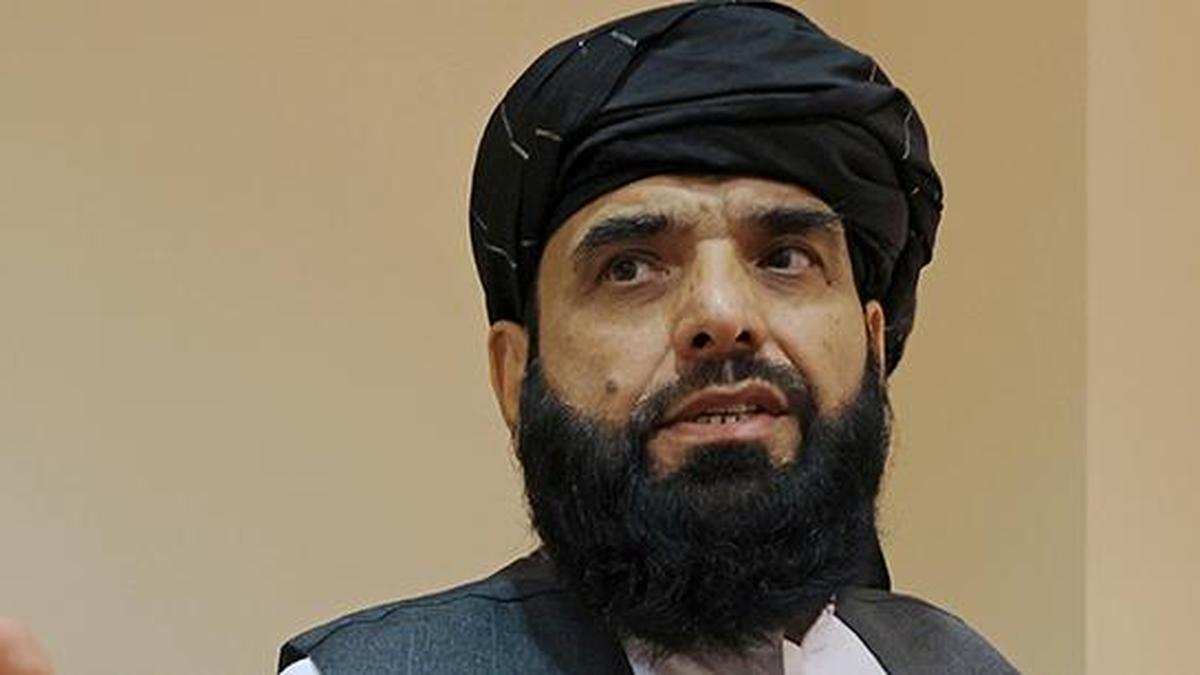
In a notable diplomatic statement, Taliban spokesperson Suhail Shaheen has said that the Indian Embassy’s continued presence in Kabul would play a constructive role in promoting regional peace and stability. His remarks come amid renewed discussions over India’s engagement with Afghanistan following the Taliban’s return to power, reflecting a subtle but significant shift in the group’s tone toward New Delhi.
A Diplomatic Opening
Speaking to local media, Shaheen emphasized that the Taliban welcomes diplomatic missions that contribute to Afghanistan’s reconstruction and regional cooperation. He stated that India, as a key regional player, has a historical role in Afghanistan’s development and could help foster an environment of peace through diplomatic, humanitarian, and economic engagement.
“India’s embassy in Kabul represents an important bridge of understanding, trade, and peace. We see its presence as beneficial for stability in the region,” Shaheen reportedly said. His comments mark a continuation of the Taliban’s outreach to India, which has cautiously maintained limited engagement since 2021 through humanitarian and technical assistance.
India’s Role in Afghanistan
India has long been one of Afghanistan’s major development partners, having invested over $3 billion in infrastructure, education, healthcare, and governance projects over the past two decades. Notable contributions include the Afghan Parliament building, Zaranj-Delaram Highway, and several power and irrigation projects.
However, India’s diplomatic footprint was drastically reduced after the Taliban takeover in August 2021. The embassy was temporarily closed, and personnel were evacuated as security conditions deteriorated. In mid-2022, India reopened a technical mission in Kabul to oversee humanitarian aid, signaling cautious re-engagement without formally recognizing the Taliban regime.
Taliban’s Message of Reassurance
Suhail Shaheen’s remarks appear to be an effort to reassure India and other regional powers of the Taliban’s commitment to maintaining diplomatic security and encouraging international cooperation. He reiterated that Afghanistan seeks friendly ties with all neighbors based on mutual respect and non-interference.
“We guarantee the safety of diplomatic missions and international organizations. Our soil will not be used against any other country,” he added — a statement aimed at dispelling lingering concerns about terrorism and cross-border militancy.
Geopolitical Implications
Analysts view the Taliban’s outreach to India as part of a broader strategy to diversify Afghanistan’s foreign relations. While the Taliban maintains close ties with Pakistan and has sought economic engagement with China and Iran, it also recognizes India’s influence in regional diplomacy and development assistance.
For India, maintaining a limited but meaningful presence in Kabul offers both strategic and humanitarian value. It allows New Delhi to monitor regional security dynamics, particularly in relation to Pakistan and terror networks, while continuing to support the Afghan people through aid, healthcare, and education initiatives.
Cautious Optimism in New Delhi
Although India has not formally responded to Shaheen’s latest statement, policymakers in New Delhi are likely to view it with cautious optimism. The Indian government has consistently maintained that its engagement with Afghanistan focuses on the welfare of its citizens and the preservation of historical and cultural ties, not political recognition of any regime.
However, India remains wary of the Taliban’s internal policies, especially regarding human rights, women’s education, and counterterrorism commitments. Any expansion of diplomatic engagement will likely depend on measurable progress in these areas and assurances that Afghanistan will not again become a haven for extremist groups.
A Step Toward Stability
Suhail Shaheen’s statement underscores a growing acknowledgment within the Taliban leadership that diplomatic inclusivity and regional cooperation are essential for Afghanistan’s economic recovery and legitimacy. As the country faces humanitarian challenges, engagement with regional powers like India could open pathways for trade, infrastructure, and stability.
Conclusion
The Taliban’s endorsement of the Indian Embassy’s role as a force for “regional peace” reflects a nuanced evolution in Afghanistan’s foreign relations. While trust remains fragile, the message from Kabul signals a willingness to rebuild bridges with India — a country that has historically stood by the Afghan people in their pursuit of progress and peace.
If both sides proceed carefully, this diplomatic thaw could mark the beginning of a new, pragmatic phase in India–Afghanistan relations, shaped by shared interests in stability, development, and regional harmony.
Comments are closed.